Where does Gemini get information about a local business?
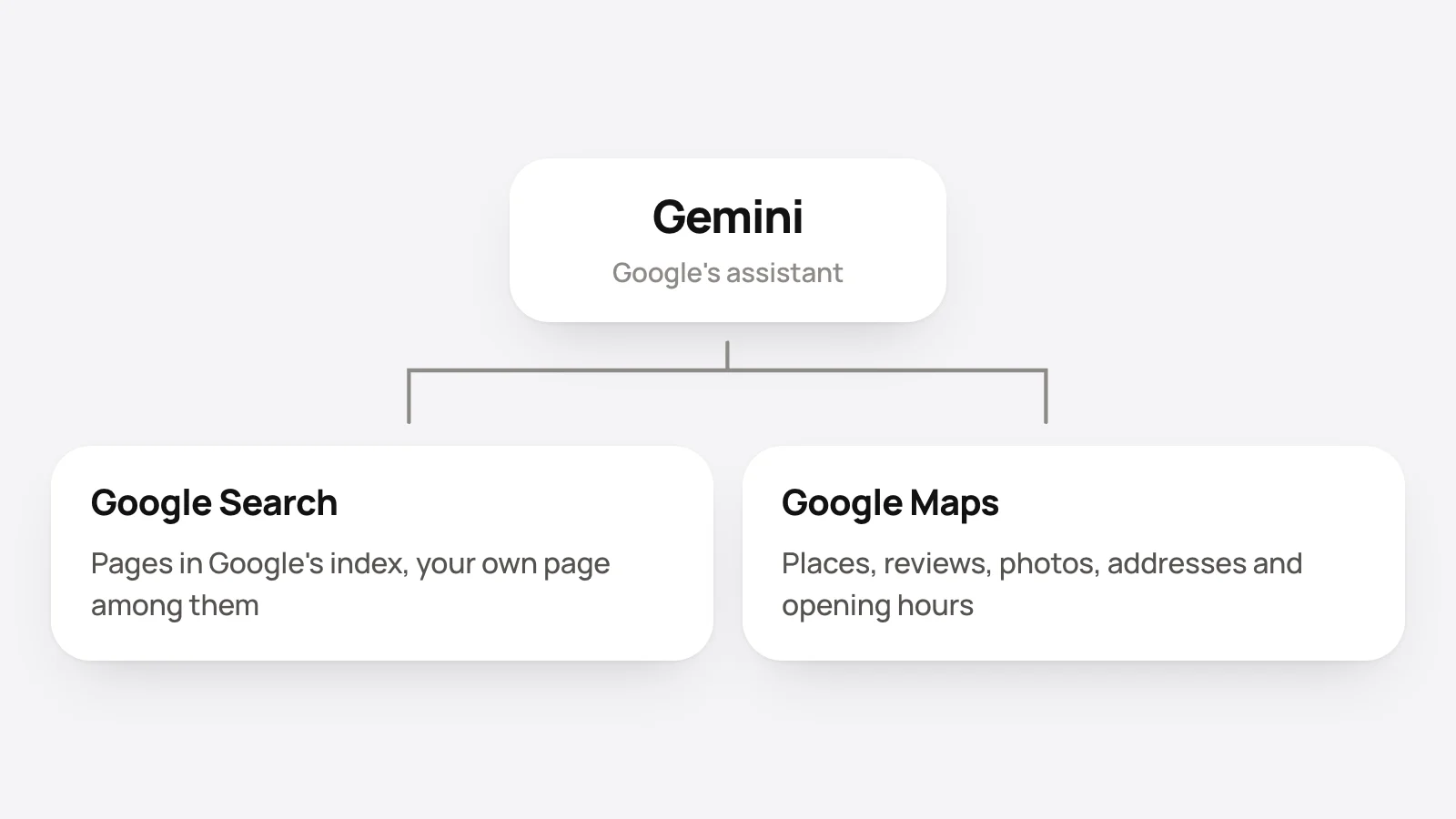
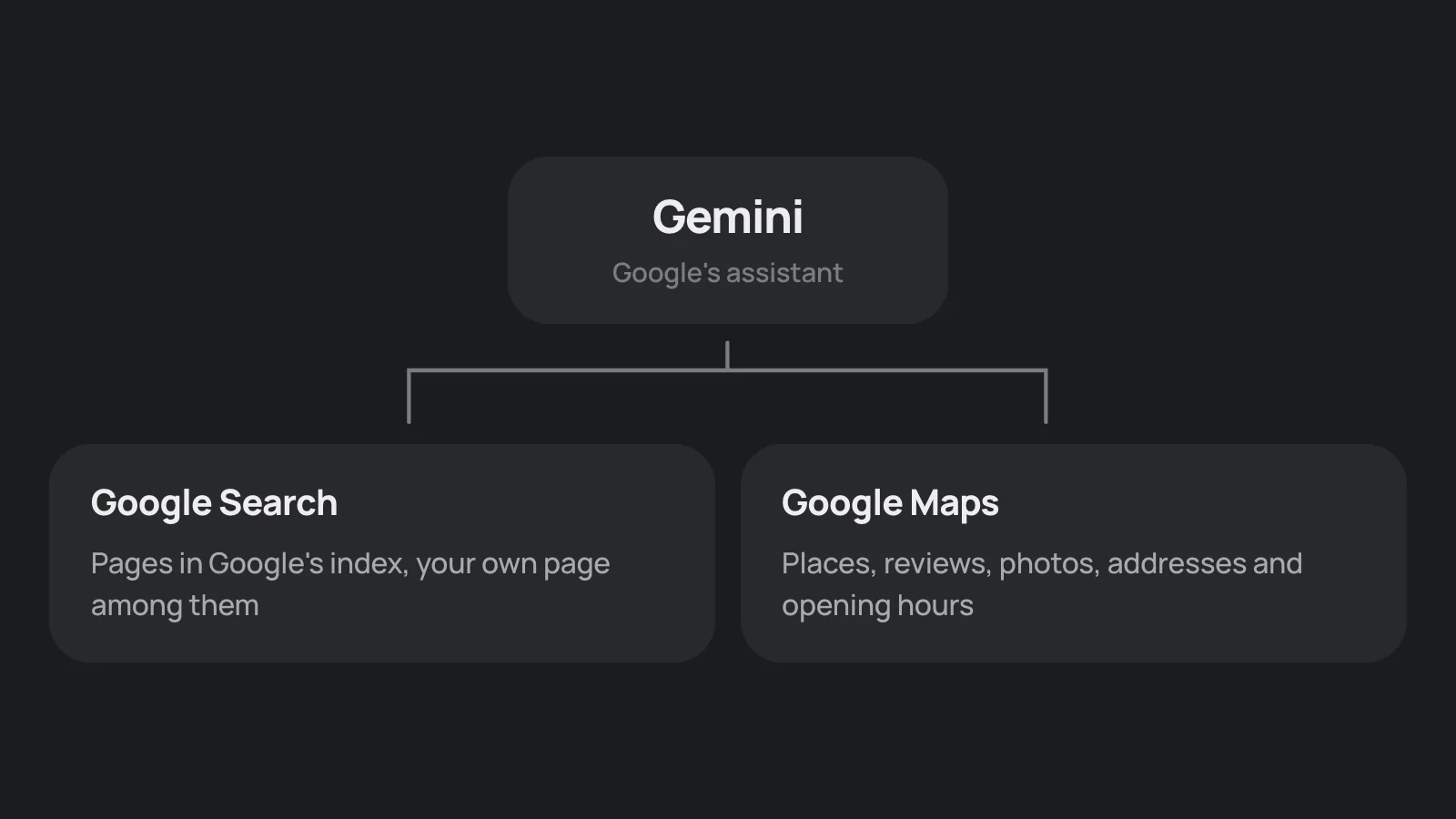
For the Gemini model, Google documents two tools. Grounding with Google Search connects it to Google's search results. Grounding with Google Maps connects it to Maps.
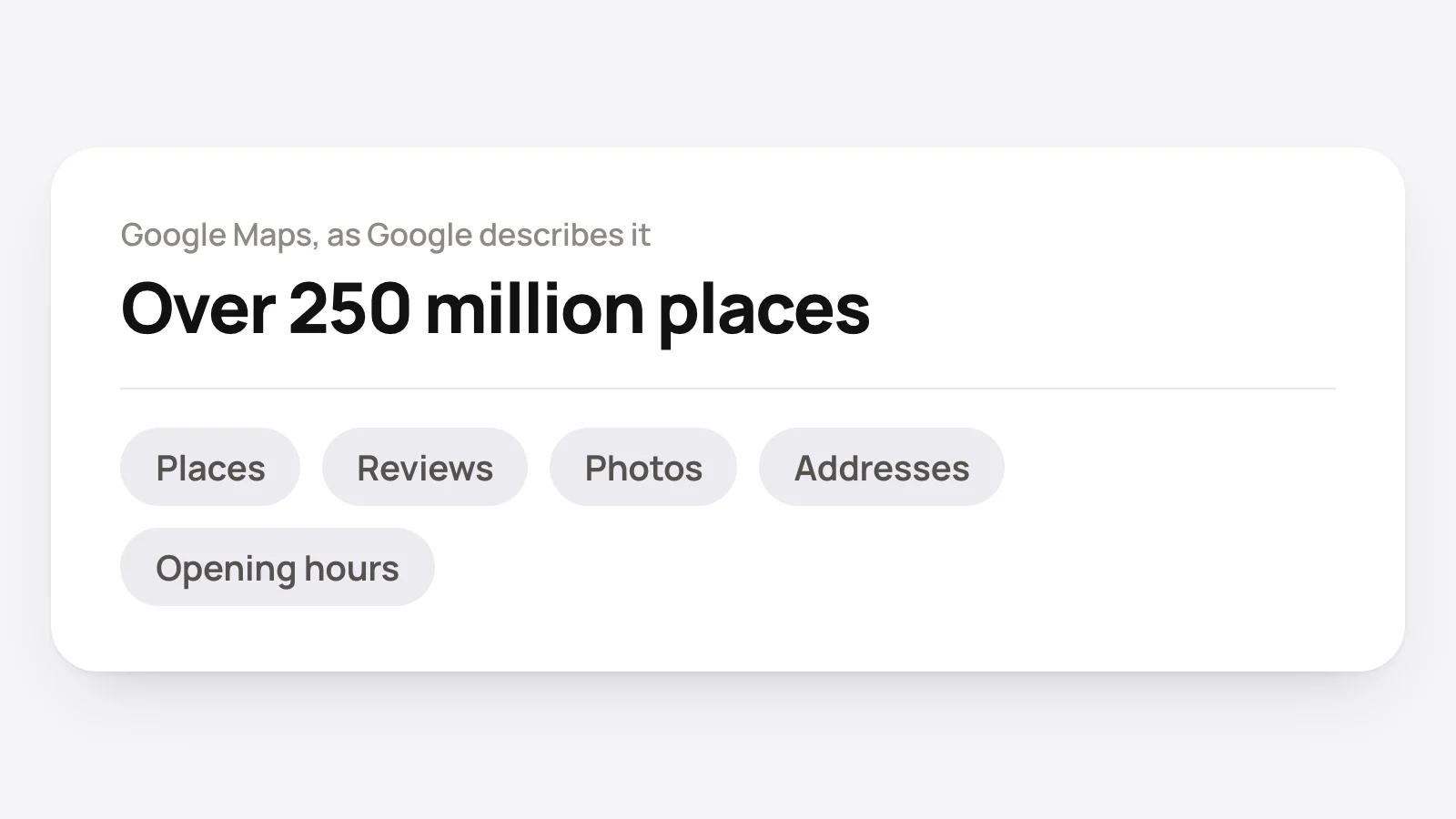
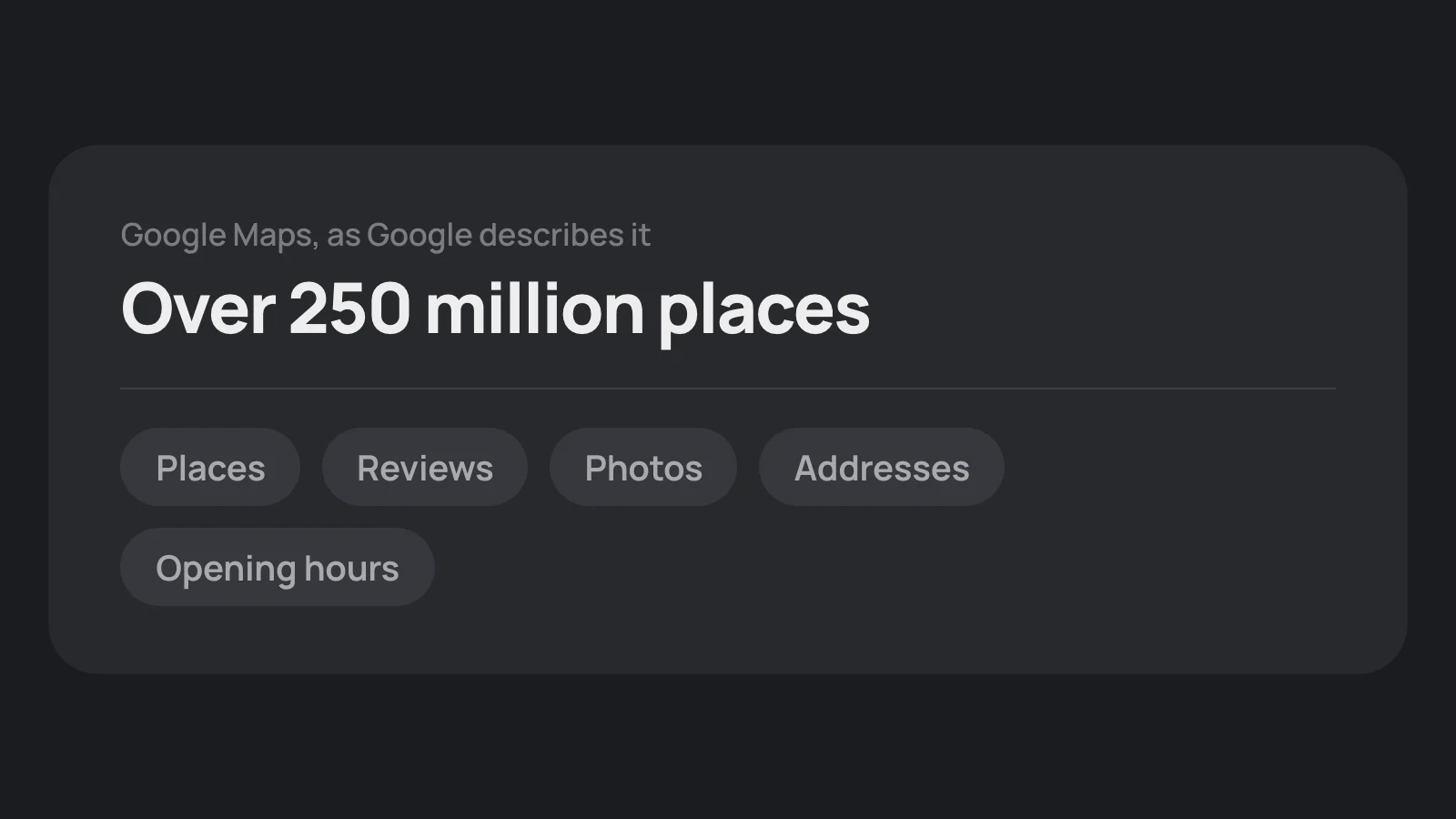
Google's page on the Maps tool says it draws on a "database of over 250 million places worldwide" and queries Maps for "places, reviews, photos, addresses, opening hours". Its examples are local questions such as "coffee shops near me".
Google does not publish how the Gemini app mixes the two for a given question. So nobody can say which one answered yours.
Does Gemini recommend businesses from Google Maps?
It can. The Maps tool exists for that. Google's page requires apps that use the tool to name Google Maps as the source of each place and to link to it.
A business reaches Maps through a Google Business Profile. Google's AI guide says a Business Profile can help a business be visible in AI responses and in other Google results.
Step 1: is your Google Business Profile complete?
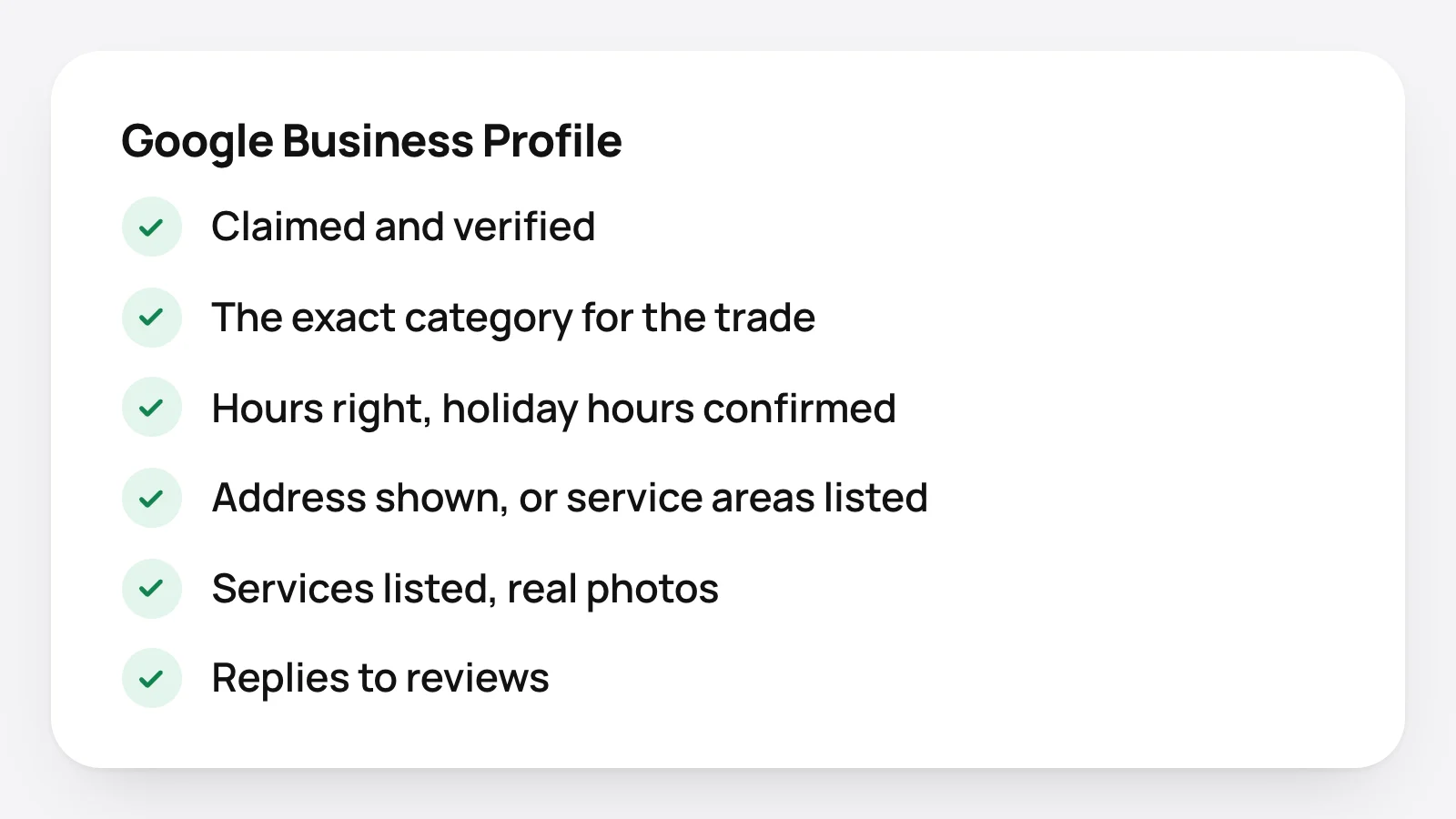
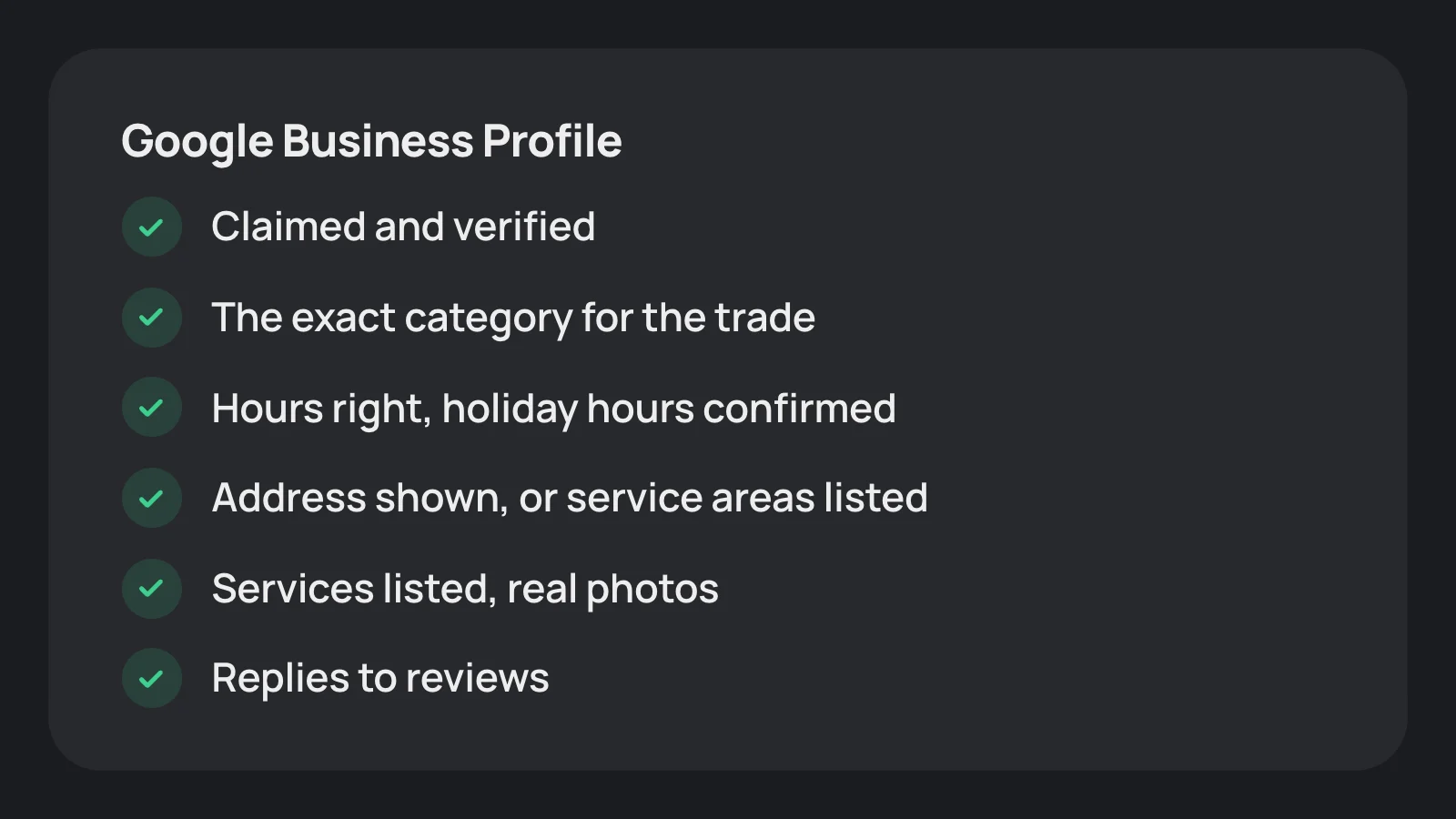
Google's local ranking page says complete and accurate information makes a business more likely to show in local results. Go through the profile once:
- It is claimed and verified.
- The category is the exact one for the trade.
- The hours are right, and holiday hours are confirmed. Details are in open now, emergencies, other languages.
- The address is shown, or the service areas are listed. Details are in near me and service areas.
- The services are listed, and the photos are of the real business.
The same page is clear about what cannot be bought: "There's no way to request or pay for a better local ranking on Google."
Step 2: has Google indexed a page with your facts?
Google's AI guide says its AI answers retrieve pages from the Google Search index, and that to be eligible a page must be indexed and able to show with a snippet. It adds: "Indexing and serving aren't guaranteed."
- Search Google for your business name and city. Is your own page in the results?
- Open the page. Are the services, area, hours and phone number text, not pictures? Google asks for important content in textual form.
- Check that nothing blocks Google's crawler. Google lists allowing crawling among its best practices.
No special markup is needed. The guide says: "Structured data isn't required for generative AI search, and there's no special schema.org markup you need to add." It also says Google Search ignores AI text files such as llms.txt.
Step 3: do real customers review you on Google?
Reviews are part of the Maps data the tool reads, and Google's local ranking page counts them toward how well known a business is. Ask customers after a job, with a link or a QR code, as Google's review tips suggest. Reply to the reviews you get.
Do not buy reviews or write them yourself. The Federal Trade Commission's rule bans fake reviews, including AI-generated ones.
Does the person's phone matter?
Location does. Google's page on the Maps tool says it can be given the person's latitude and longitude, and that local questions use them. How the Gemini app on a phone passes location is not something Google publishes in detail.
For a business the consequence is the same on any device: the answer depends on where the person is, so your page and profile have to say where you are and which areas you serve.
How do I know it worked?
Ask Gemini the question a customer would ask, with your city in it, in a new chat, at least five times, and count how often the business is named. In a study by SparkToro and Gumshoe the same question returned a different list almost every time. The method is in how to check whether assistants mention your business.
Where does OnMap fit?
An OnMap page covers step 2: it is open to Google's crawler and the facts are plain text. Steps 1 and 3 stay with the business. The dashboard has a checklist for the profile, shown on the dashboard page.
Sources
- Google: Gemini API: Grounding with Google Search (official documentation)
- Google: Gemini API: Grounding with Google Maps (official documentation)
- Google: Optimizing your website for generative AI features on Google Search (official documentation)
- Google: Tips to improve your local ranking on Google (official documentation)
- Google: AI features and your website (official documentation)
- Google: Tips to get more reviews (official documentation)
- Federal Trade Commission: Final rule banning fake reviews and testimonials (August 2024) (official documentation)
- SparkToro and Gumshoe: AIs are highly inconsistent when recommending brands or products (January 2026) (study)
Sources were last read on November 15, 2026. Assistants change often, so a fact here can go out of date.
Keep reading
How to get Claude to recommend your business
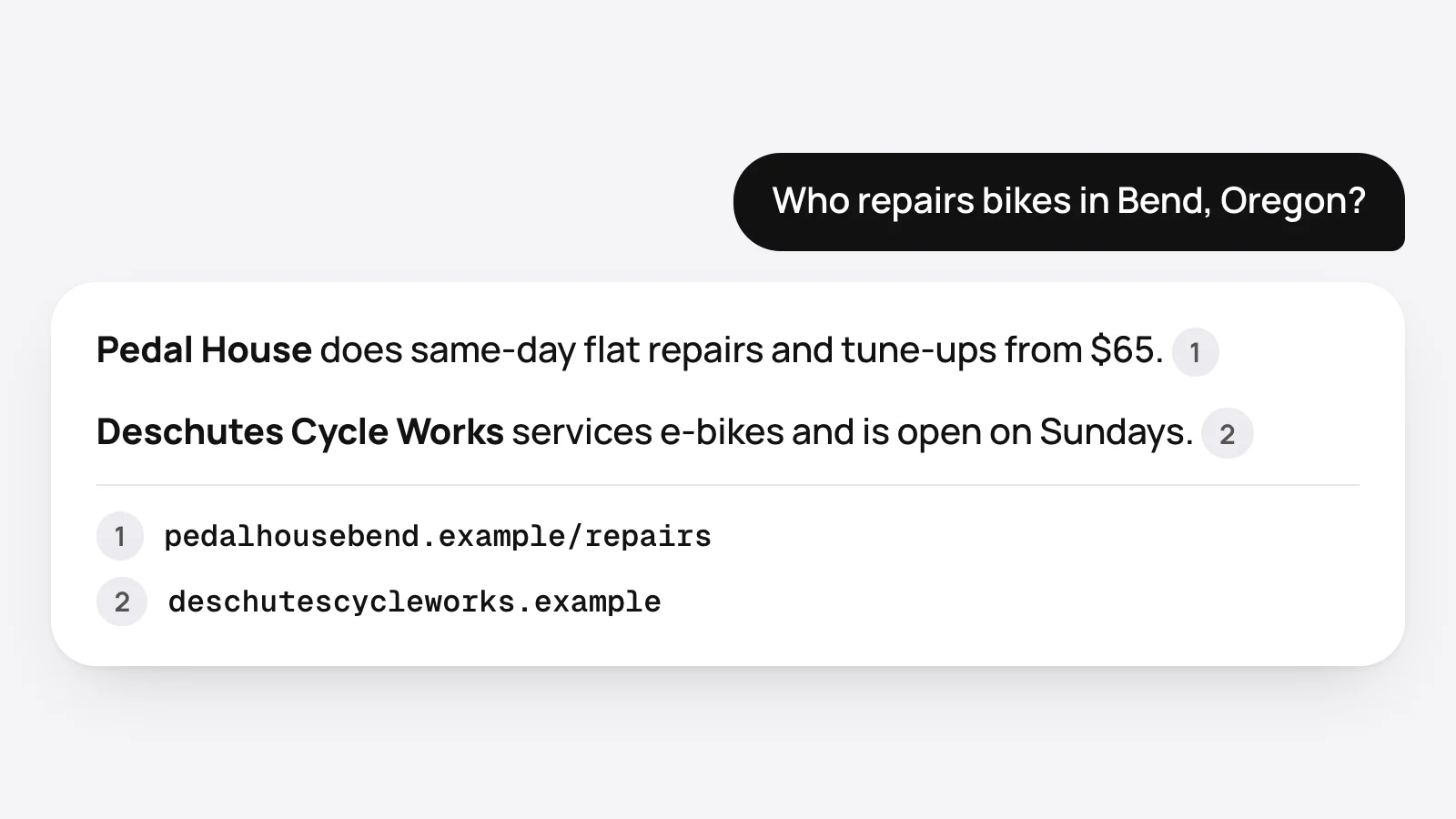
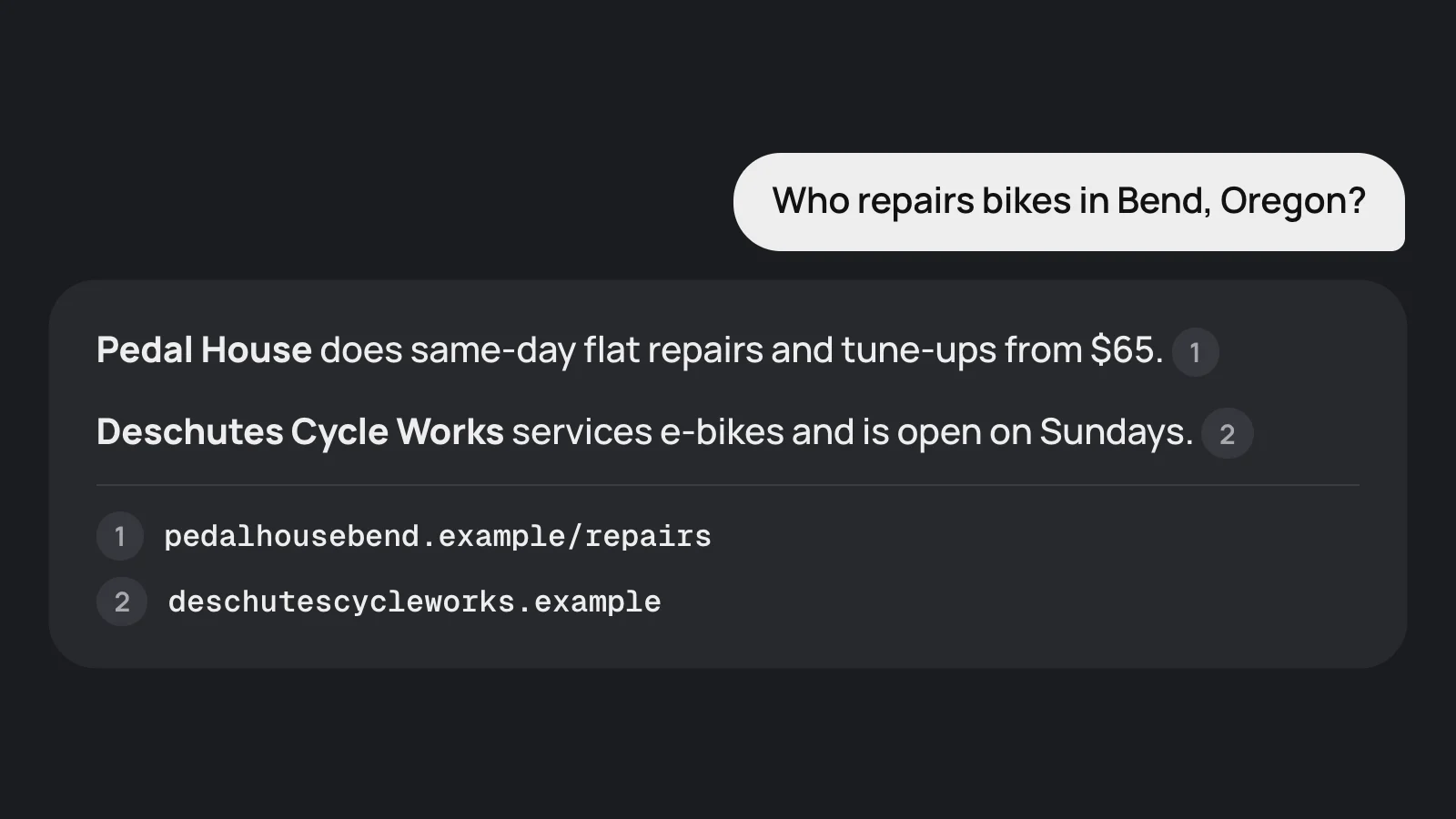
Claude searches the web when a question needs current information and cites the pages it used. Let Anthropic's crawlers in, be findable in the search providers it uses, and put the facts in text.
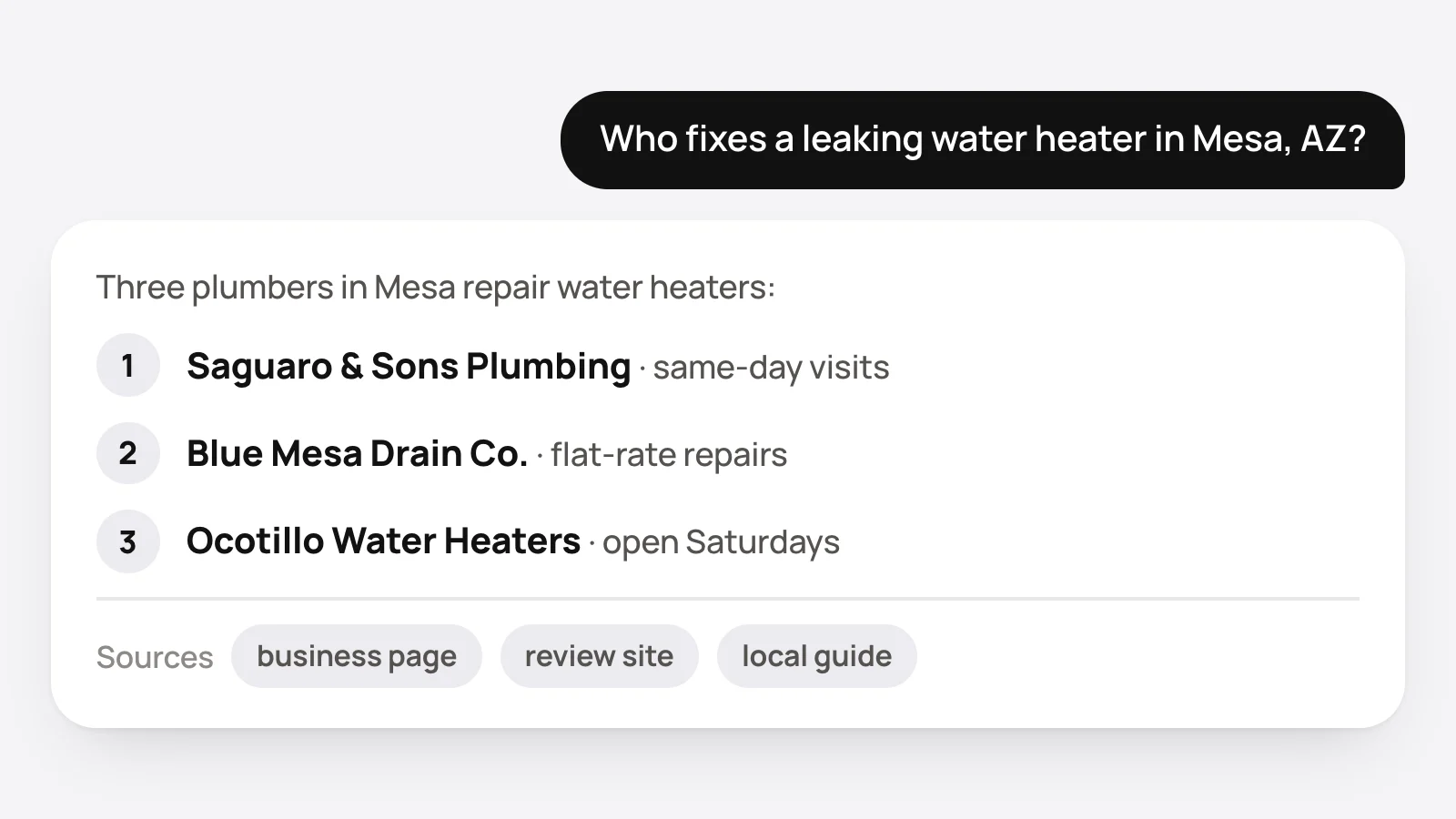
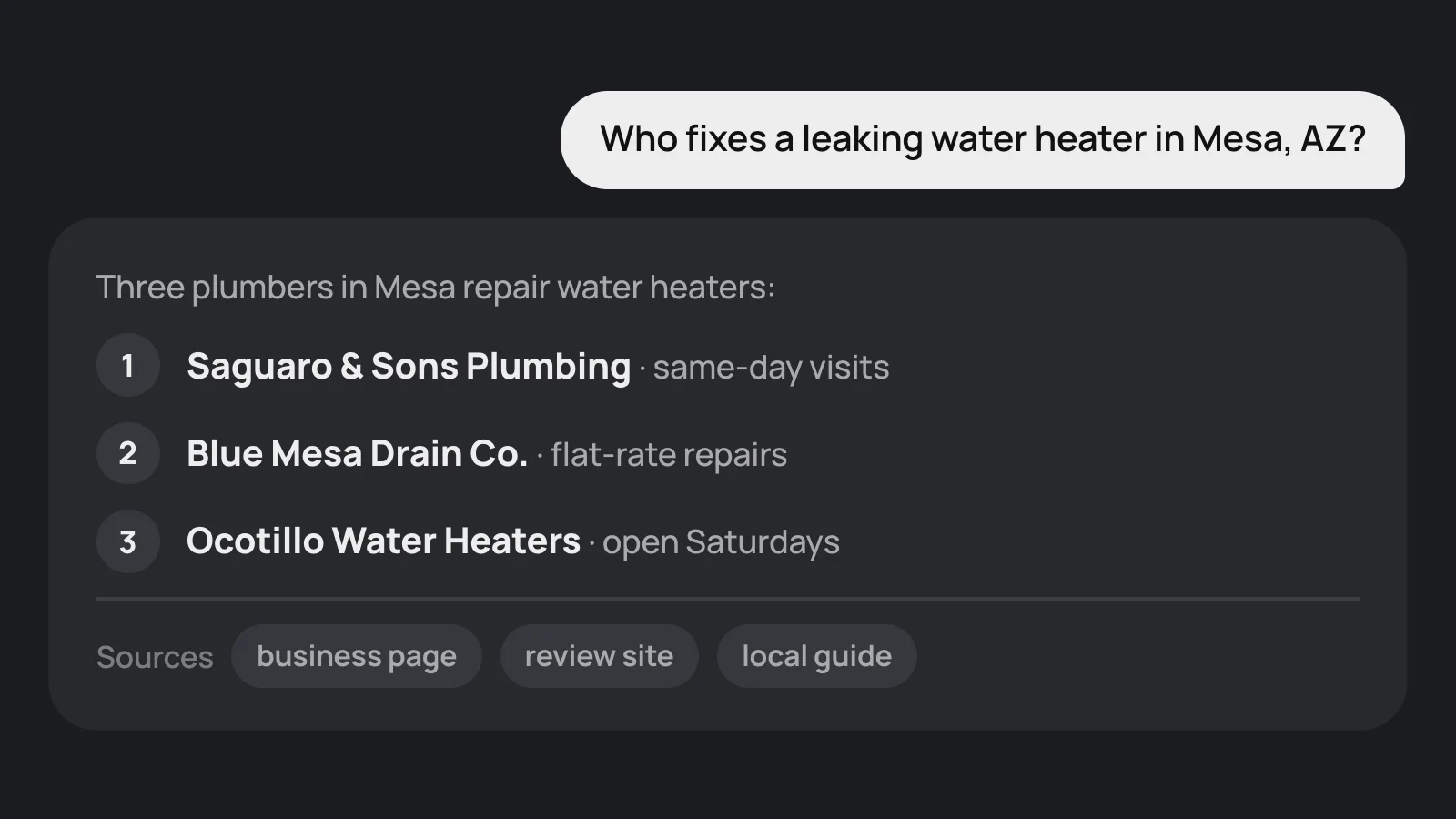
How to get your business to show up in ChatGPT
Four steps for a local business that wants ChatGPT to name it: let OpenAI's search crawler in, put the facts in text, keep listings the same, and earn real reviews.
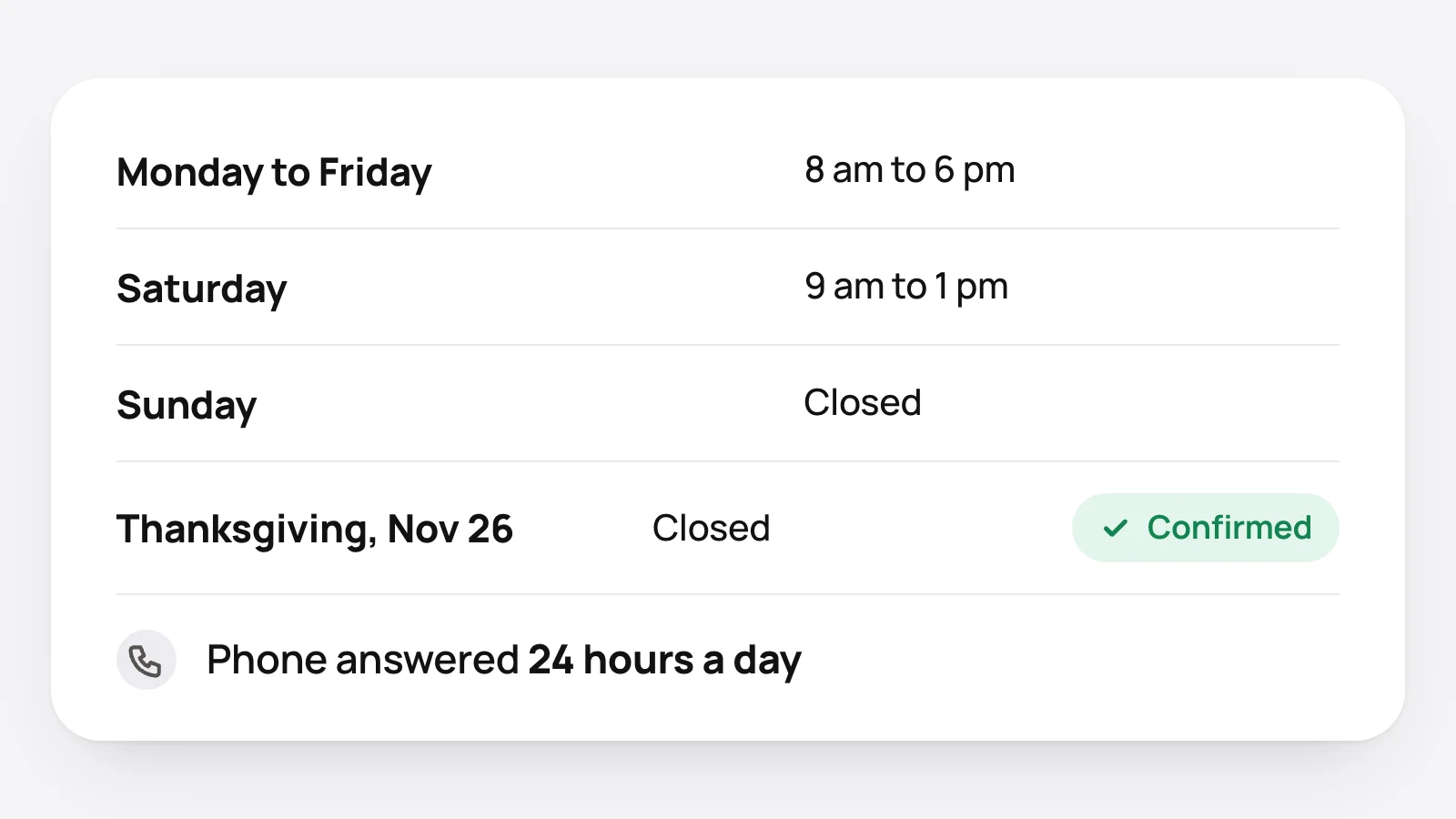
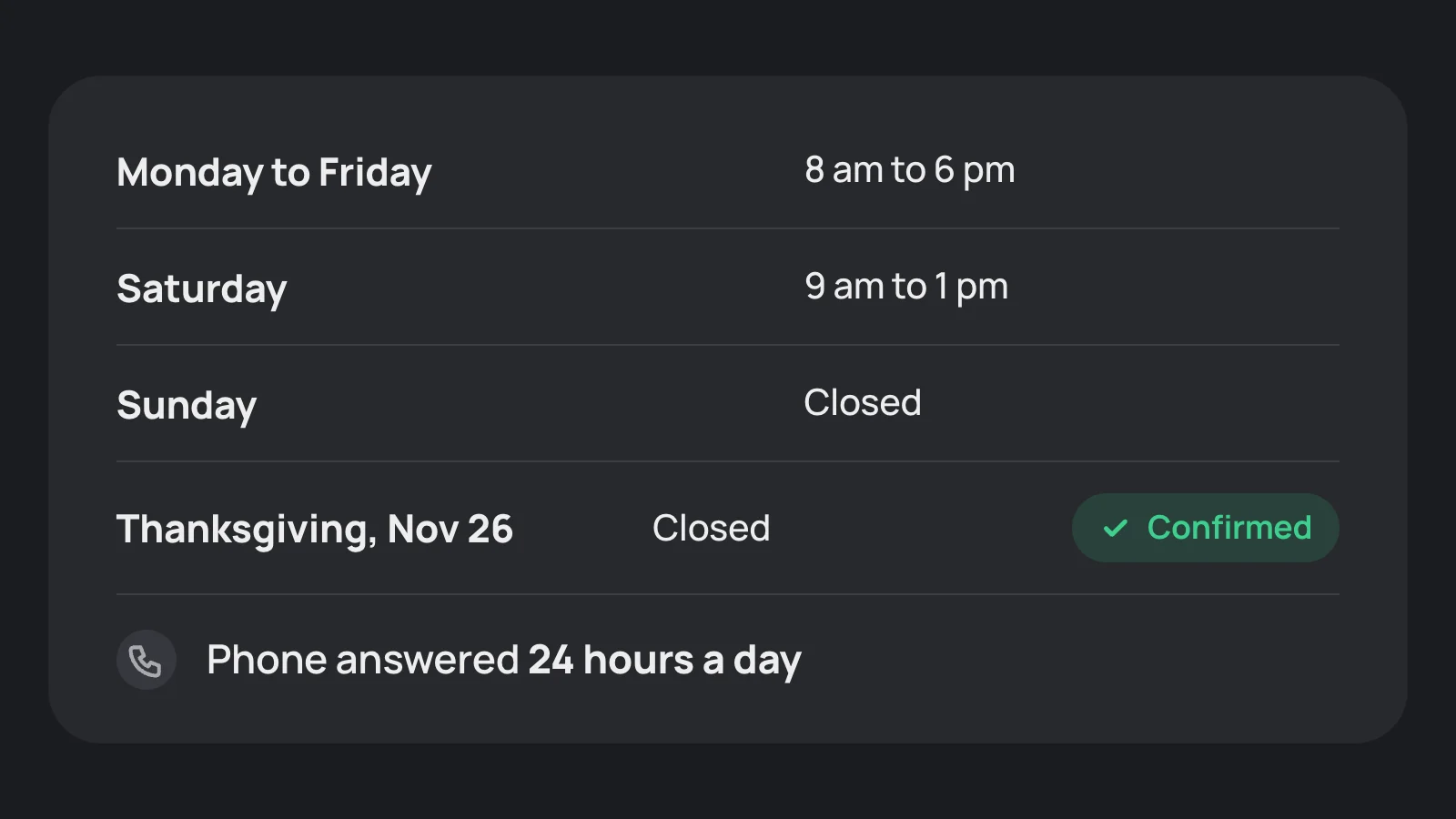
How to be found for "open now", emergency and Spanish-language questions
What to publish so assistants can answer who is open now, who takes emergencies and who serves customers in Spanish: exact hours, holiday hours, a plain 24/7 sentence and a real page per language.