What does "near me" mean to an assistant?
The words "near me" carry no place. The assistant has to fill one in, and each vendor documents a way to do it.
- ChatGPT. OpenAI's help page on search says ChatGPT may add the person's general location to the searches it runs.
- Gemini. Google's Maps tool for Gemini can be given the person's latitude and longitude. Google's page says location matters for local questions, and that specific or non-local questions are unlikely to be influenced by it.
- Claude. The search tool Anthropic offers to developers has a setting that localizes results by city, region, country and time zone.
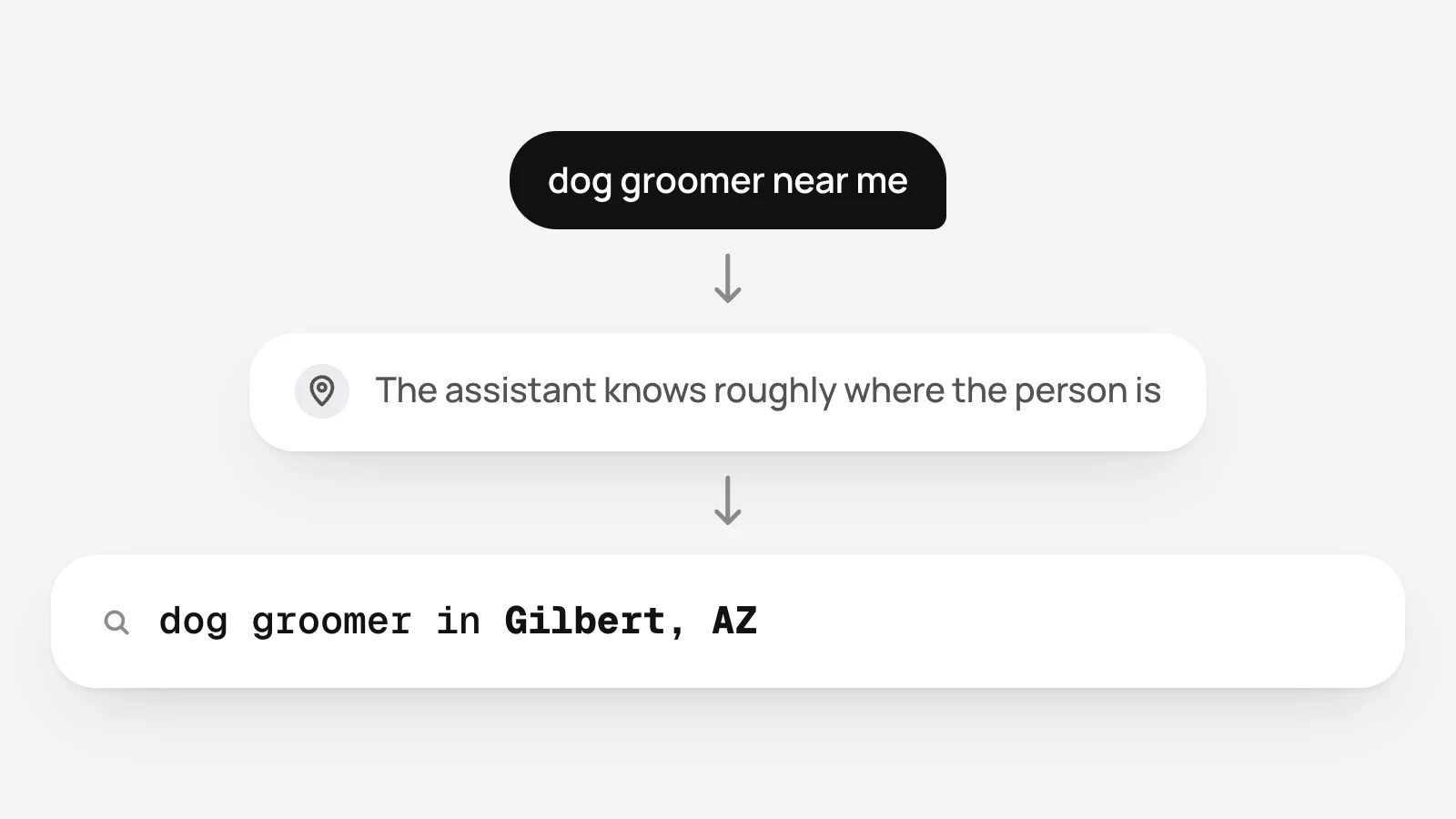
So the question that reaches the web usually names a town or a neighborhood. A page that never says where the business works has nothing for that search to match. That last sentence is our inference: no vendor publishes how a business is picked.
Why is a business farther away named instead of mine?
Distance is one of three things Google weighs in local results. Its local ranking page names relevance, distance and how well known a business is, and adds: "If a customer doesn't share where they are, Google uses what it knows about their location." A well known business a little farther away can come before a closer one.
No vendor documents a distance limit for assistants. Two checks are worth five minutes:
- Ask the question again with the place written out, such as "dog groomer in Gilbert, AZ". If you appear now, the assistant placed the first question somewhere else.
- Read your own page. Is the town named in the first lines, as text?
How do I tell assistants which areas I serve?
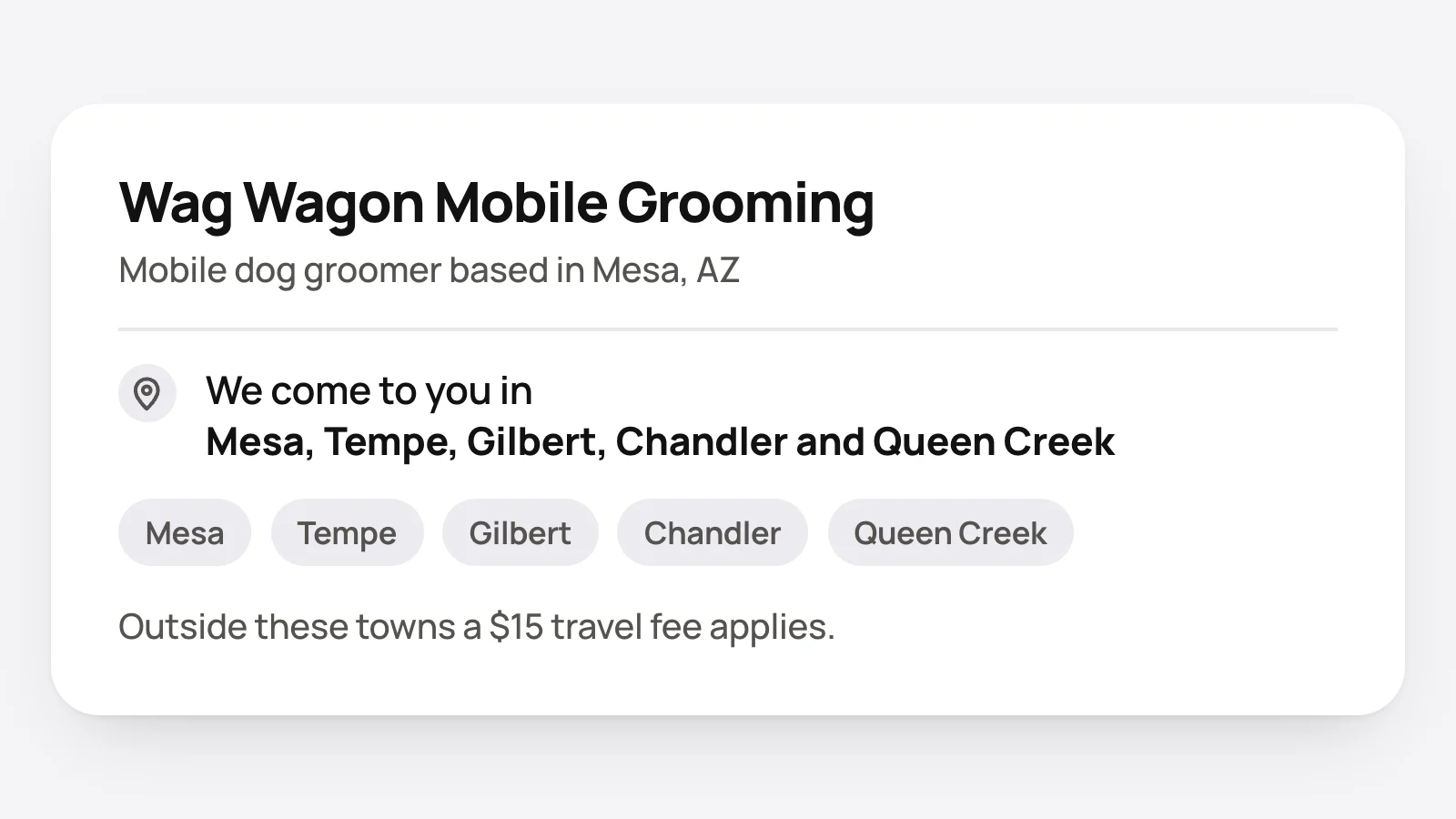
- Write the areas as a sentence on your page. "We serve Mesa, Tempe, Gilbert, Chandler and Queen Creek." A map picture alone cannot be read.
- Set the same areas on your Google Business Profile. Google's service area page allows up to 20 areas, set by city, postal code or another type of area. A radius around the business is not accepted.
- Keep the area realistic. The same page says its edges should not be more than about 2 hours of driving from where the business is based.
- Say what changes outside the area. A travel fee or a minimum job is a fact a customer asks about. Write it as a sentence with the amount.
A suburb next door or a whole county works the same way: name it. "We also serve Apache Junction" or "all of Maricopa County" is enough. Do not copy the page once for every town. Google's AI guide warns against making a page for every variation of a search, and the reasons are in match what customers ask for.
Can I be named without a storefront, or from home?
Yes. Google has a profile type for this. Its service area page defines a service-area business as one that "visits or delivers to customers directly but doesn't serve customers at their business address".
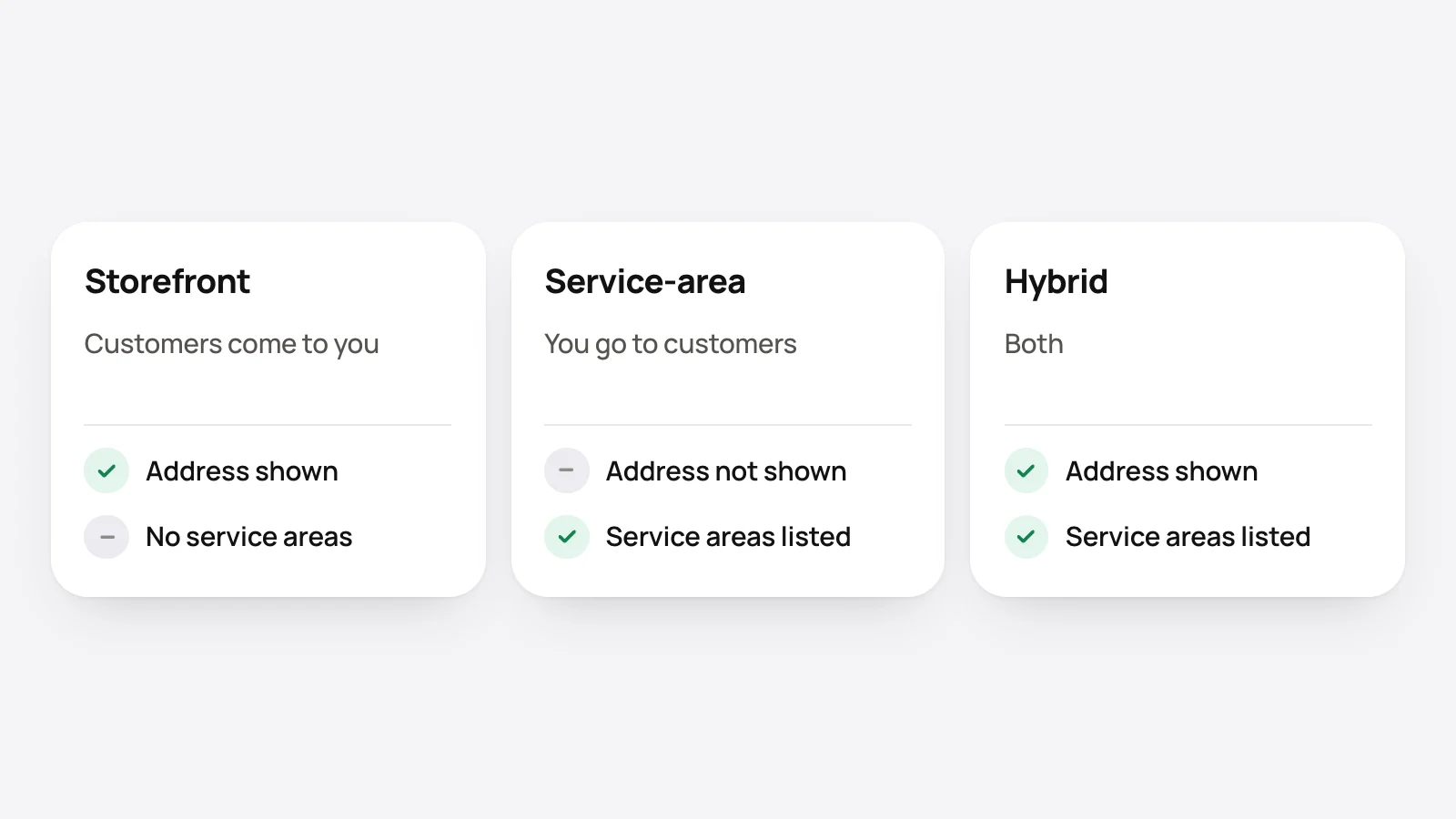
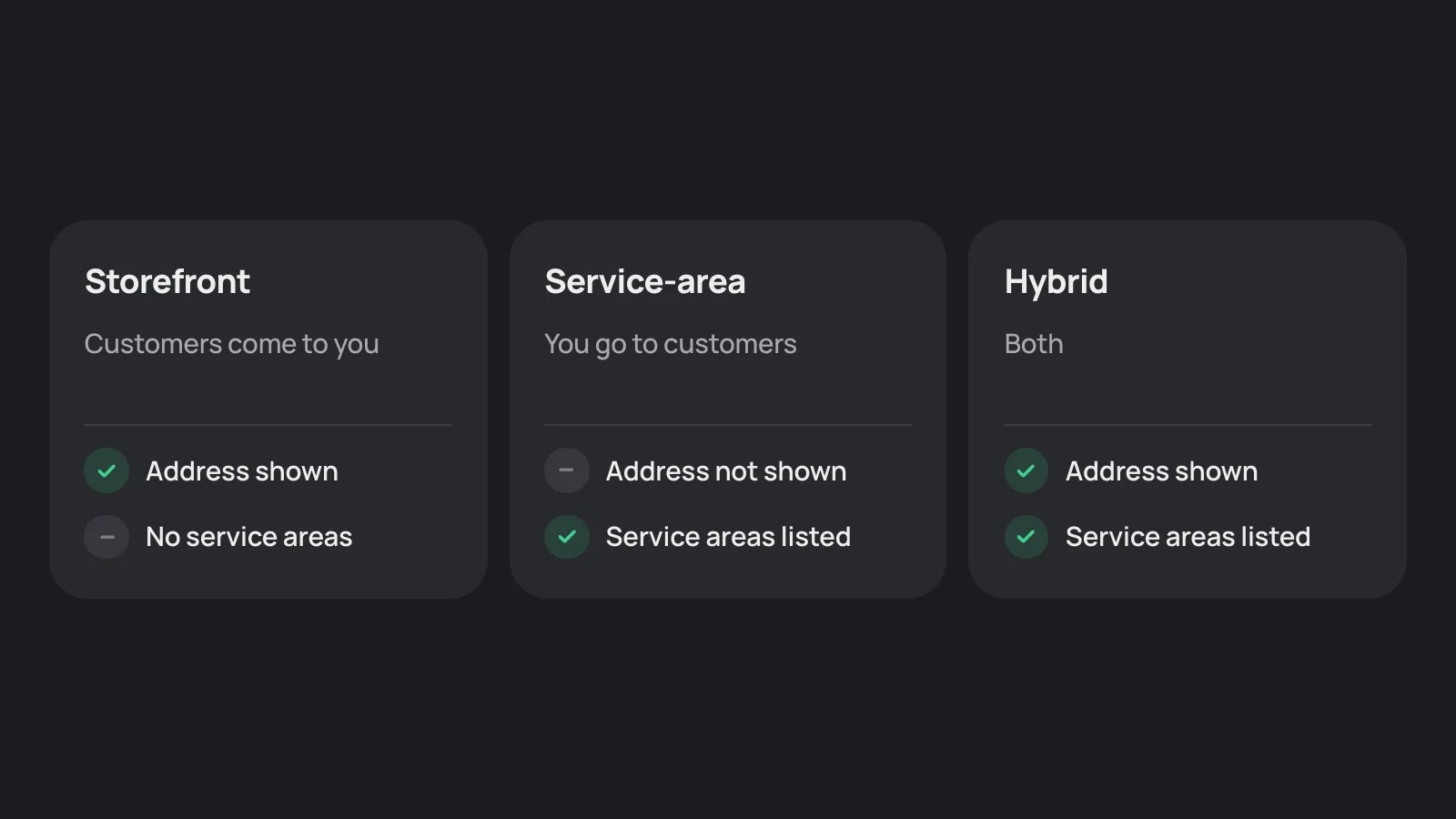
- A home address stays private. Google's guidelines say: "If you're a service-area business, you should hide your business address from customers."
- A P.O. box does not count. The guidelines say mailboxes at remote locations are not acceptable, and that a virtual office is not eligible unless it is staffed during business hours.
- On your own page, the city and state are enough. Write the city you are based in and the areas you travel to. Leave the street out.
Do small towns and rural areas count?
Nothing we found limits local answers to big cities. Google's three factors apply everywhere. Our inference: in a small town fewer businesses publish a page at all, so one accurate page that names the town and the county has less to compete with.
Name the places people there actually say: the town, the county, and the nearest larger town customers drive from.
What if my clients are everywhere and I work online?
Then local listings are the wrong tool. Google's guidelines say a business qualifies for a profile if it has a location customers can visit, or travels to customers where they are. A business that only meets clients by video does not fit either.
Say it plainly on your page instead: who you work with, that the work is done online, and the states or countries you can take clients from. If a license limits where you may work, name the states.
Where does OnMap fit?
An OnMap page has a field for the areas you serve and shows them as text. A business that travels to its customers shows its city and areas, with no street address. The Google Business Profile stays with you. See how it works.
Sources
- OpenAI: Searching the web with ChatGPT (official documentation)
- Google: Gemini API: Grounding with Google Maps (official documentation)
- Anthropic: Web search tool (official documentation)
- Google: Tips to improve your local ranking on Google (official documentation)
- Google: Manage your service areas for service-area and hybrid businesses (official documentation)
- Google: Optimizing your website for generative AI features on Google Search (official documentation)
- Google: Guidelines for representing your business on Google (official documentation)
Sources were last read on November 15, 2026. Assistants change often, so a fact here can go out of date.
Keep reading
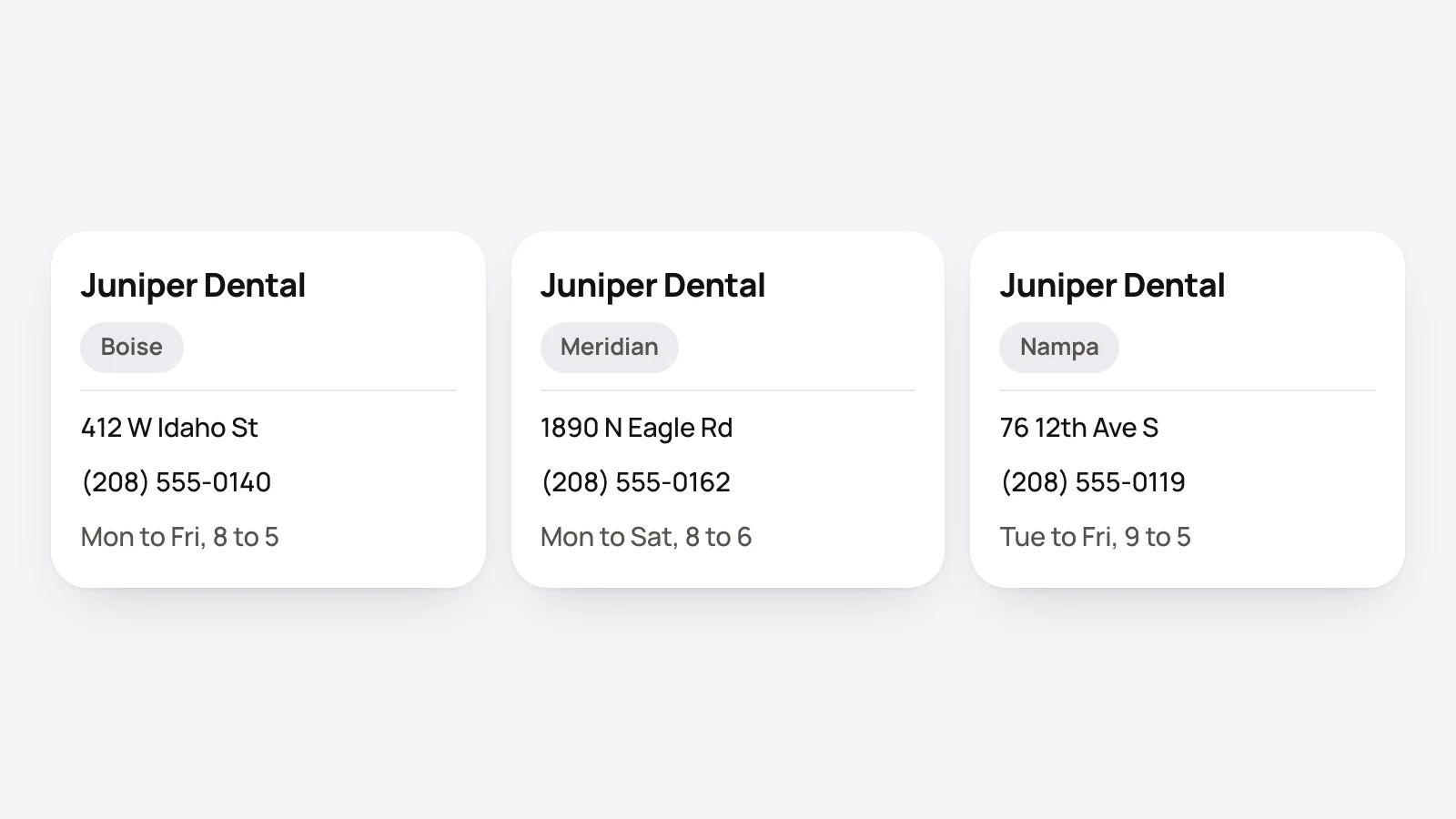
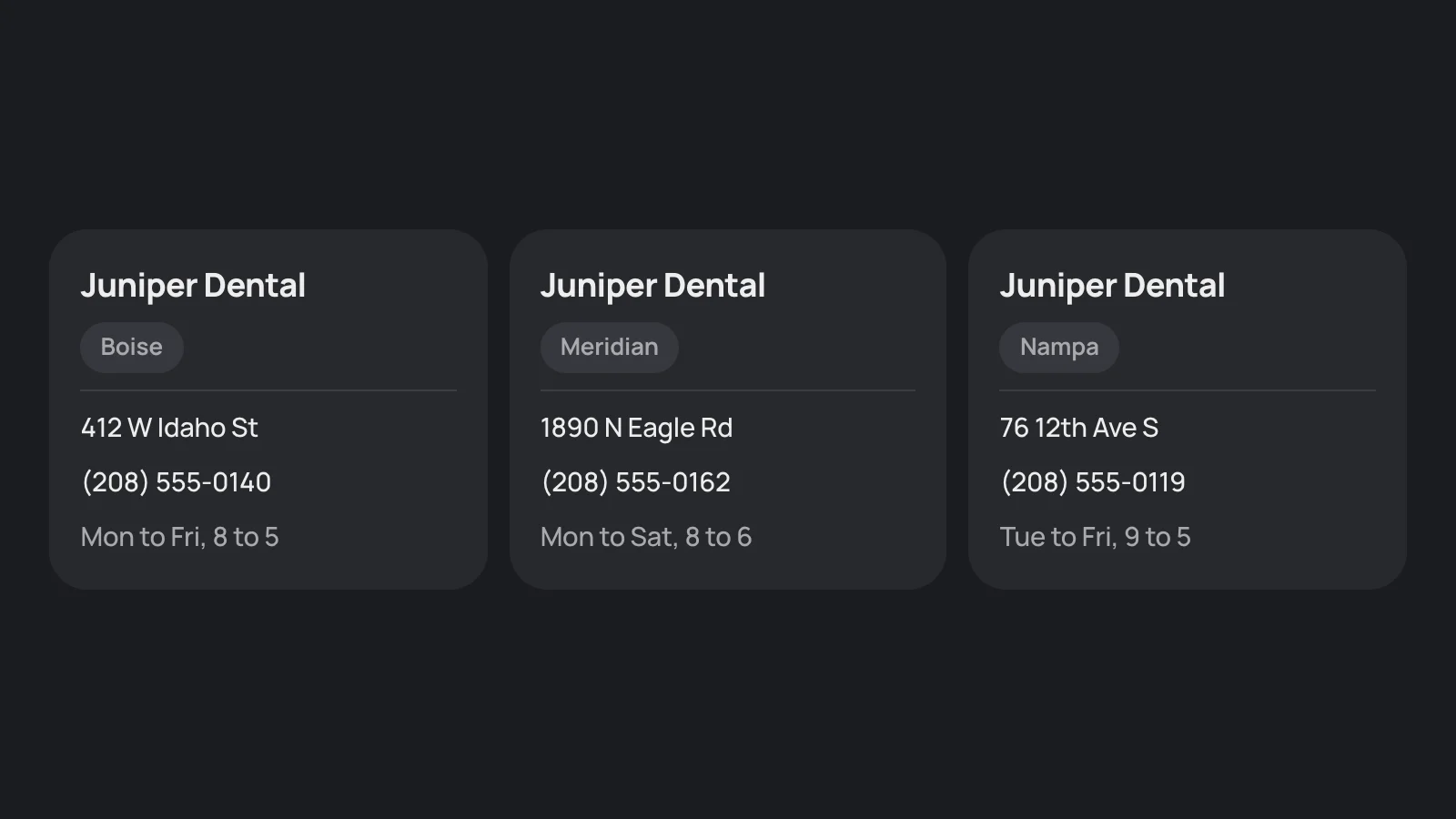
How to get each location of a multi-location business named by AI
For a business with more than one location: what each branch needs on the web so assistants name the right one, what Google requires, and what to do about towns you only travel to.
How to get matched to what customers ask AI for
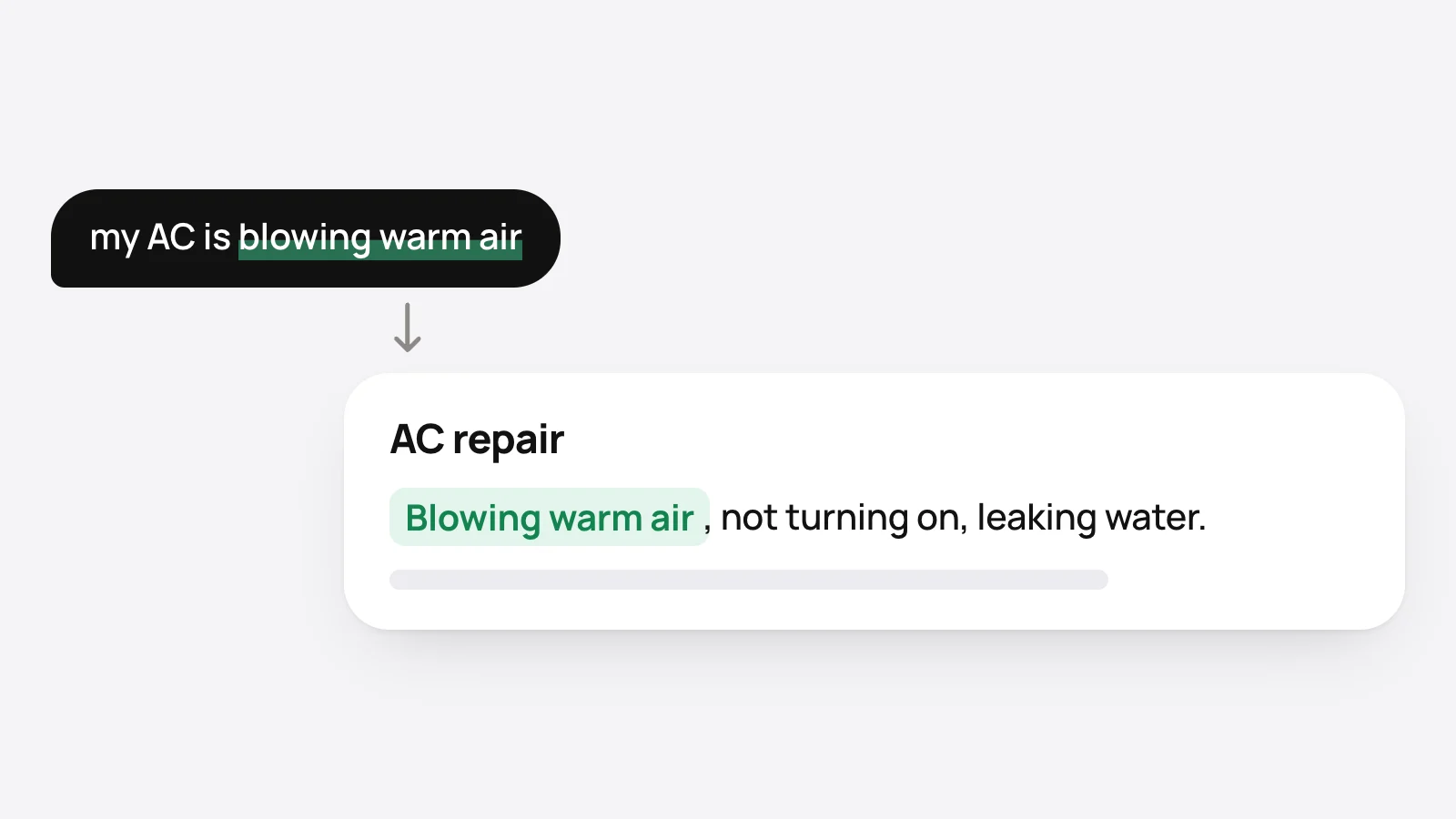
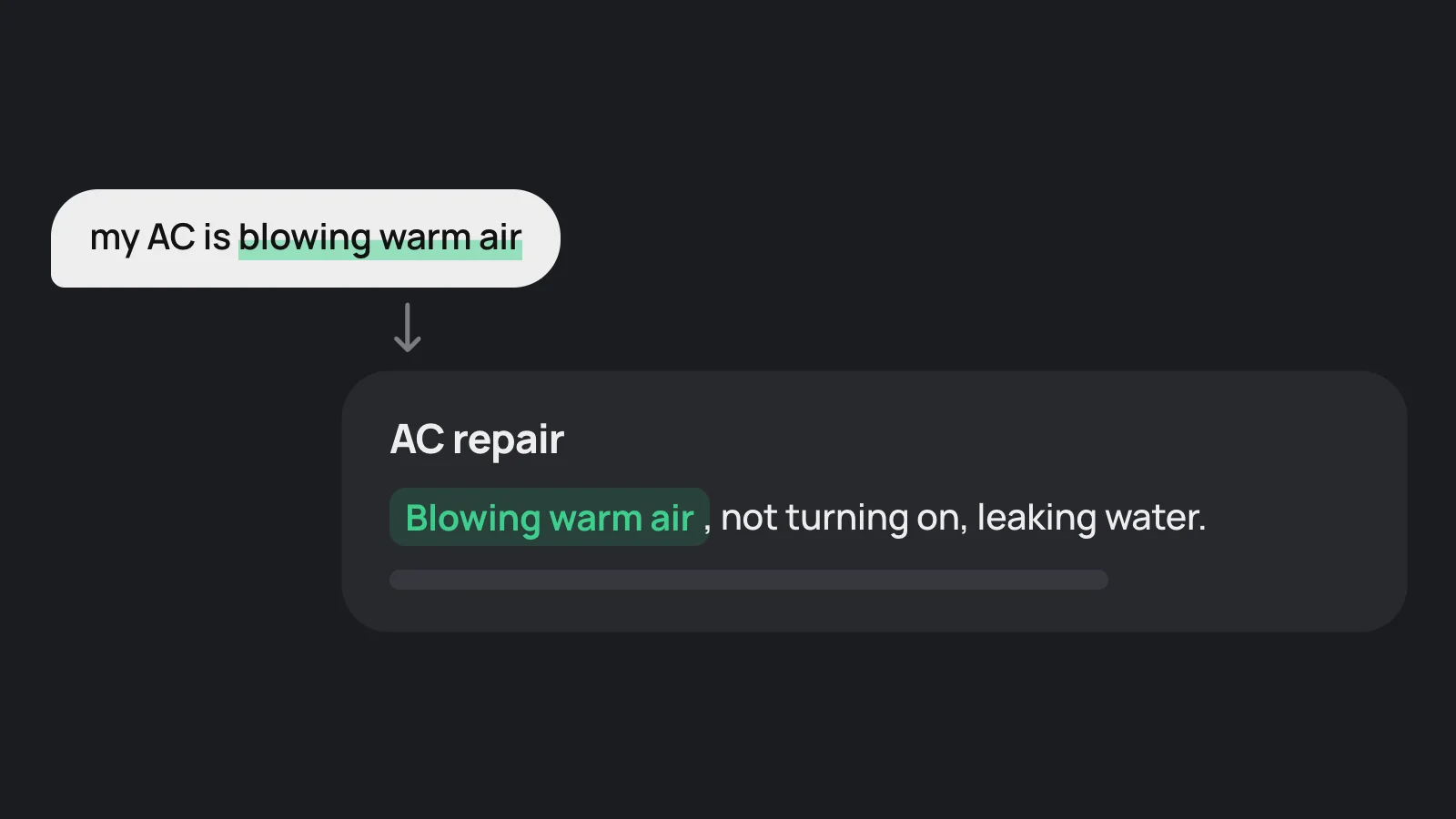
Customers describe a problem, not a service name. How to write a local business page so an assistant can connect a specific request, a city or a follow-up question to the business.
How to get business details into AI answers
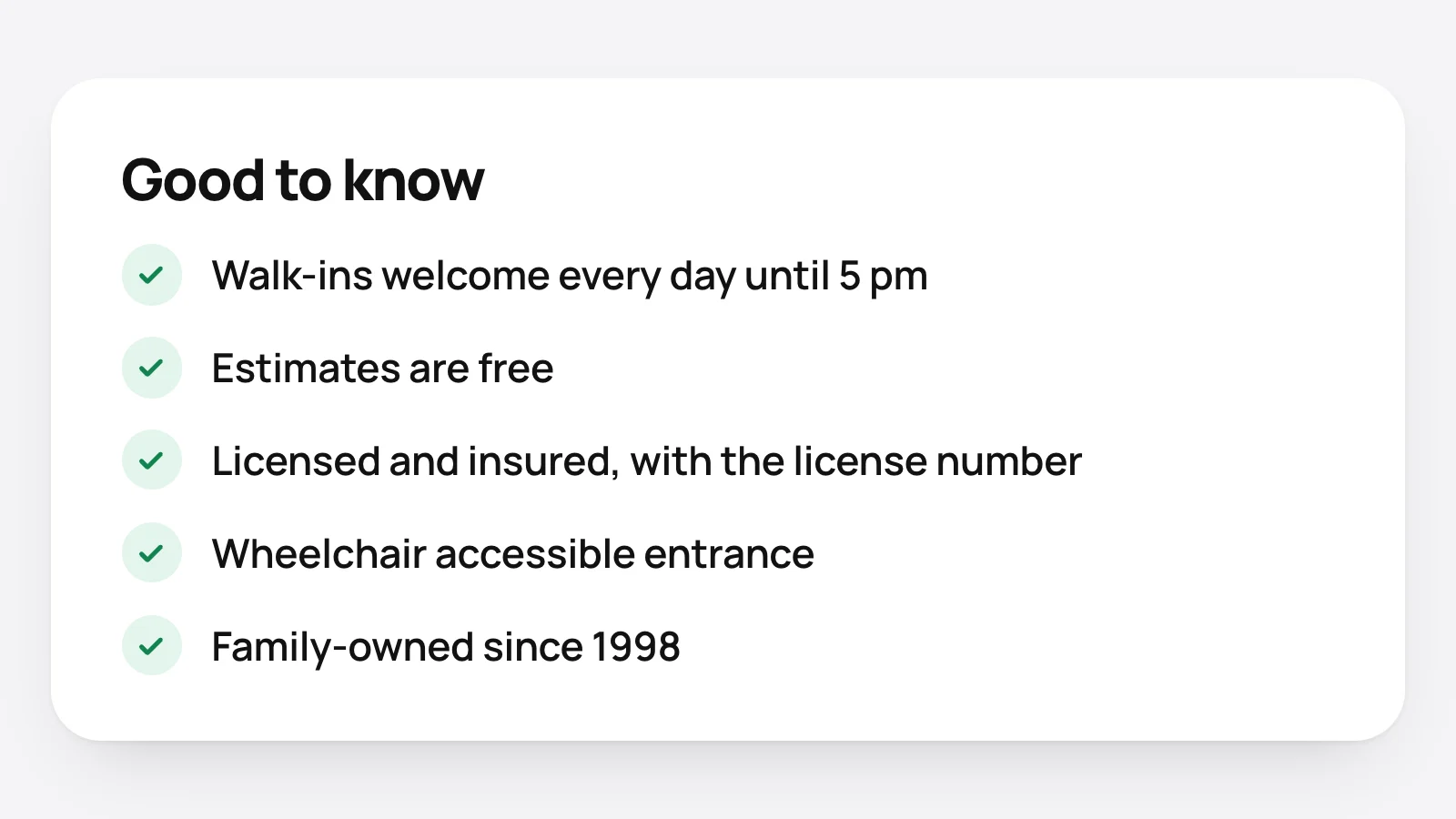
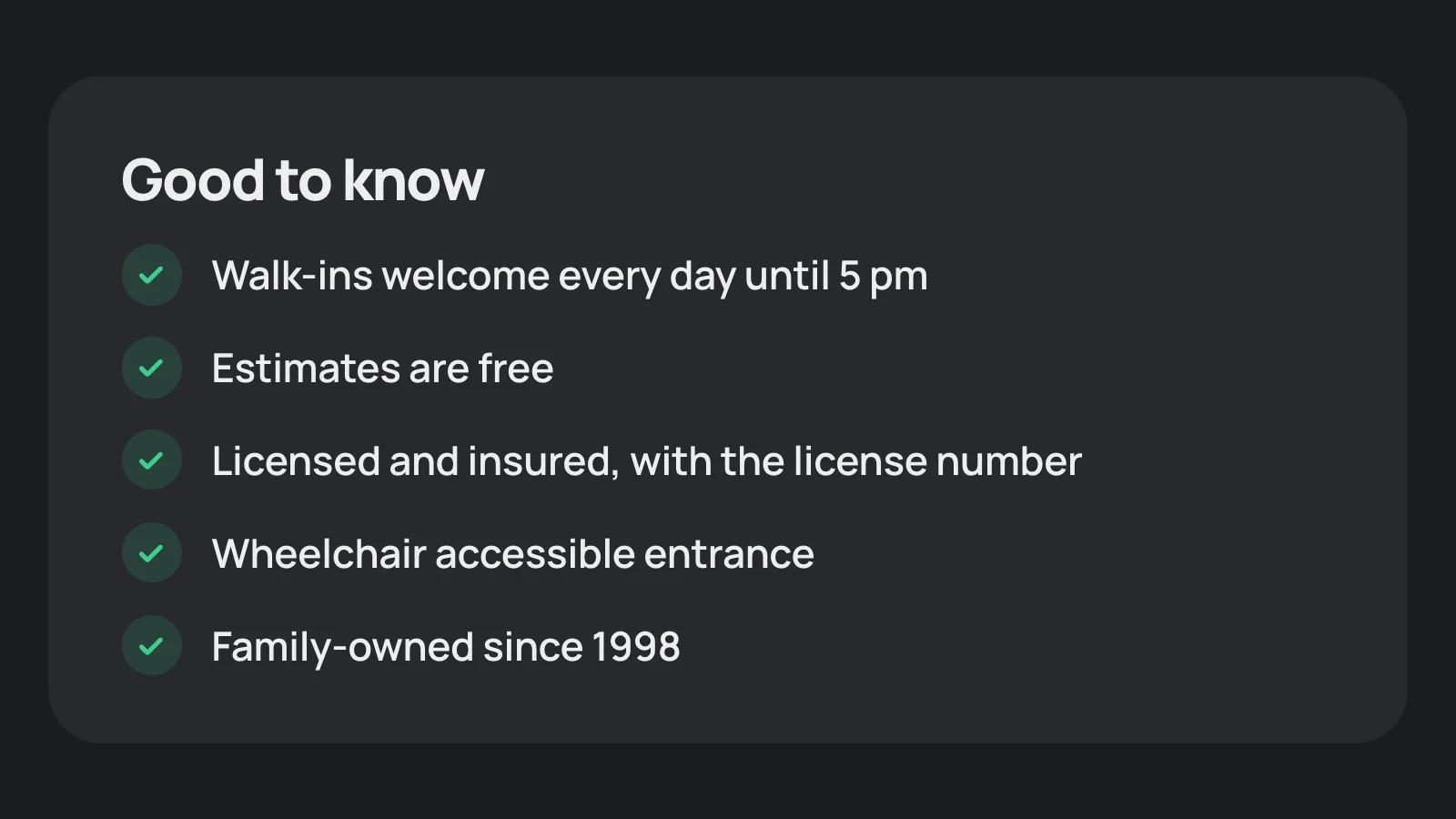
How to get an assistant to mention that a business takes walk-ins, gives free estimates, is licensed and insured, wheelchair accessible or family-owned: write it as text, in more than one place.