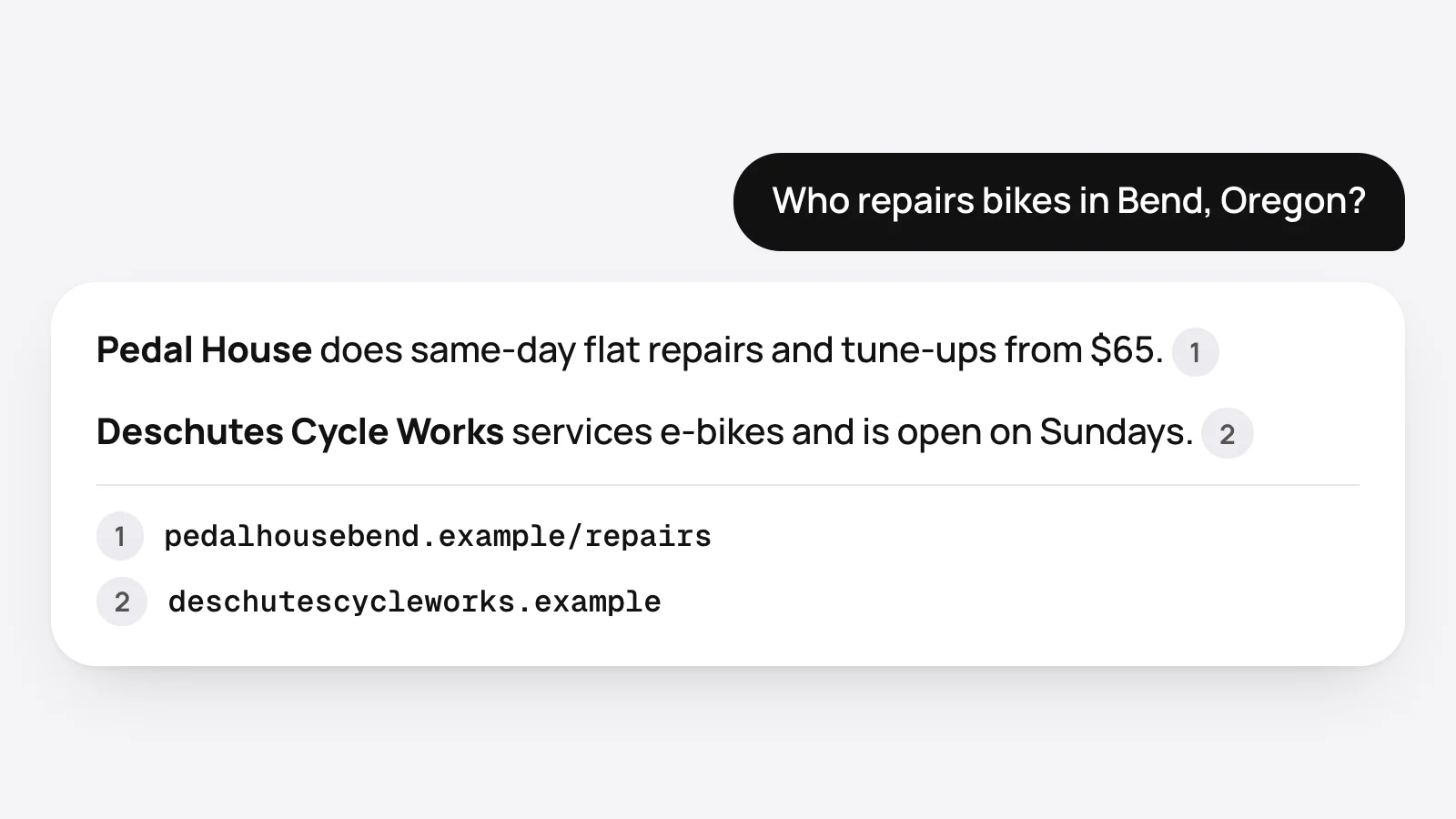
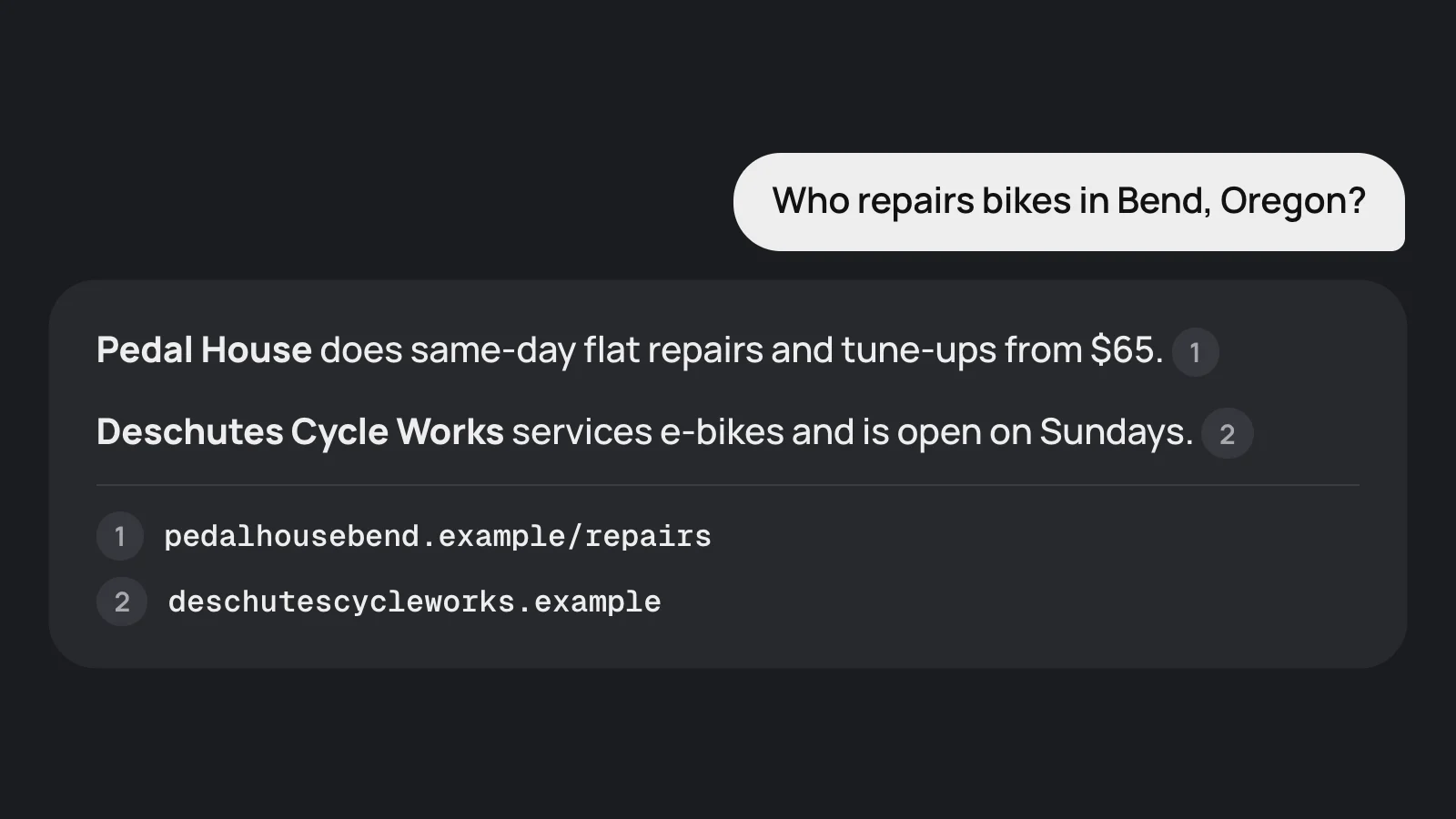
Does Claude search the web for local businesses?
It can, when web search is on. Claude's help page on web search says Claude calls a search tool when a question needs current information, and adds: "Every response includes citations".
Anthropic's documentation of the search tool lists what triggers a search. One item is information about specific organizations that might have changed. A question about who is open, what something costs or who serves a town is that kind of question.
Without a search, Claude answers from what it learned in training, which has a cut-off date and may not include a small business at all.
Which search engine does Claude use?
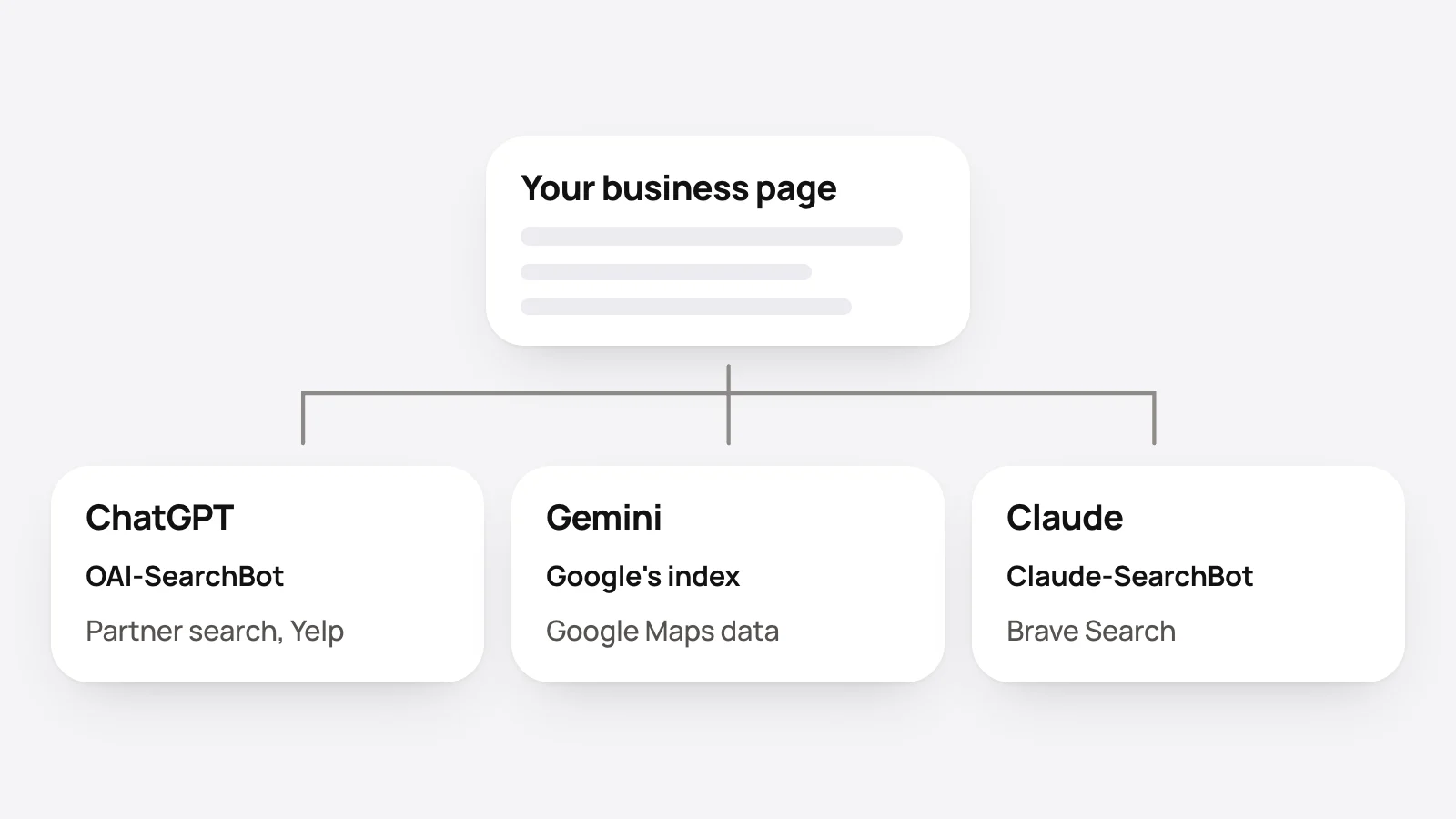
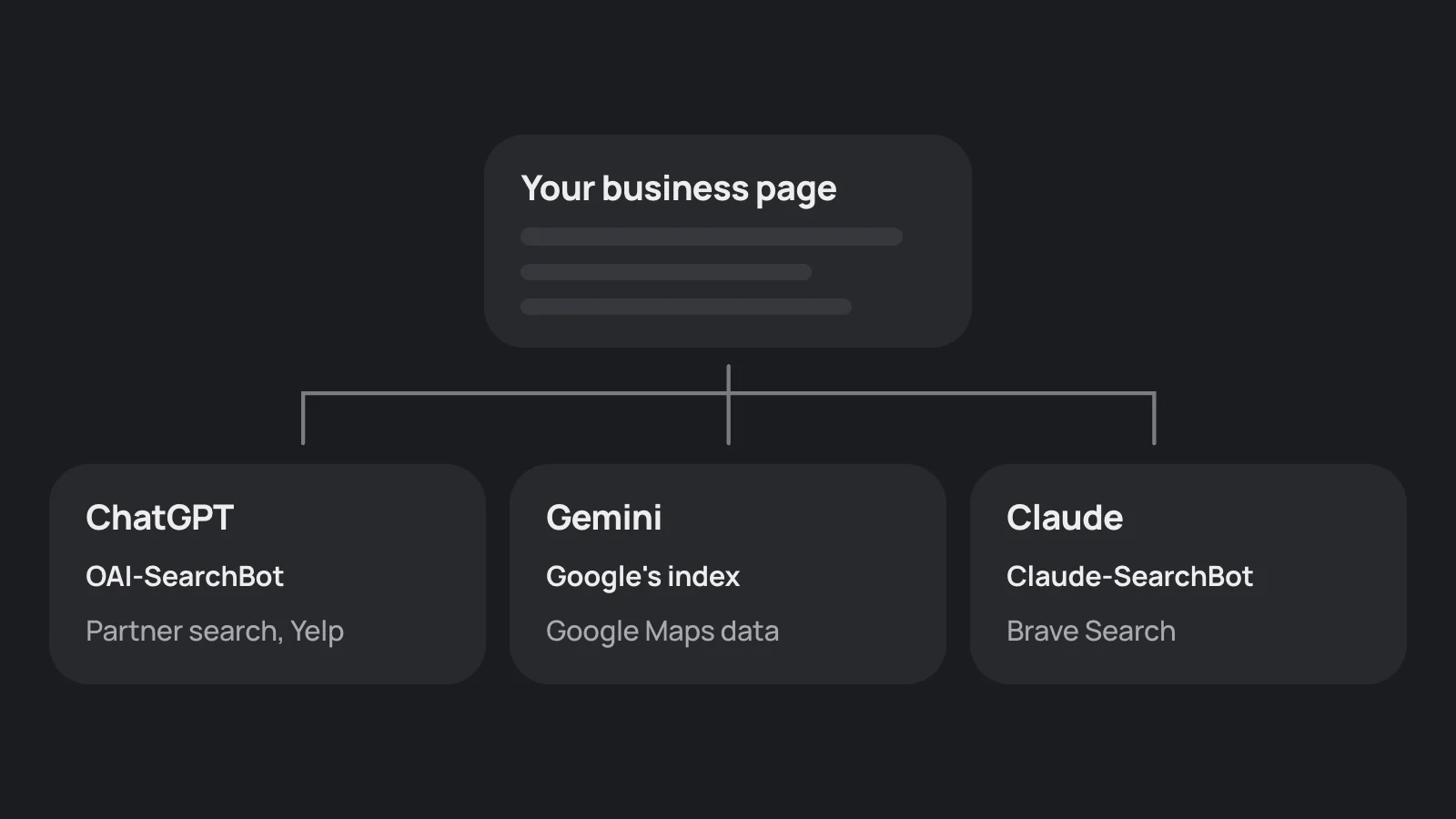
Anthropic's subprocessor list names Brave Search, TurboPuffer and Parallel Web Systems under web search. Anthropic does not say how the work is split between them. TechCrunch reported in March 2025 that Claude's citations matched Brave's results.
Anthropic also runs its own crawlers, described in the next step. We found no documentation of a listings database such as the ones Google and Yelp keep.
Step 1: can Anthropic's crawlers read your page?
Anthropic documents three crawlers and says all three follow robots.txt.
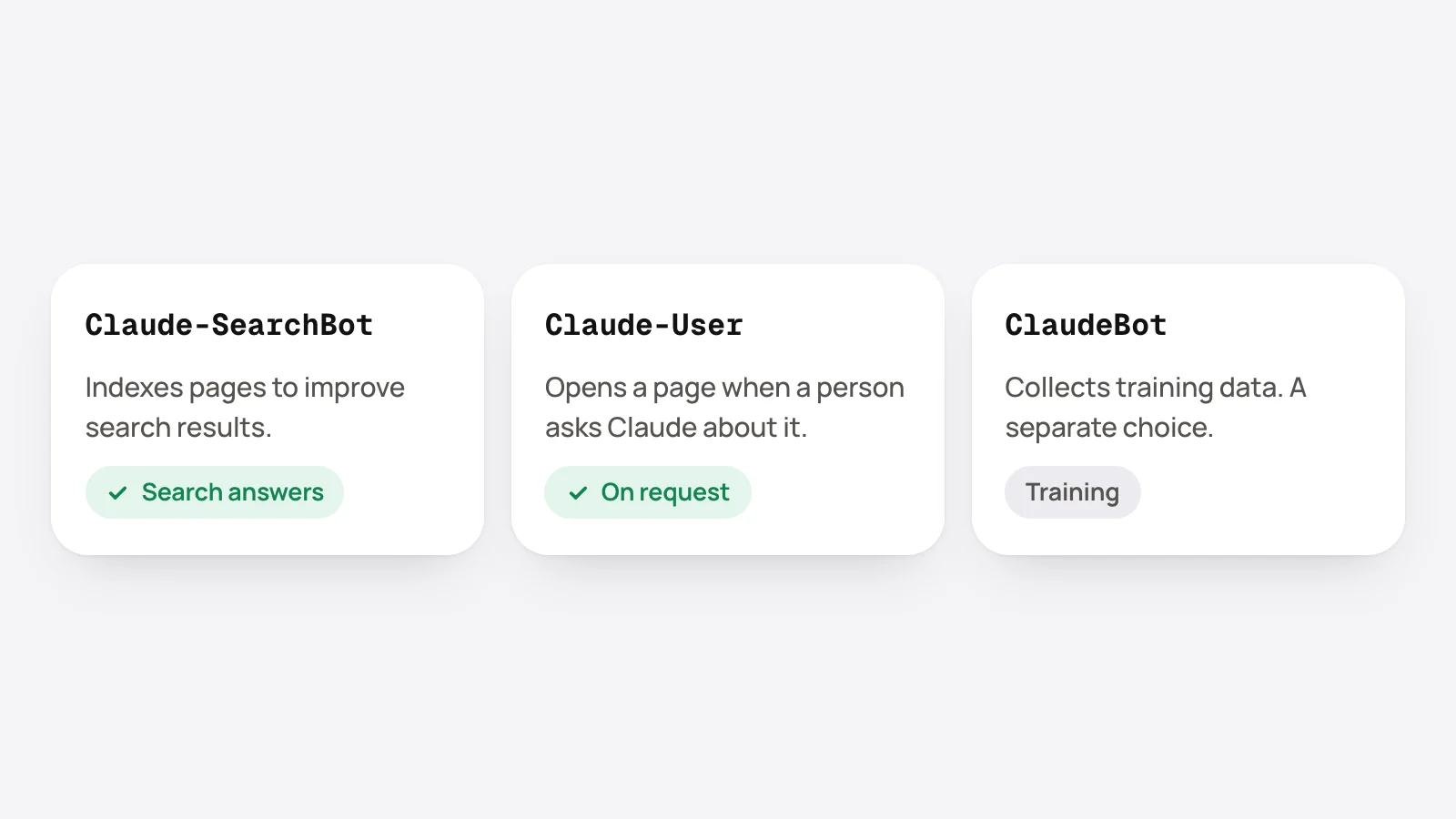
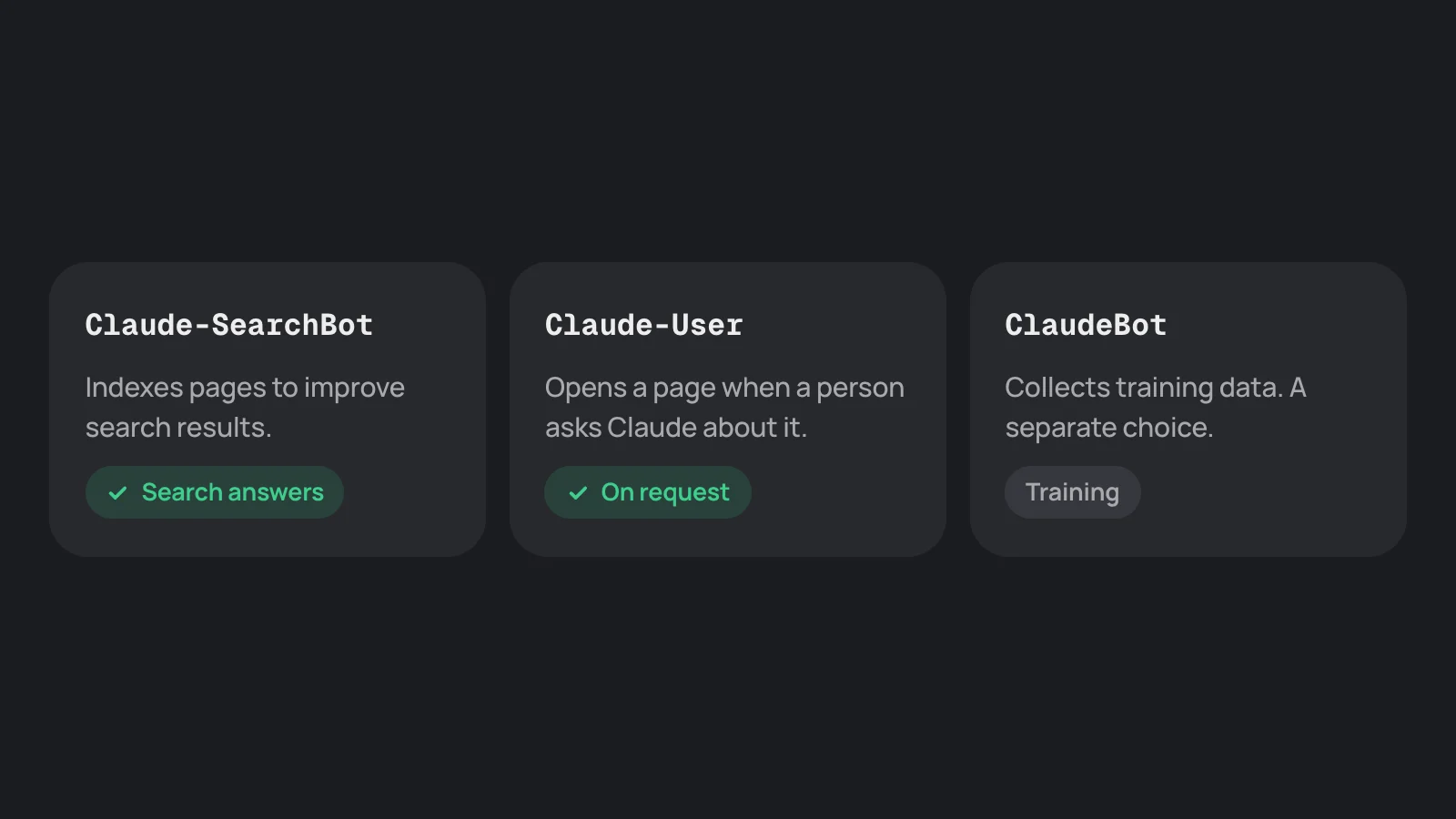
- Claude-SearchBot indexes pages to improve search results.
- Claude-User fetches a page when a person asks Claude about it.
- ClaudeBot collects training data.
Open yoursite.com/robots.txt. If it blocks the first two, or blocks every crawler, Anthropic says the site's visibility in Claude's search answers may be reduced. Blocking ClaudeBot is a separate choice about training. Some hosts turn bots away before they reach the file, so also look for a setting about AI crawlers in your website builder or security service.
Step 2: can Brave Search find you?
Since Brave Search is one of the named providers, check it directly.
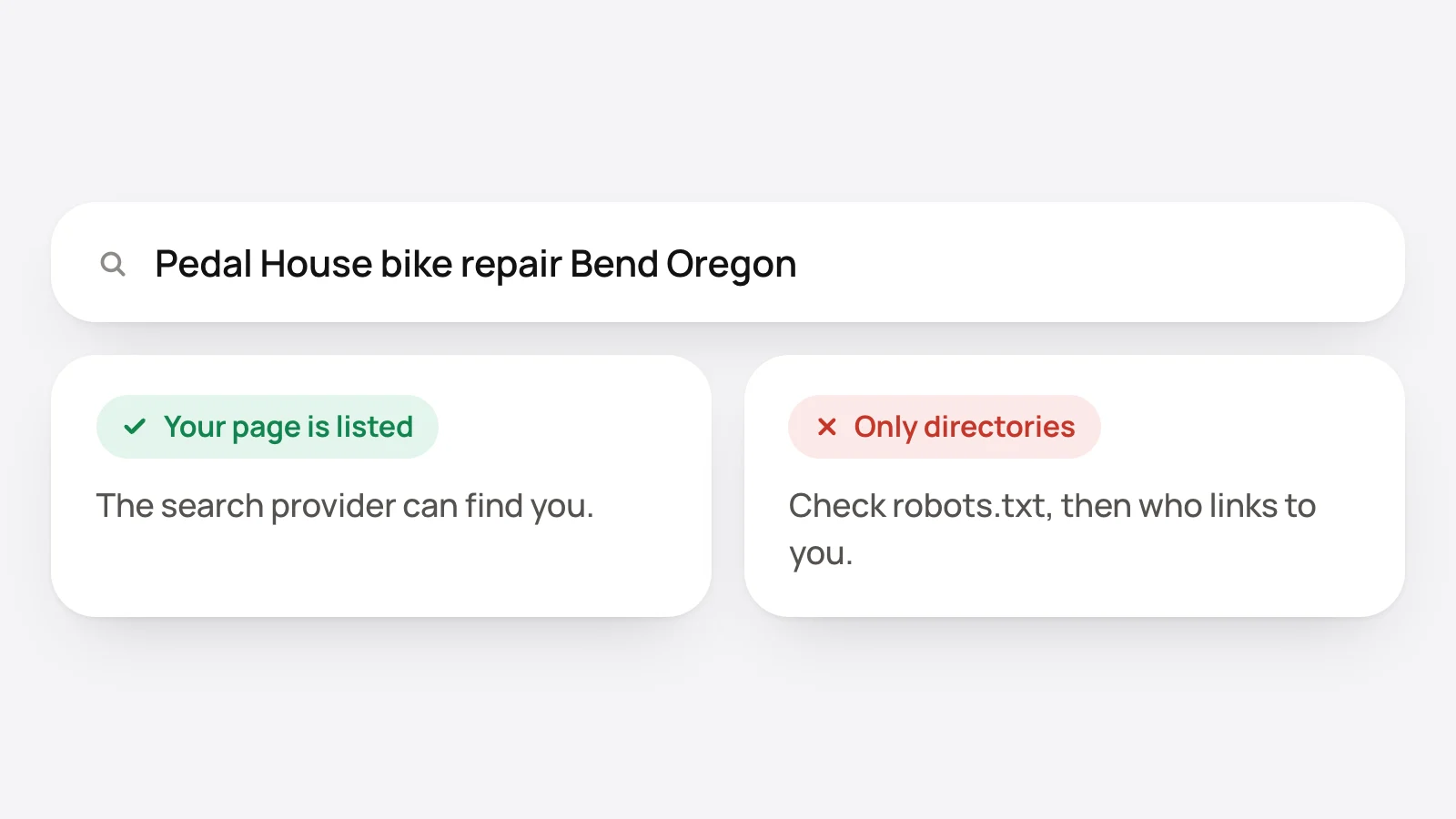
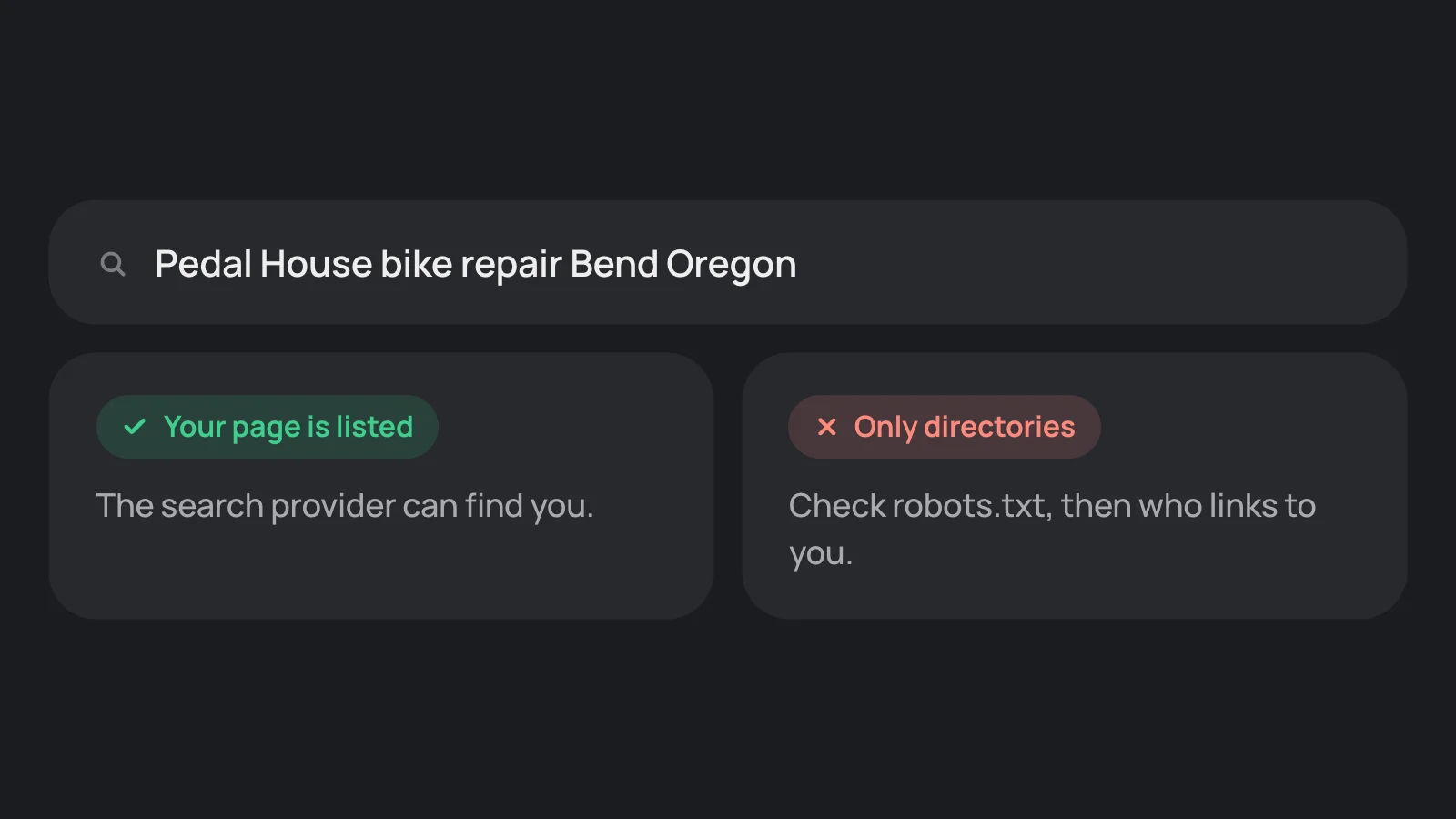
- Go to search.brave.com and search for your business name and city.
- Look for your own page in the results, not only directory listings.
- If it is missing, check robots.txt again, then look at who links to you. A link from a local directory, a supplier or a chamber of commerce is a path for a crawler to follow.
That last point is our inference from how crawlers work. Brave does not publish a rule for when a small site is indexed.
Step 3: are the facts on the page as text?
Claude quotes pages, so the page has to contain the sentence. Write the services, the city and the areas you serve, the hours, the phone number and the prices you publish as text. The full list is in what a page needs to be quoted.
Show when the page was last updated. The search tool passes each result's page age to the model, described as "when the site was last updated". Nobody documents how Claude weighs it. A visible, current date costs nothing.
Name the place. The same tool can localize results by city, region and country. A page that says "Bend, Oregon" in its first lines can match a search that carries that place.
How do I know it worked?
Ask Claude the question a customer would ask, with your city in it, in a new chat with web search on, at least five times. Then read the citations under each answer. They show which pages Claude used, which is more than most assistants tell you.
If a competitor is named, open the pages cited for them. What do those pages say that yours does not?
Where does OnMap fit?
An OnMap page covers steps 1 and 3: it is open to Anthropic's crawlers, and the facts are plain text with the date they were last updated. In our own traffic, ClaudeBot made 326 of the 867 requests that Cloudflare counted from AI crawlers on OnMap.me in the week to November 15, 2026. That shows the pages are being read. It does not show that any business is being recommended.
Sources
- Anthropic: Enable and use web search (official documentation)
- Anthropic: Web search tool (official documentation)
- Anthropic: Trust Center: subprocessors (official documentation)
- TechCrunch: Anthropic appears to be using Brave to power web search for its Claude chatbot (March 2025) (press report)
- Anthropic: Does Anthropic crawl data from the web, and how can site owners block the crawler? (official documentation)
Sources were last read on November 15, 2026. Assistants change often, so a fact here can go out of date.
Keep reading
How to get your business recommended by Google Gemini
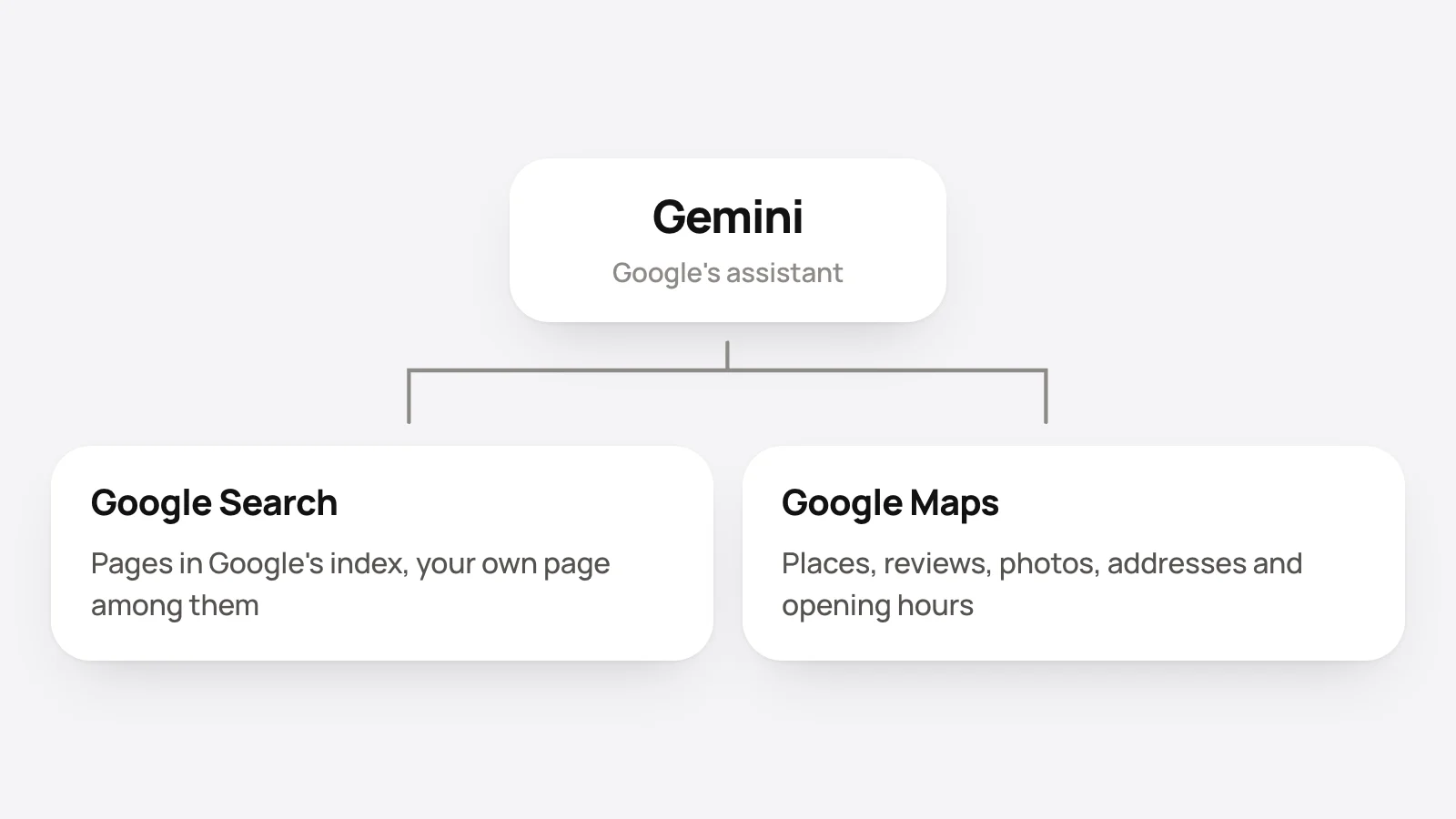
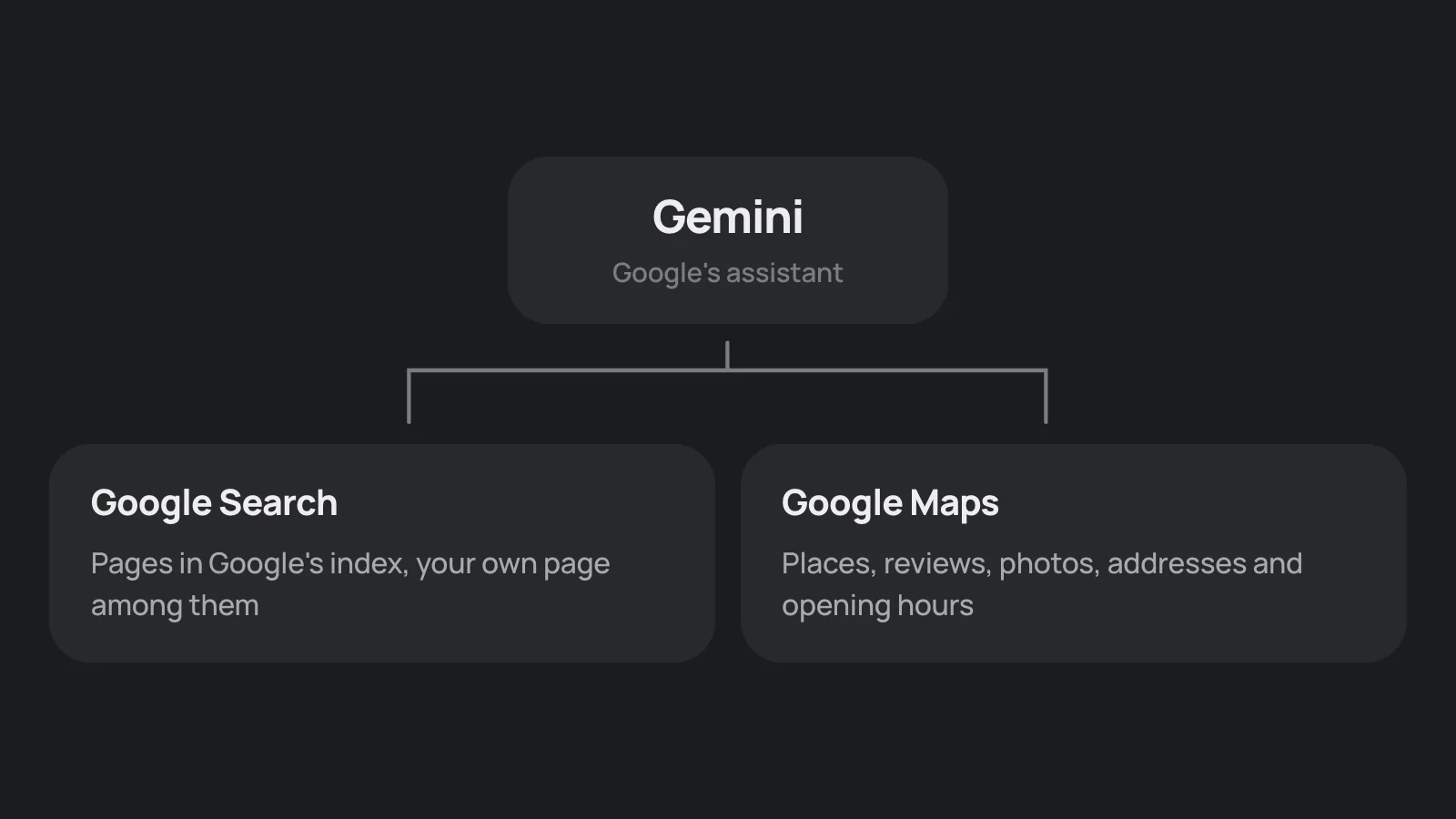
Gemini is Google's assistant. Google documents two things it can draw on, Google Search and Google Maps data, so a complete Business Profile and an indexed page do most of the work.
How to get your business to show up in ChatGPT
Four steps for a local business that wants ChatGPT to name it: let OpenAI's search crawler in, put the facts in text, keep listings the same, and earn real reviews.
How to make a local business visible in AI search
AI search is three systems, not one. What ChatGPT, Gemini and Claude each need from a local business, what they share, and what makes a page a source they cite.