Is AI search one thing?
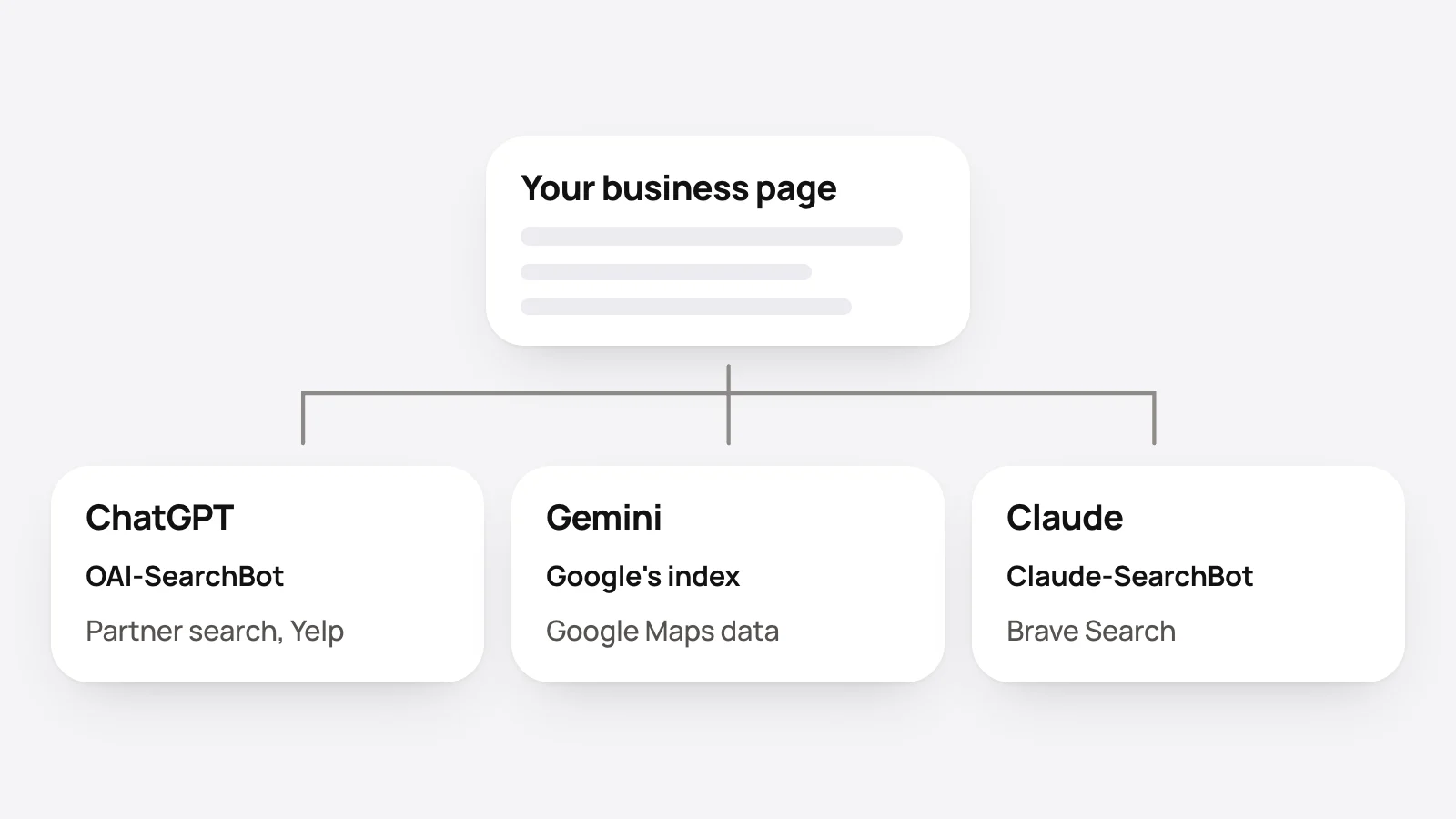
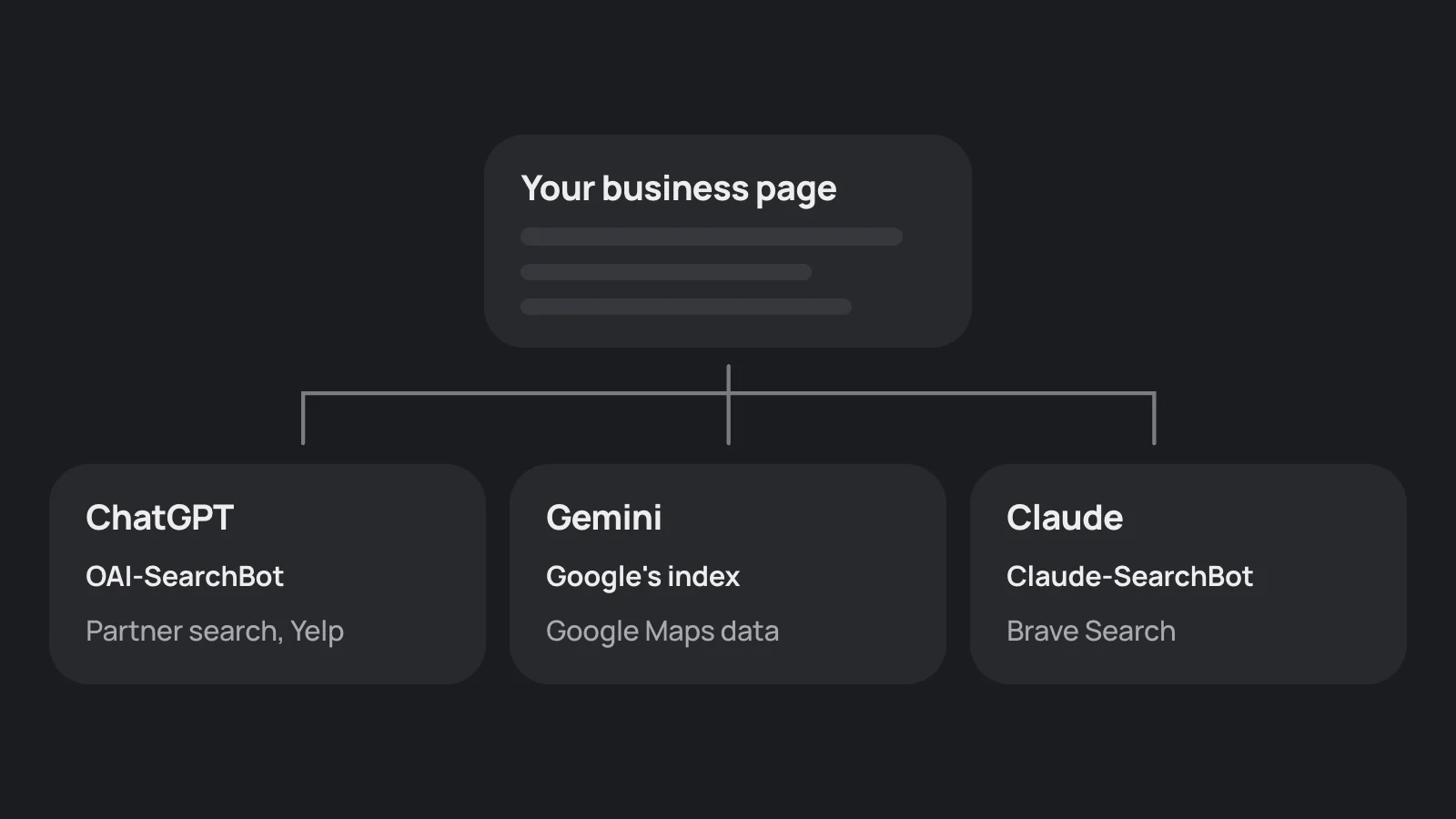
No. Each assistant has its own way to the web:
- ChatGPT uses pages crawled by OAI-SearchBot, partner search providers and licensed listings, according to OpenAI's crawler overview and search help page.
- Gemini and Google's AI answers use the Google Search index and, for local questions, Google Maps data. Google's AI guide says these features are "rooted in our core Search ranking and quality systems".
- Claude uses Claude-SearchBot and web search providers such as Brave Search, which Anthropic names in its subprocessor list.
That is why the three give different answers. In a study by SparkToro and Gumshoe, the chance of getting the same list of brands twice was under 1 in 100. Gumshoe sells an AI tracking tool.
What do all three need?
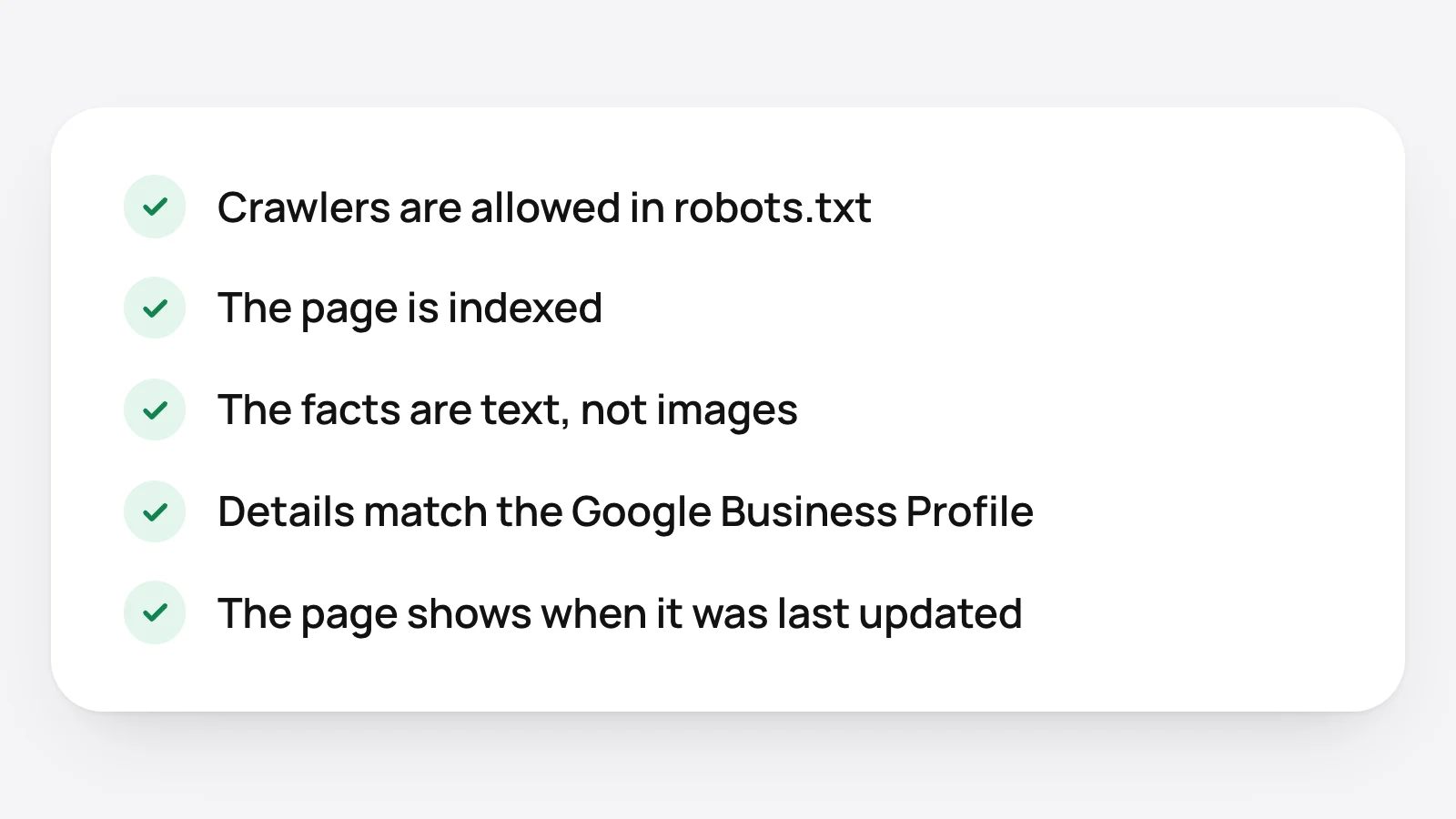
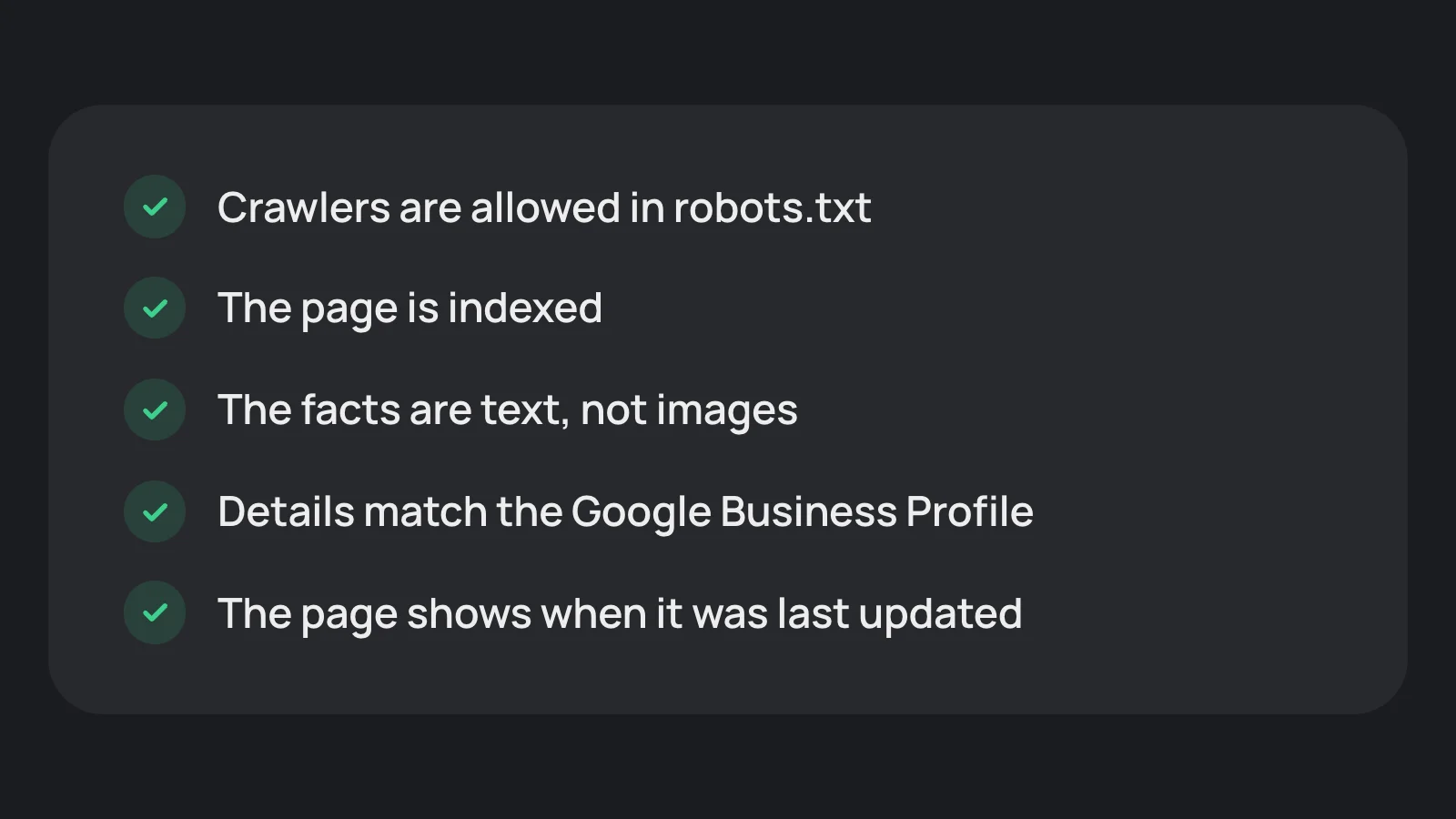
- Access. Allow OAI-SearchBot, Googlebot, Claude-SearchBot and Claude-User in robots.txt.
- Text. Google asks that important content is available in textual form.
- Specific facts. Services, areas, hours, phone, prices if you publish them.
- The same facts everywhere. Page, Google Business Profile and directories.
What is different for each one?
For Gemini, the Google Business Profile matters most. Google's AI guide says a Business Profile can help a business be visible in AI responses. It is free. See Google profile, website, or OnMap page.
For ChatGPT, review sites count too. Yelp licenses its reviews and business information to OpenAI, according to Axios.
For Claude, we found no listings database behind it. Our inference: a business exists for Claude as the web pages about it, so the page itself carries more weight.
Does SEO still matter?
Yes, and Google says so directly. Its AI guide answers the question "Is SEO still relevant for generative AI search?" with "In short, yes!" It tells site owners to put effective SEO ahead of what it calls "AEO/GEO hacks". The terms are explained in GEO, AEO and AI visibility.
What makes a page a source AI cites?
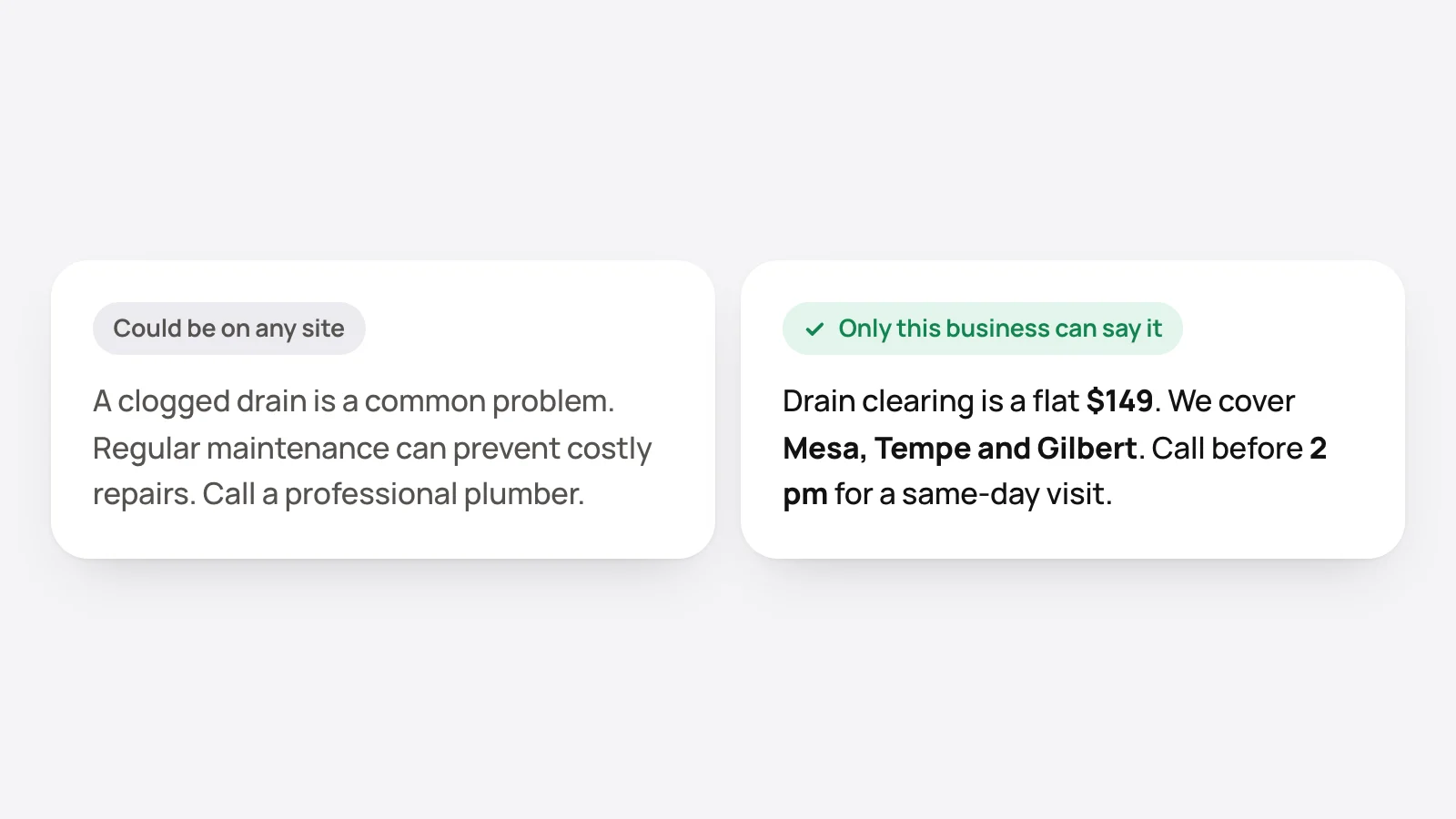
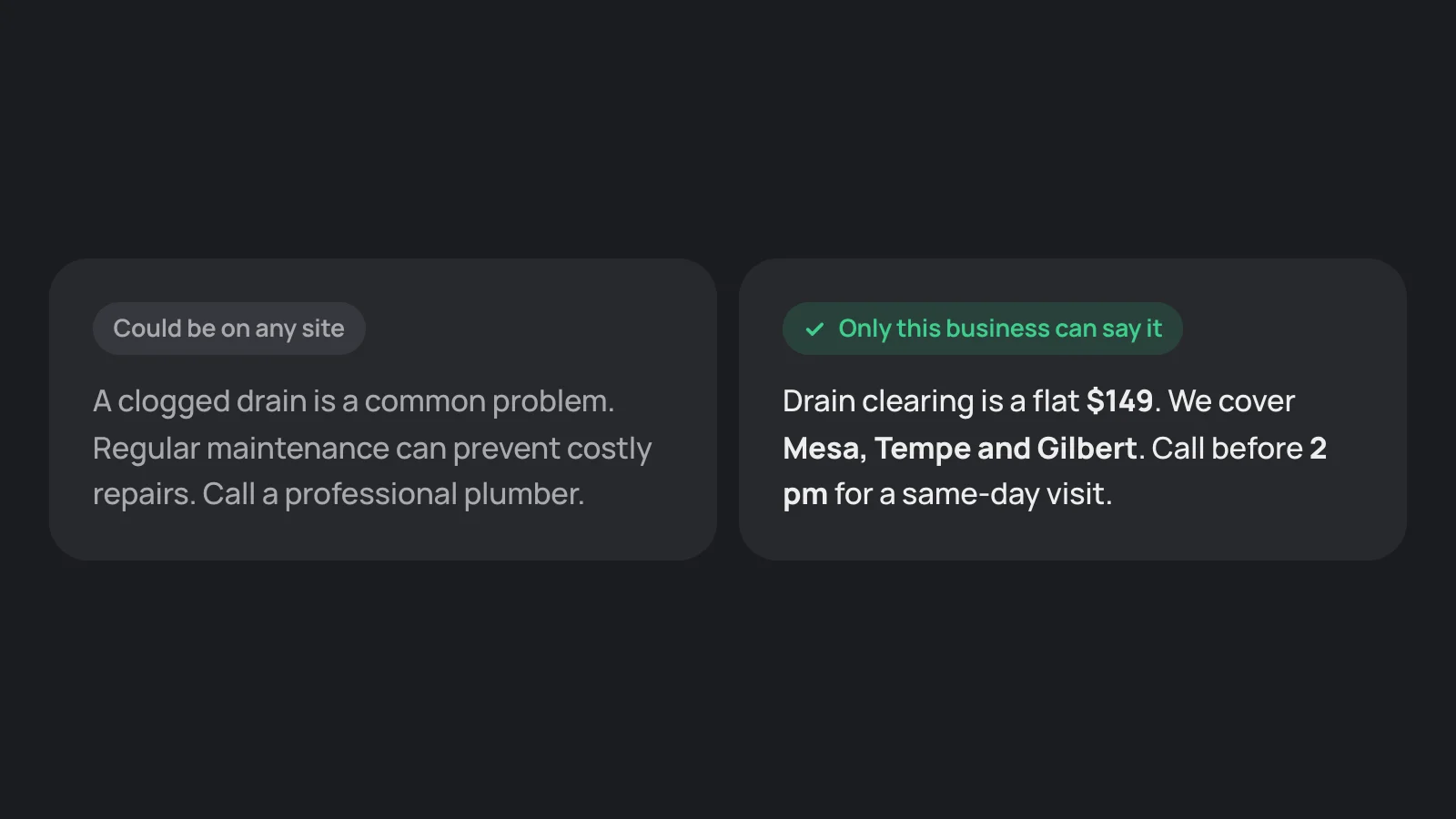
Google's guide draws a line between commodity content, which repeats common knowledge, and content with something of its own. A local business has plenty that nobody else can write: its prices, its service area, how long a job takes, what it will not do.
One academic study points the same way. The GEO paper (KDD 2024) reported that some ways of rewriting a page raised its visibility in generative answers by up to 40%. Its tests were not on local business questions.
What can I skip?
Google's guide says its Search ignores AI text files such as llms.txt, and that there is no need to break content into tiny pieces. OpenAI and Anthropic do not document that either helps. Start with the first steps.
Where does OnMap fit?
An OnMap page is one page built for all three readers: open to their crawlers, plain text, with structured data that matches the text. It does not replace the Google Business Profile. See pricing.
Sources
- OpenAI: Overview of OpenAI crawlers (official documentation)
- OpenAI: Searching the web with ChatGPT (official documentation)
- Google: Optimizing your website for generative AI features on Google Search (official documentation)
- Anthropic: Trust Center: subprocessors (official documentation)
- SparkToro and Gumshoe: AIs are highly inconsistent when recommending brands or products (January 2026) (study)
- Google: AI features and your website (official documentation)
- Axios: Yelp partners with ChatGPT to surface reviews (July 2026) (press report)
- Aggarwal and co-authors: GEO: Generative Engine Optimization (KDD 2024) (study)
Sources were last read on November 14, 2026. Assistants change often, so a fact here can go out of date.
Keep reading
How to get your business to show up in ChatGPT
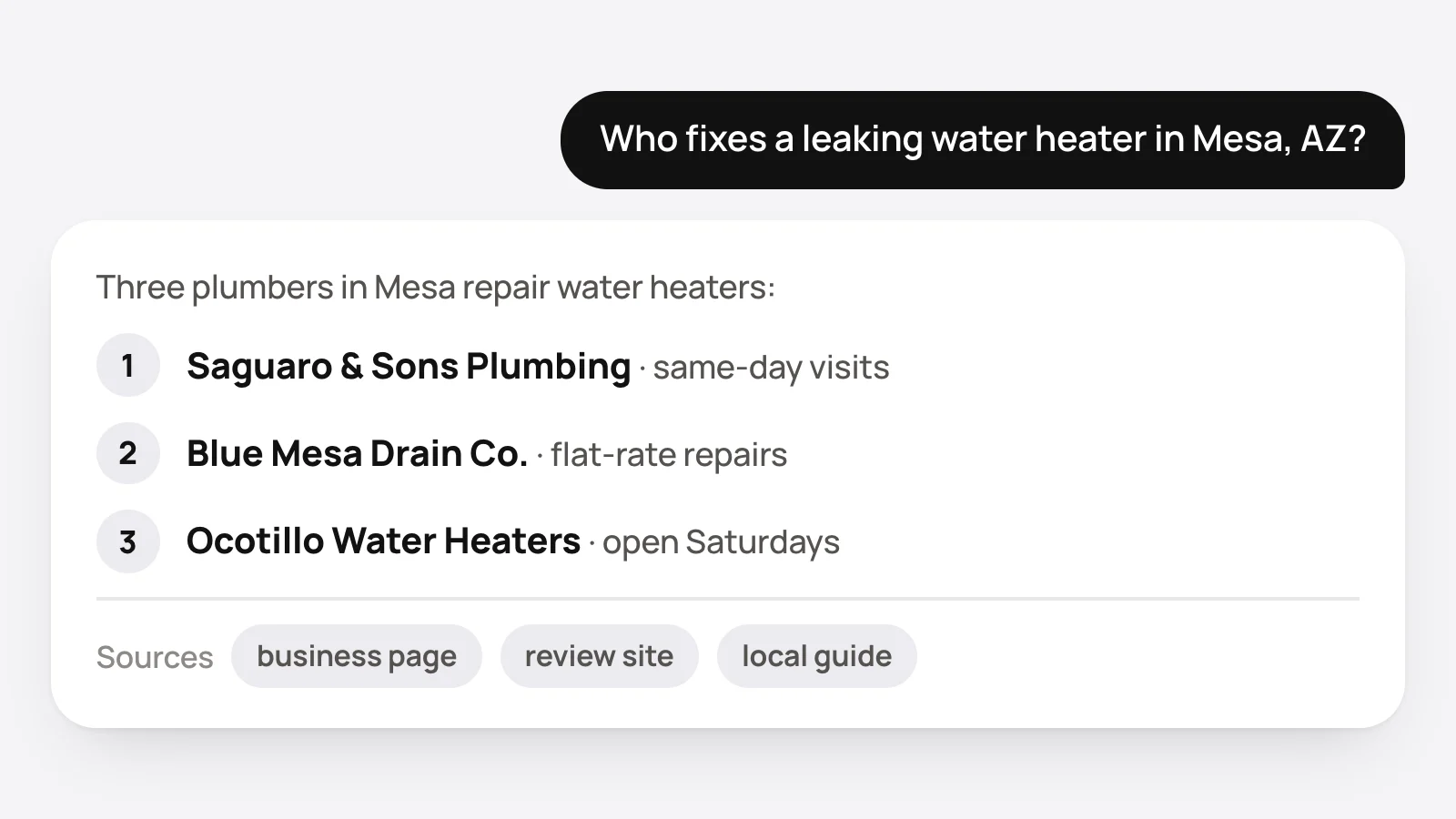
Four steps for a local business that wants ChatGPT to name it: let OpenAI's search crawler in, put the facts in text, keep listings the same, and earn real reviews.
AI visibility for a local business: where to start
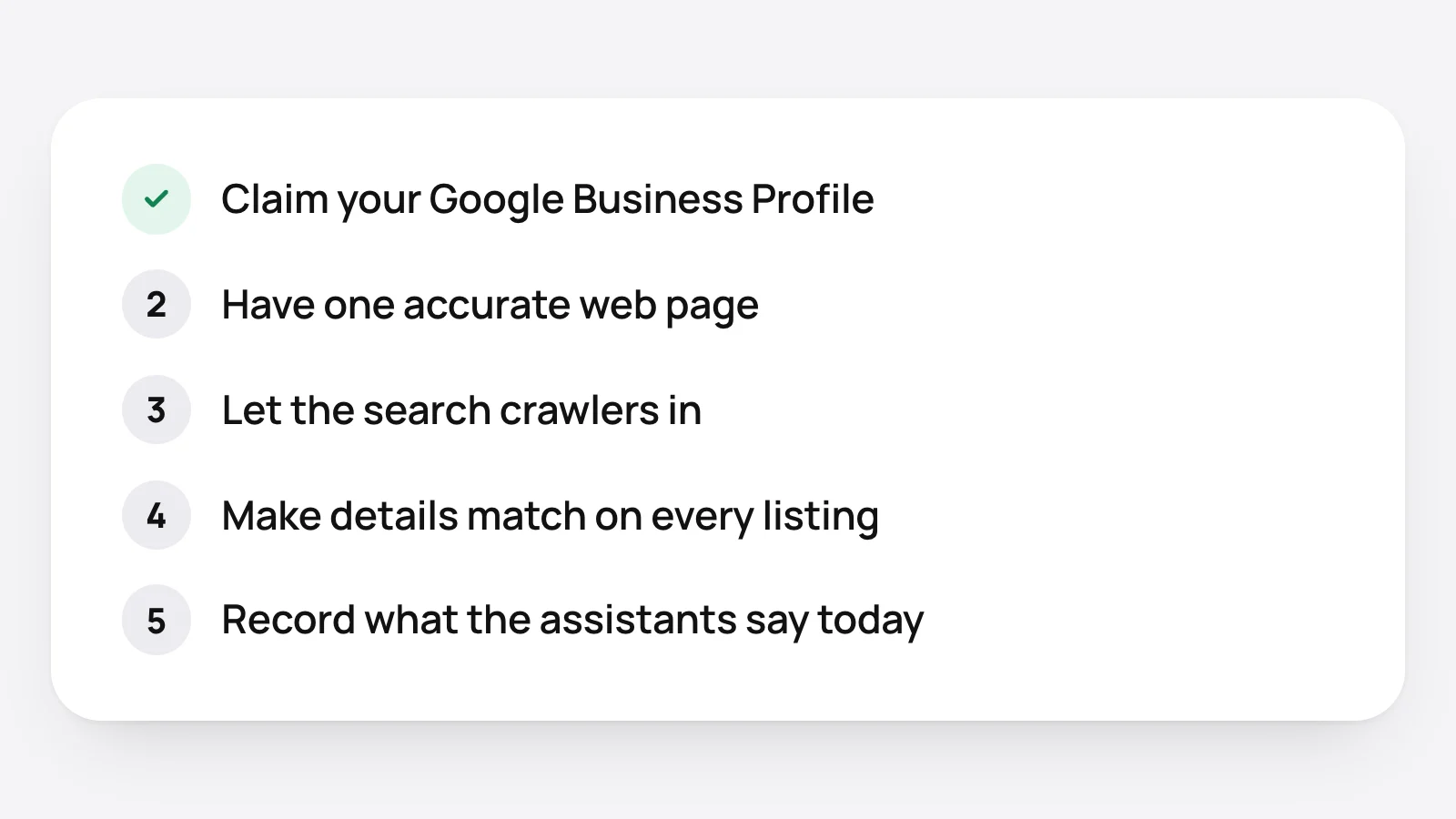
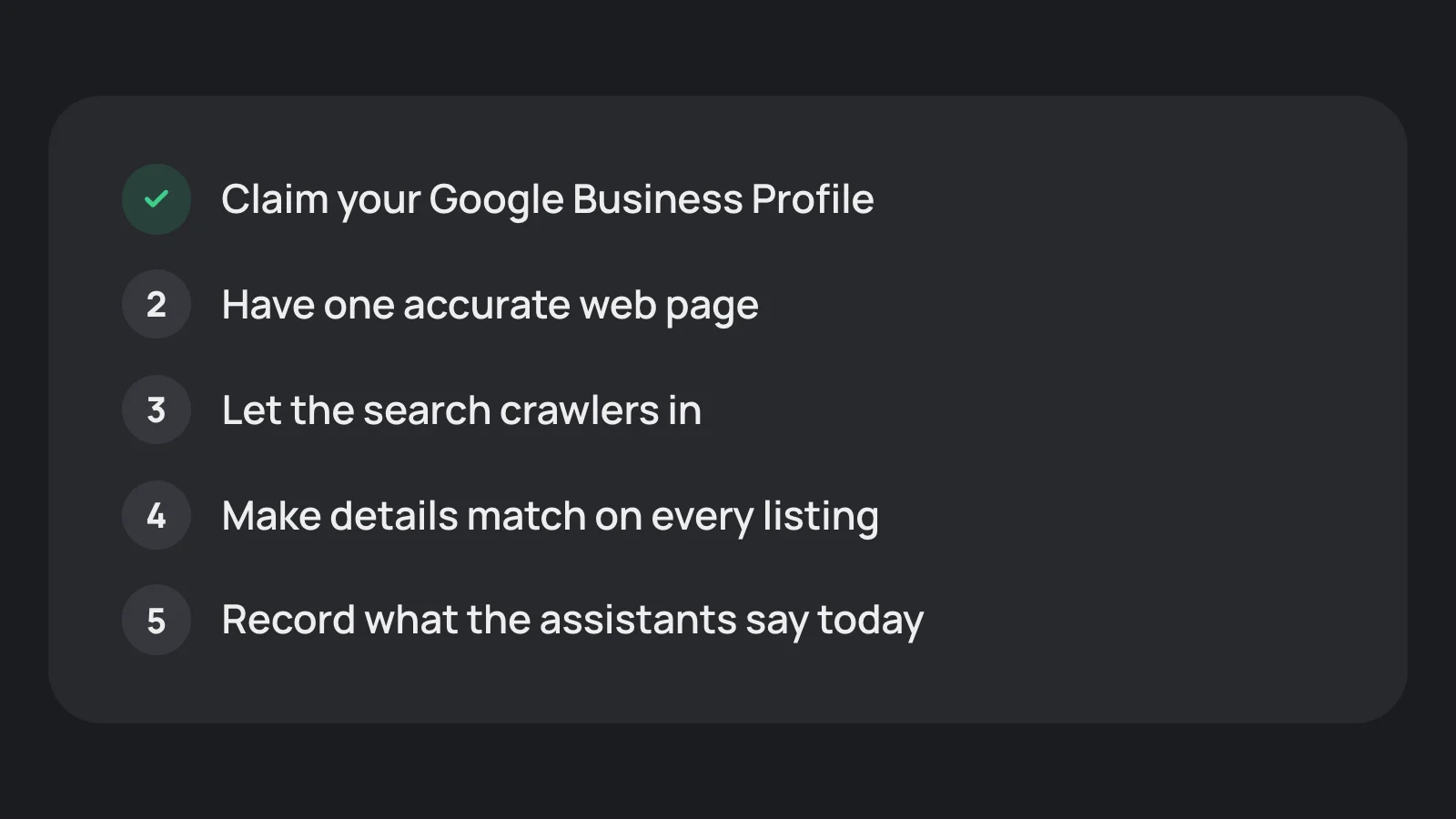
A first checklist for a local business that wants to appear in AI answers: Google profile, one readable page, crawler access, matching details, and a baseline check.
How to get matched to what customers ask AI for
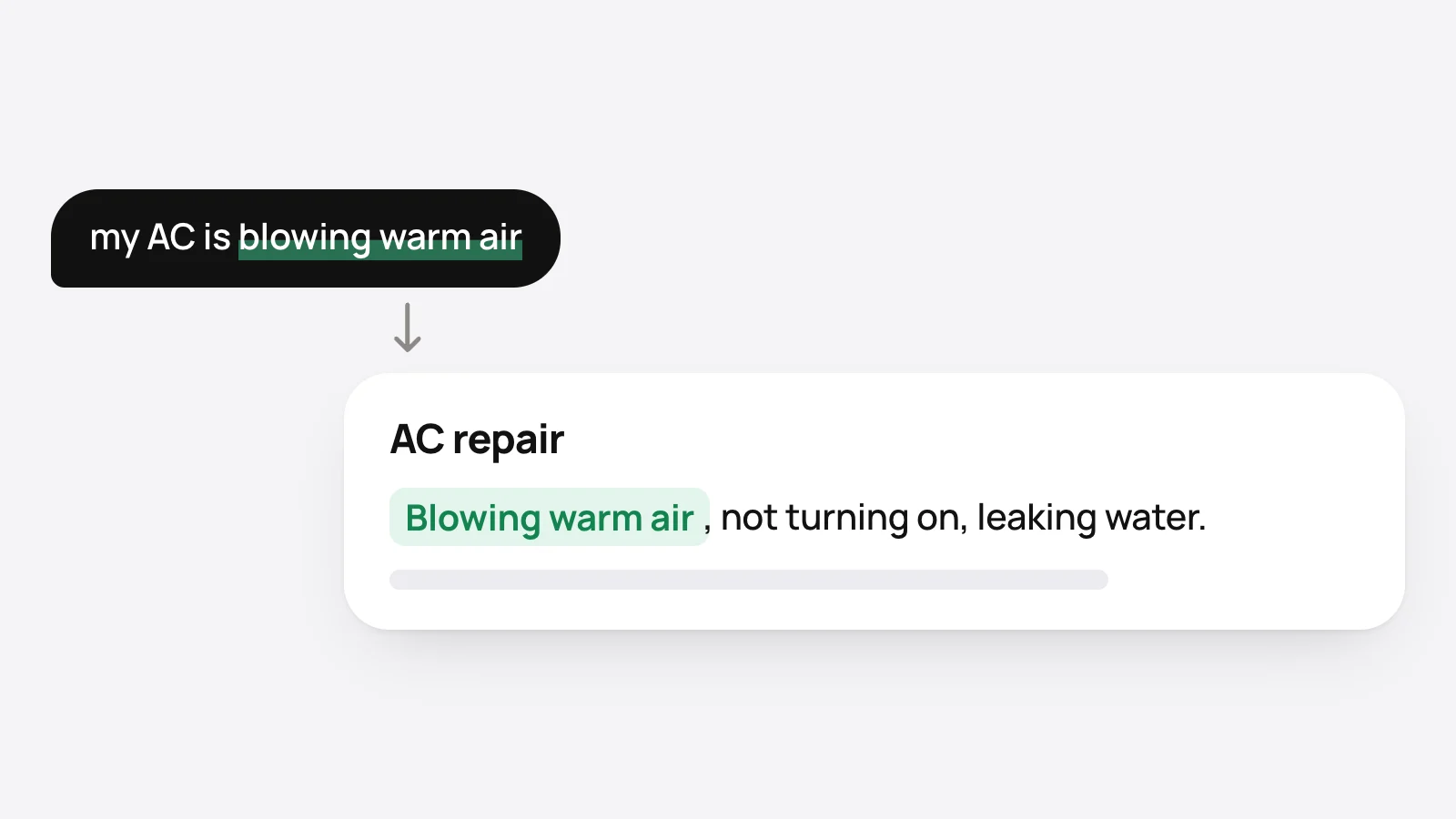
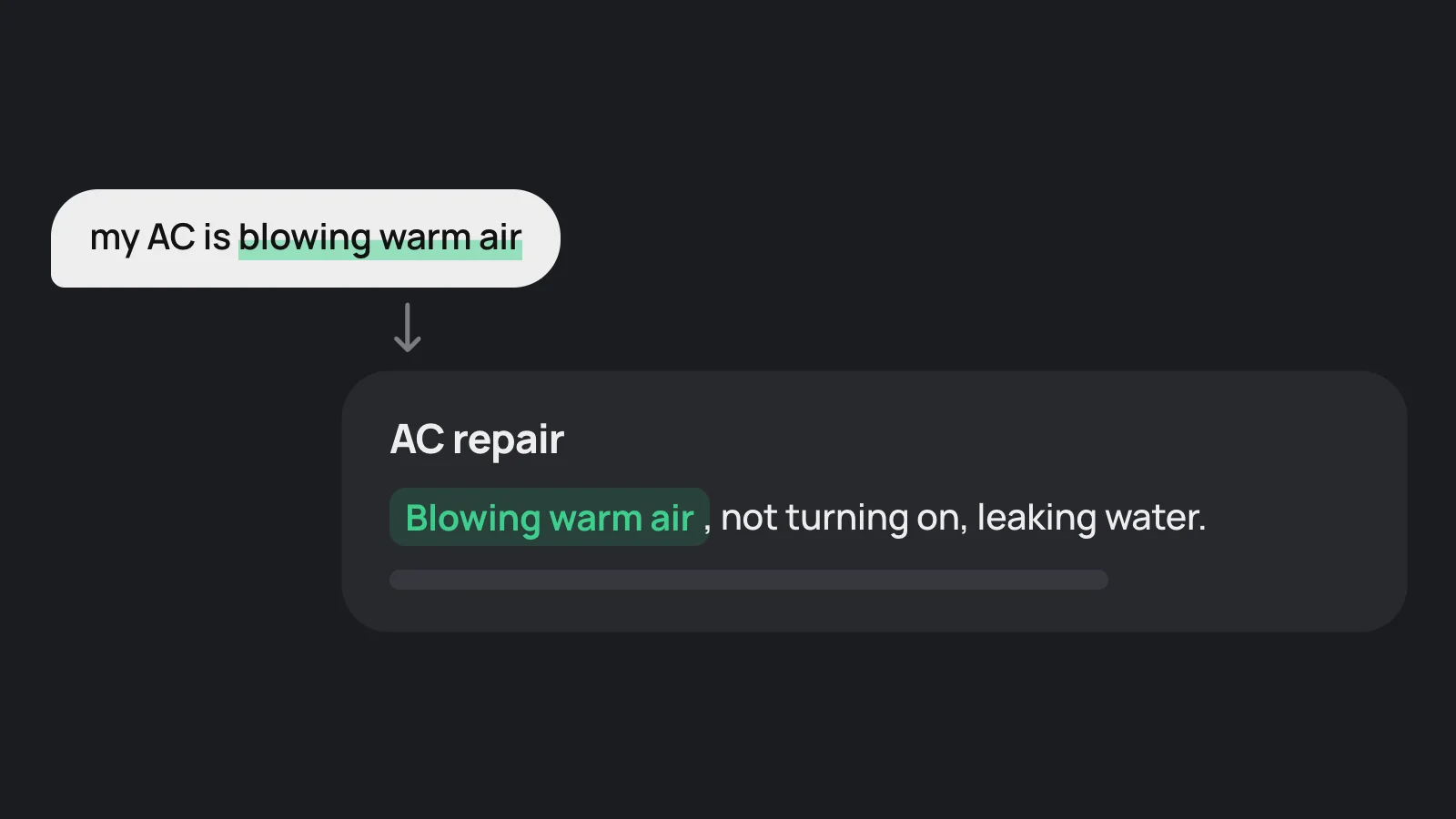
Customers describe a problem, not a service name. How to write a local business page so an assistant can connect a specific request, a city or a follow-up question to the business.