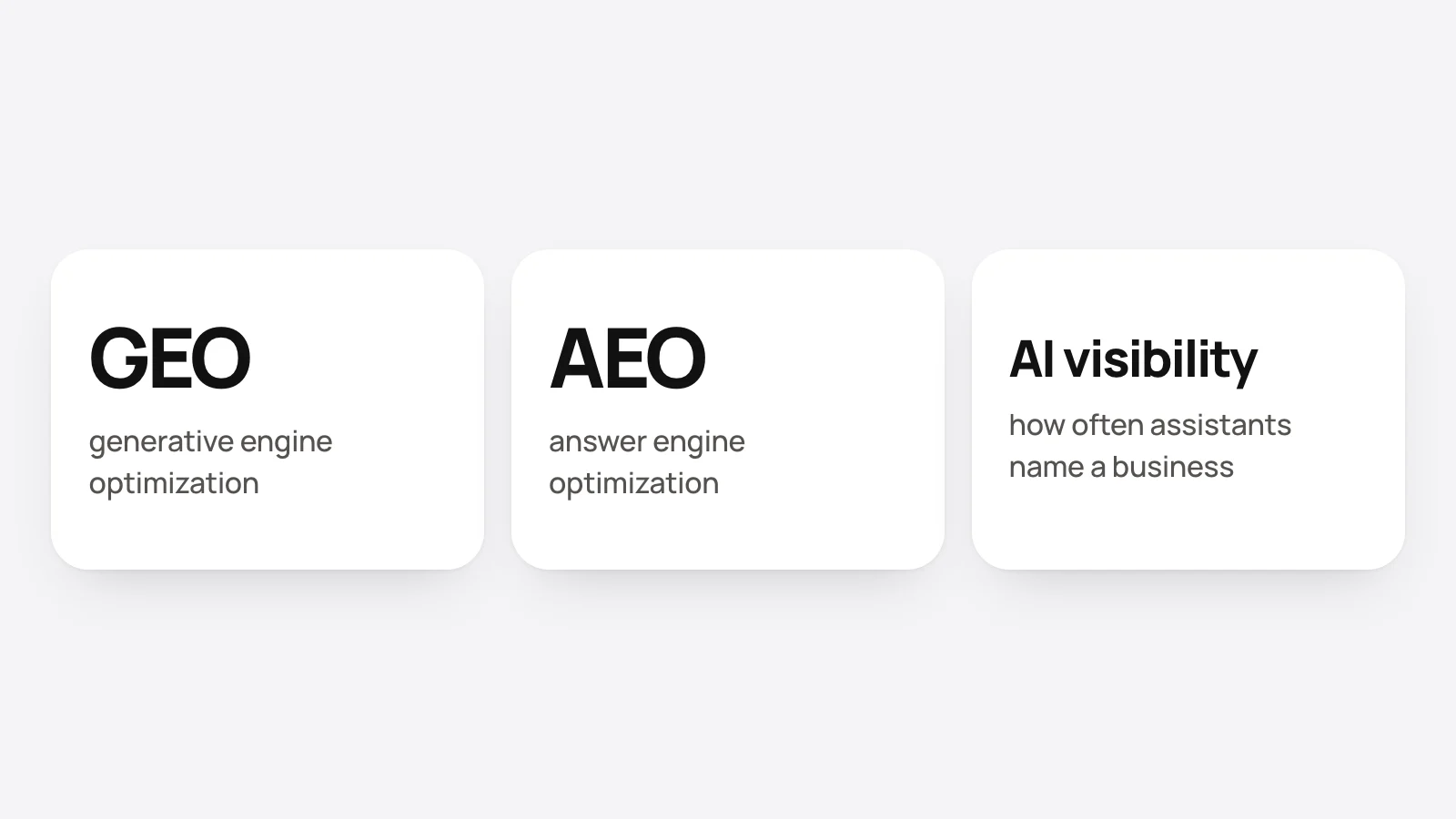
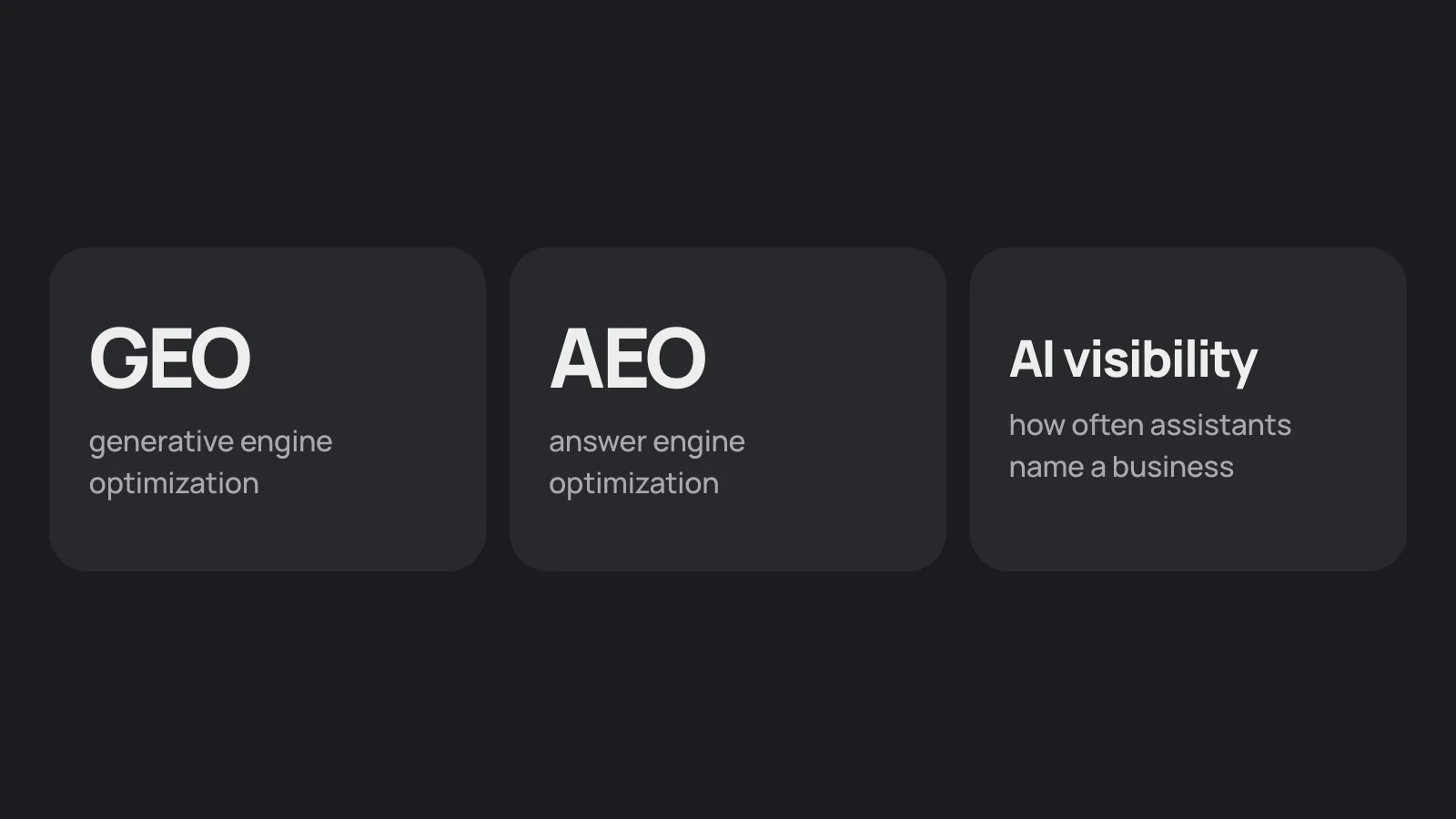
What is generative engine optimization (GEO)?
GEO is the work of making content more likely to be used in the answers of AI systems. The name comes from a research paper, GEO: Generative Engine Optimization, presented at KDD 2024. Its authors tested ways of rewriting pages and reported that some raised visibility in generative answers by up to 40%.
The paper did not test local business questions, and it predates today's assistants.
What is answer engine optimization (AEO)?
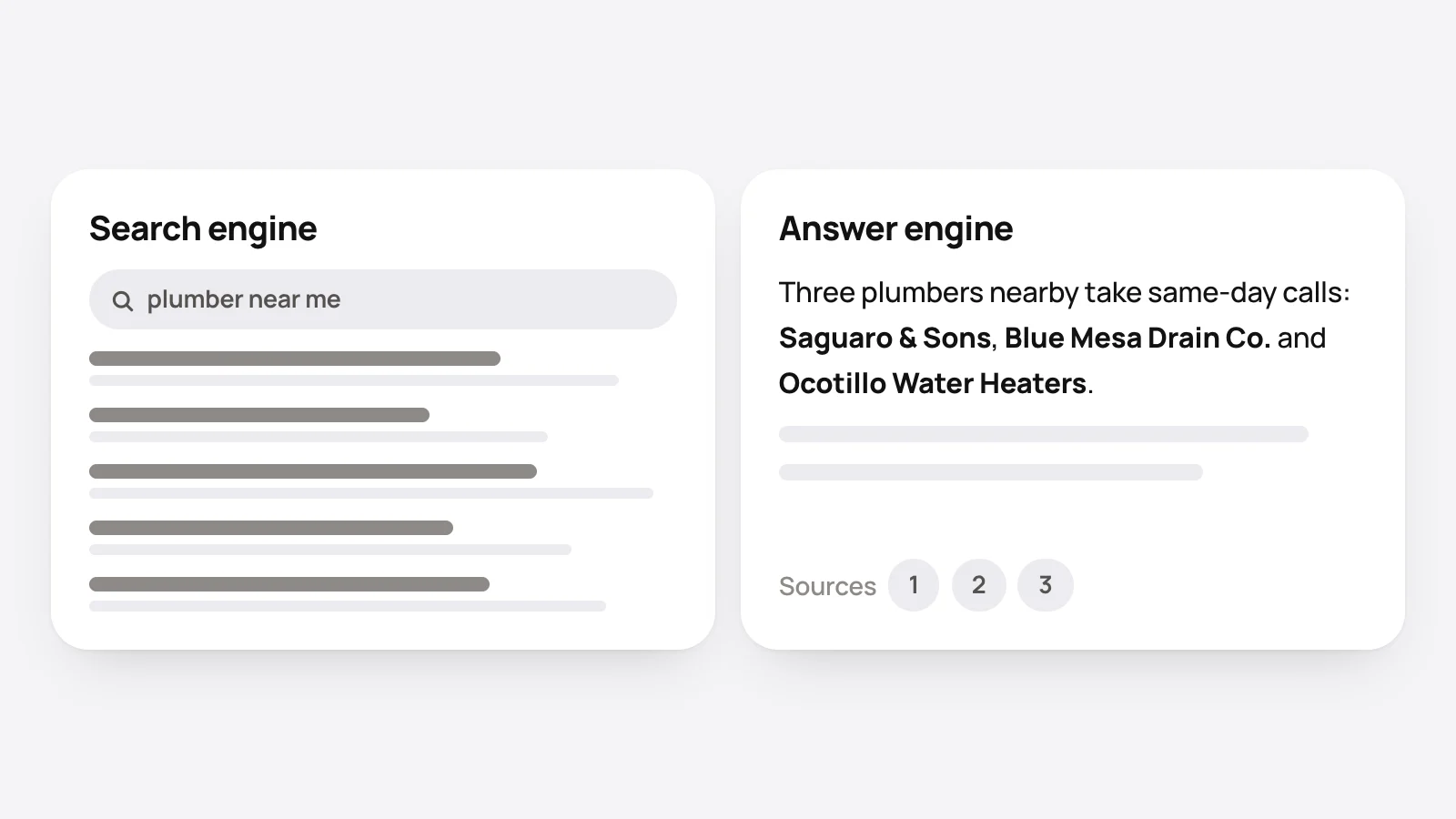
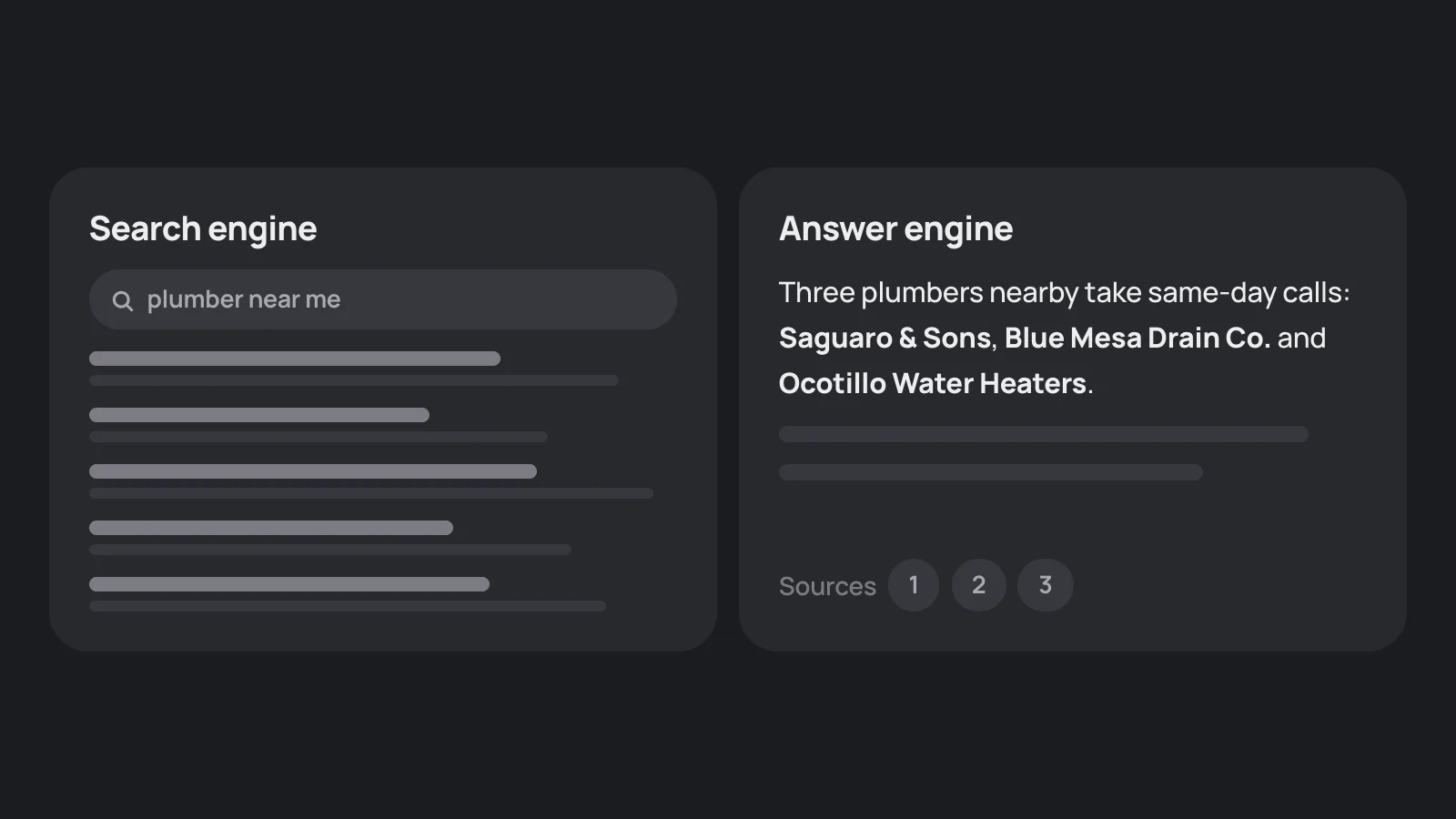
AEO is the same idea under an older name. An answer engine gives an answer where a search engine gives a list of links. Google's AI guide spells out both: AEO stands for "answer engine optimization" and GEO for "generative engine optimization".
Is GEO different from SEO?
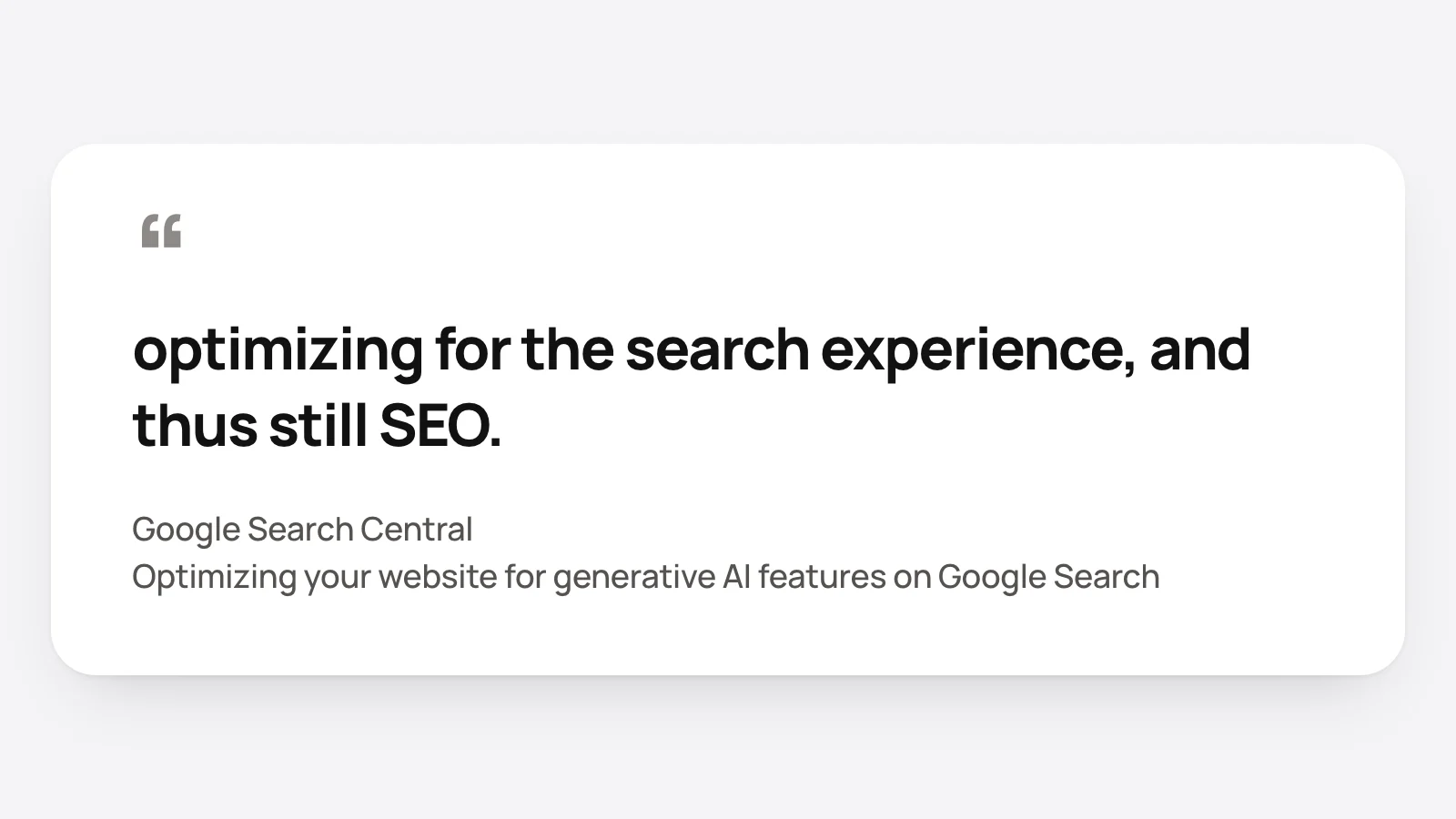
Google says no. Its guide calls optimizing for generative AI search "optimizing for the search experience, and thus still SEO", and tells site owners to prioritize effective SEO over "AEO/GEO hacks".
That is Google speaking about Google. ChatGPT and Claude use other crawlers and indexes, so there is one real difference for them: their crawlers must be allowed in. See visible in AI search.
What does AI visibility mean?
AI visibility is how often assistants name or cite a business when people ask about what it sells. It is a share, not a rank. SparkToro and Gumshoe found that the list of brands in an answer changes almost every run, while the share of answers that name a brand is much steadier. Gumshoe sells an AI tracking tool.
You can measure it by hand. See how to check.
What does being cited mean?
A citation is a link to the page an assistant used, shown with the answer. Claude's help page says of its web search: "Every response includes citations". A business can be named without being cited, and a page can be cited without the business being recommended.
What is llms.txt, in simple terms?
It is a text file some sites publish to point AI systems at their main pages. Google's AI guide says you do not need AI text files to appear in Search, and that it is fine to keep one for other services. We found no OpenAI or Anthropic documentation saying ChatGPT or Claude use it to choose what to quote.
Why does this matter for a shop?
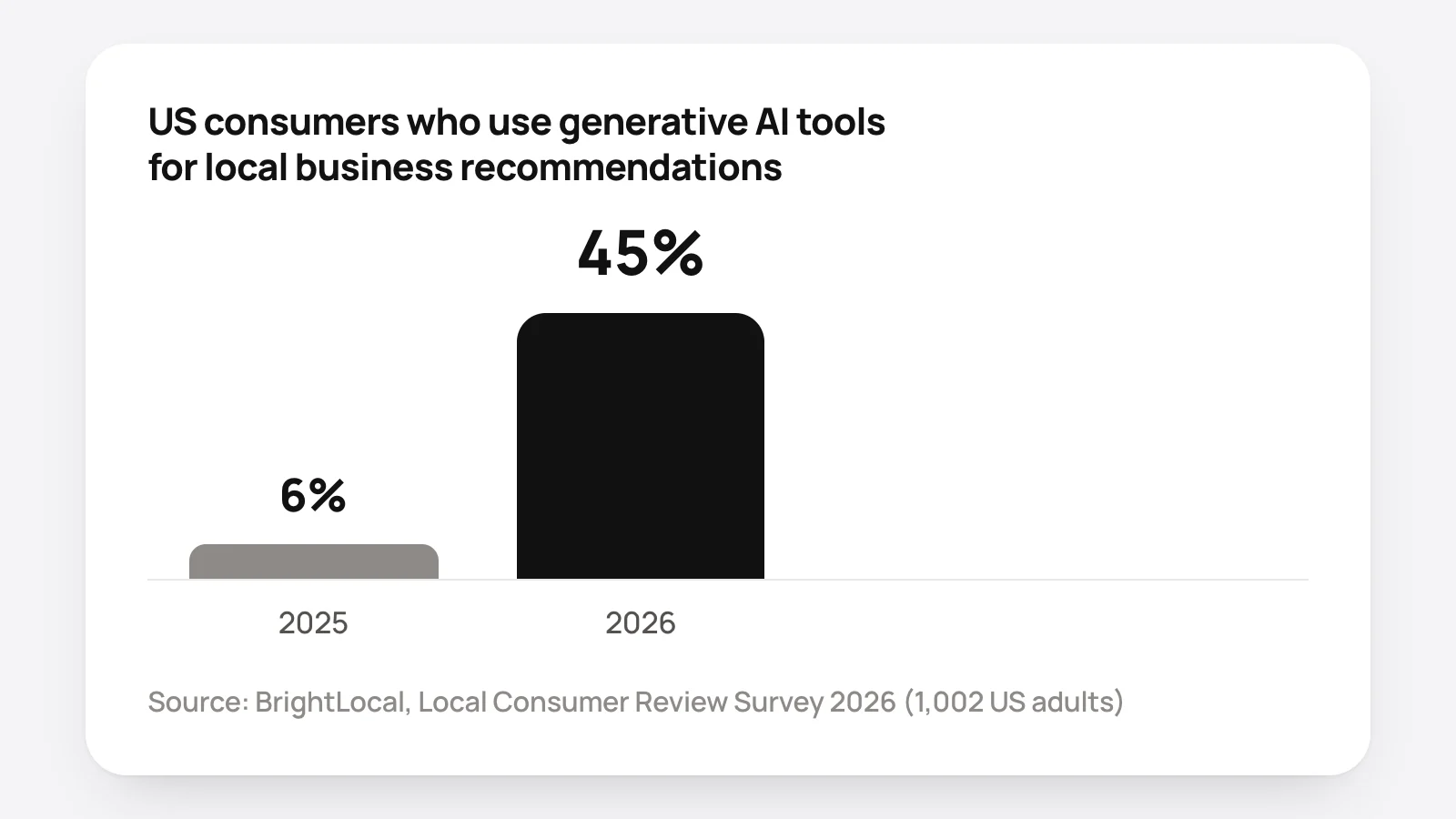
Because customers have started asking. In BrightLocal's 2026 consumer survey of 1,002 US adults, 45% said they use ChatGPT or other generative AI tools for local business recommendations, up from 6% a year earlier. BrightLocal sells local marketing tools. More in can a small or new business get found by AI.
Where does OnMap fit?
OnMap makes the page this work points at: one page with the business's facts, readable by ChatGPT, Gemini and Claude. See how it works.
Sources
- Aggarwal and co-authors: GEO: Generative Engine Optimization (KDD 2024) (study)
- Google: Optimizing your website for generative AI features on Google Search (official documentation)
- SparkToro and Gumshoe: AIs are highly inconsistent when recommending brands or products (January 2026) (study)
- Anthropic: Enable and use web search (official documentation)
- BrightLocal: Local Consumer Review Survey 2026 (February 2026) (study)
Sources were last read on November 14, 2026. Assistants change often, so a fact here can go out of date.
Keep reading
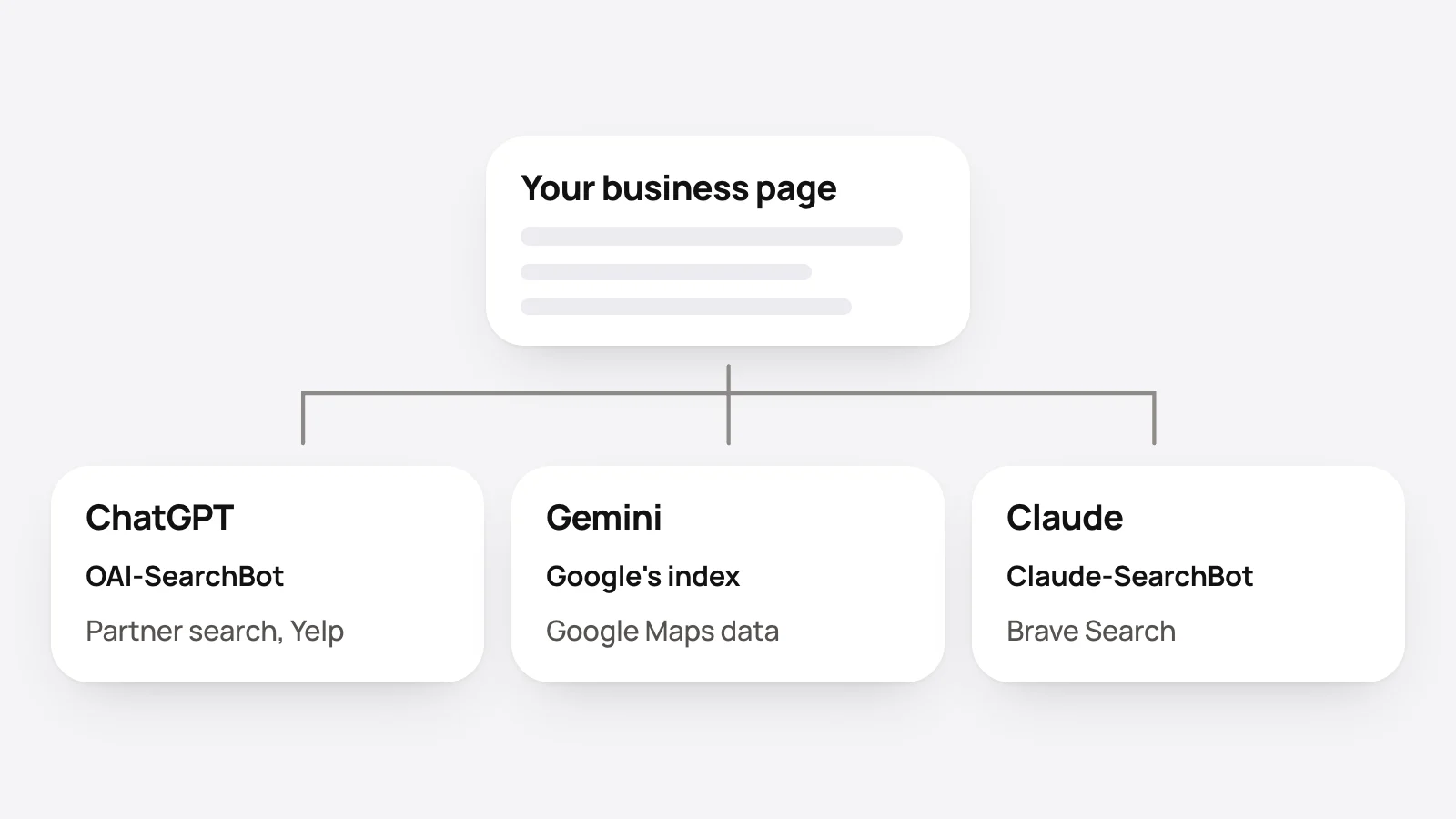
How to make a local business visible in AI search
AI search is three systems, not one. What ChatGPT, Gemini and Claude each need from a local business, what they share, and what makes a page a source they cite.
Can a small or new business get found by AI?
Do people use ChatGPT to find local businesses, can a small shop appear next to big brands, and how a new business gets known to AI assistants. With the numbers and their limits.
AI visibility for a local business: where to start
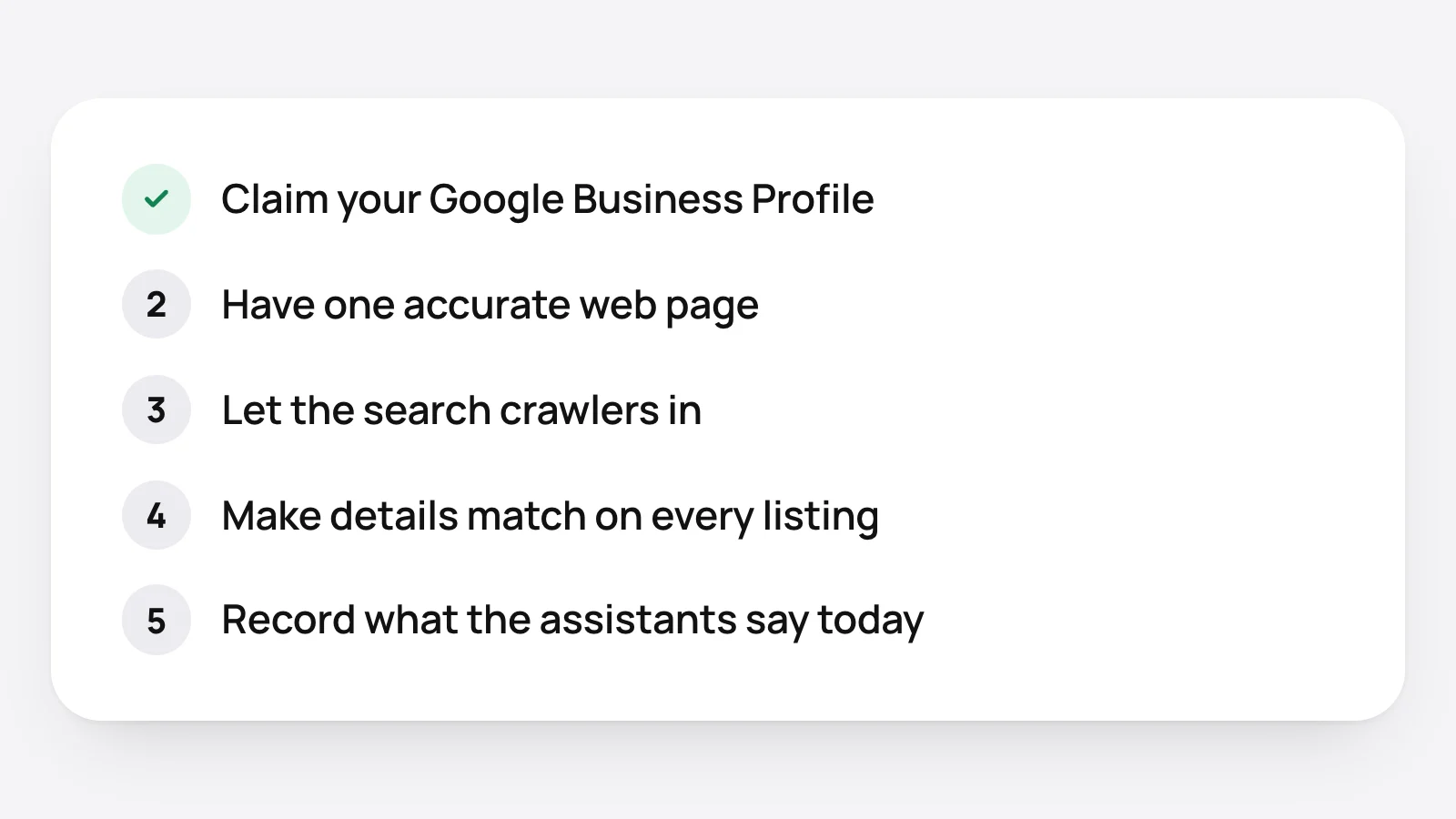
A first checklist for a local business that wants to appear in AI answers: Google profile, one readable page, crawler access, matching details, and a baseline check.