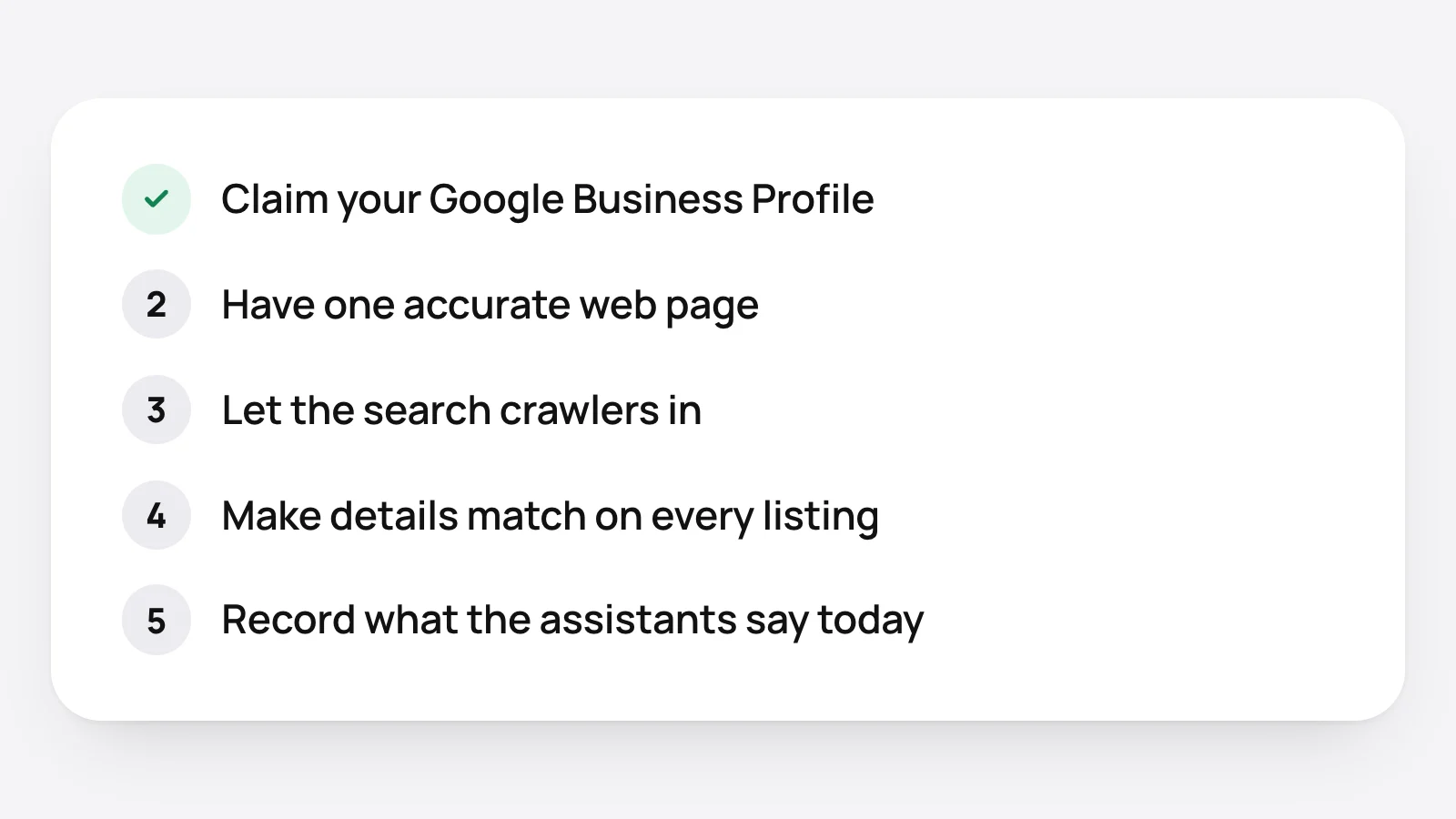
What are the first five steps?
- Claim and verify your Google Business Profile. It is free, and Google's AI guide says a profile can help a business be visible in AI responses.
- Have one accurate web page. Your own website or a page like an OnMap page. It needs the services, areas, hours and phone as text.
- Let the search crawlers in. OAI-SearchBot, Googlebot, Claude-SearchBot and Claude-User. See step 1 of show up in ChatGPT.
- Make the details match. Name, address, phone and hours, the same on the page, the profile and every directory. Google's local ranking page says complete and accurate information makes a business more likely to show.
- Record a baseline. Ask each assistant a customer's question five times and note how often you are named.
How long does this take, and what does it cost?
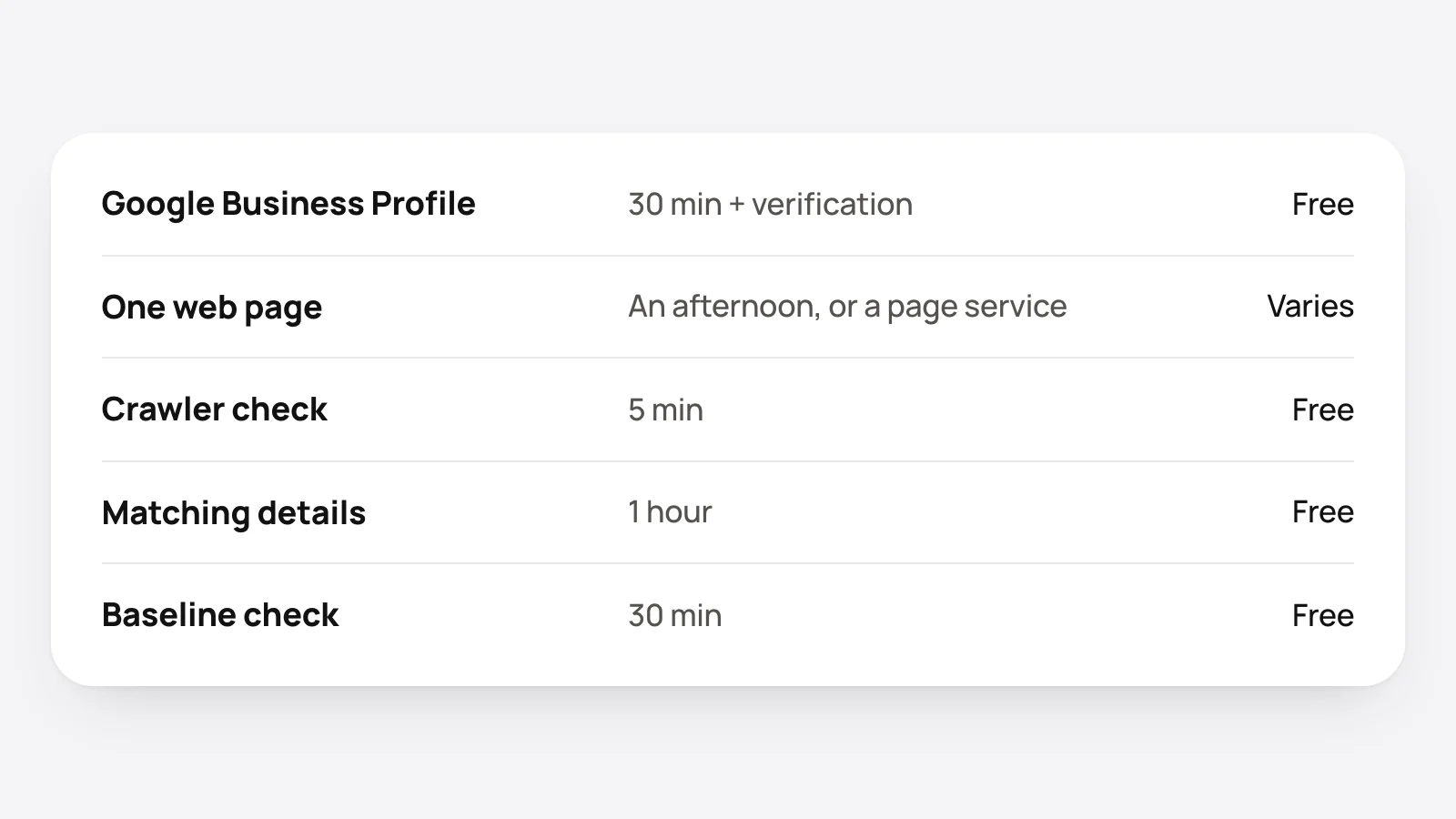
The times are our own estimate, not a measured figure. Only the web page can cost money: a website builder, a freelancer, or a page service. Everything else is your time.
How do I record a baseline?
Write five questions a customer would type, with the city in each, and without your business name. Ask each one in a new chat, five times, in ChatGPT, Gemini and Claude. Mark whether the business was named.
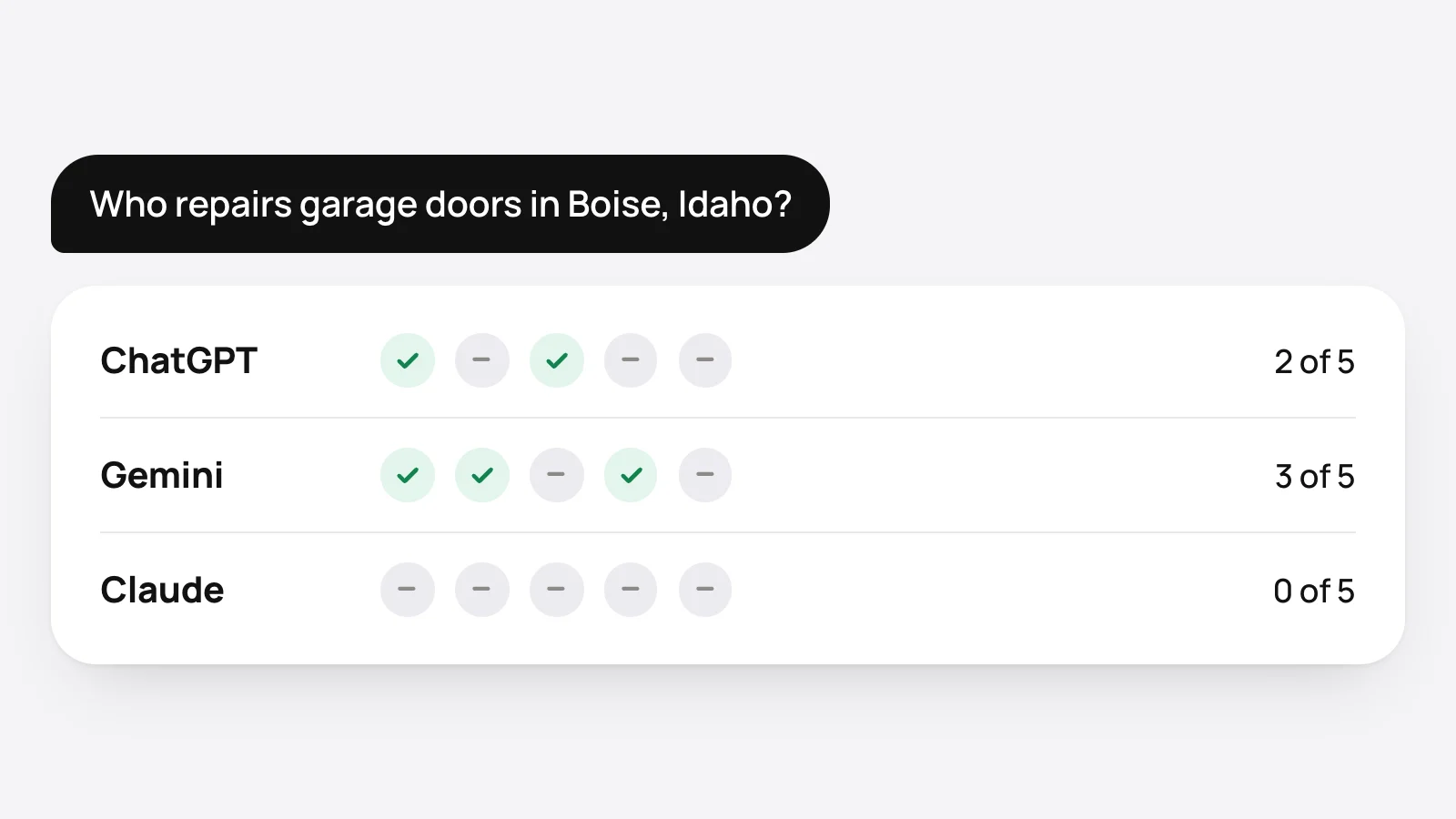
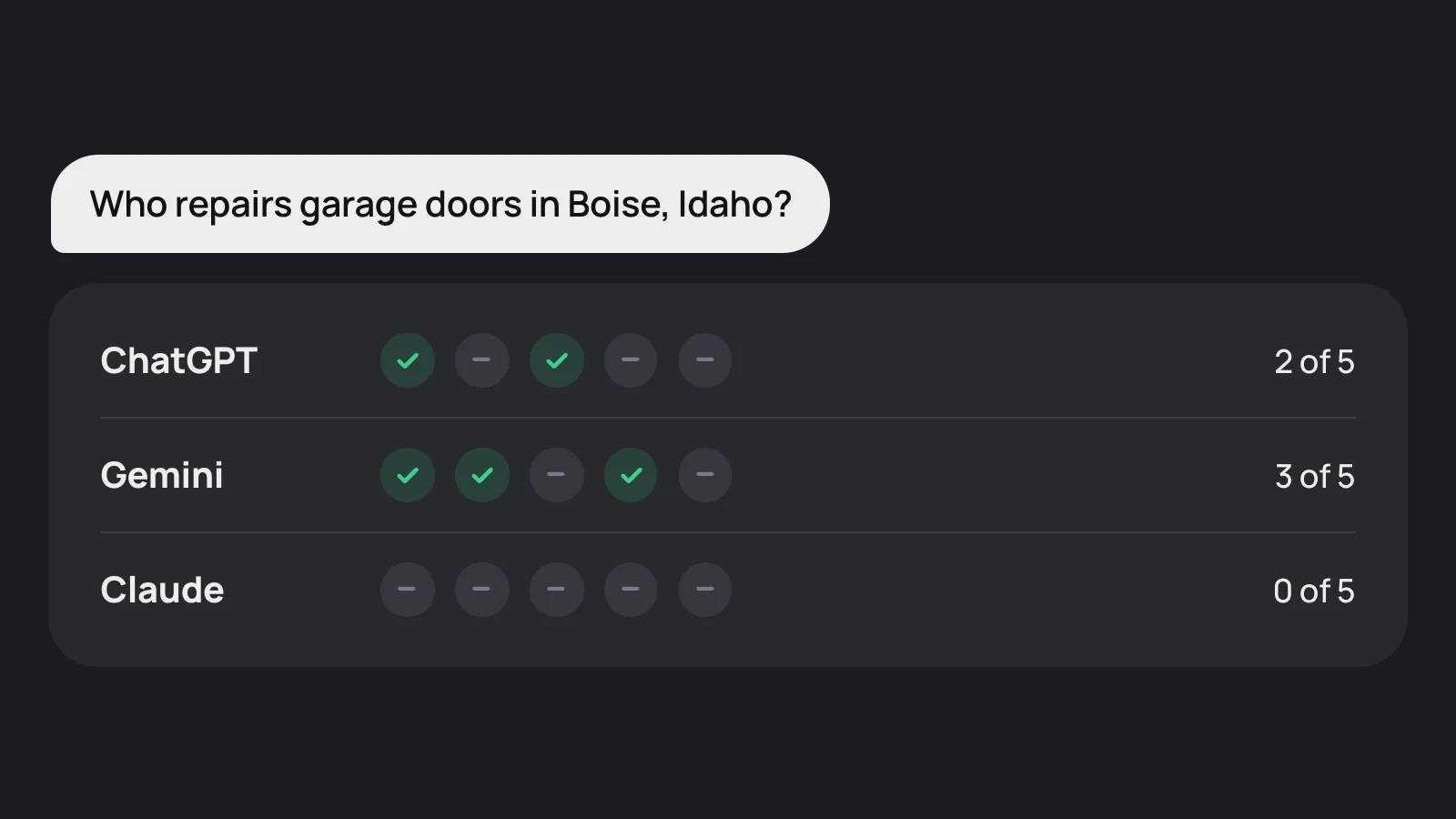
Five runs give a rough picture: never, sometimes or usually. One run is not enough, because the list changes almost every time, as a study by SparkToro and Gumshoe found. Gumshoe sells an AI tracking tool. The reasons are in how to check whether assistants mention your business.
What can wait?
- An llms.txt file. Google's AI guide says its Search ignores it. No vendor documents that it helps.
- Special markup for AI. The same guide says there is no special schema.org markup to add for generative AI search.
- A paid tracking tool. Do the hand check first. Google says no third-party tool has access to its ranking or AI systems.
- A page for every keyword. Google warns against making a page for every variation of a search.
What comes after the first five?
Reviews from real customers, answers to the questions people ask before they call, and keeping all of it current. Then read get matched to what customers ask for and turn AI answers into calls.
Where does OnMap fit?
OnMap does steps 2 and 3 for you, and keeps the page current with a new local guide every week. Steps 1, 4 and 5 are yours. Pro includes a checklist for the Google profile. See how it works.
Sources
- Google: Google Business Profile (official documentation)
- Google: Optimizing your website for generative AI features on Google Search (official documentation)
- Google: Tips to improve your local ranking on Google (official documentation)
- SparkToro and Gumshoe: AIs are highly inconsistent when recommending brands or products (January 2026) (study)
Sources were last read on November 14, 2026. Assistants change often, so a fact here can go out of date.
Keep reading
How to get your business to show up in ChatGPT
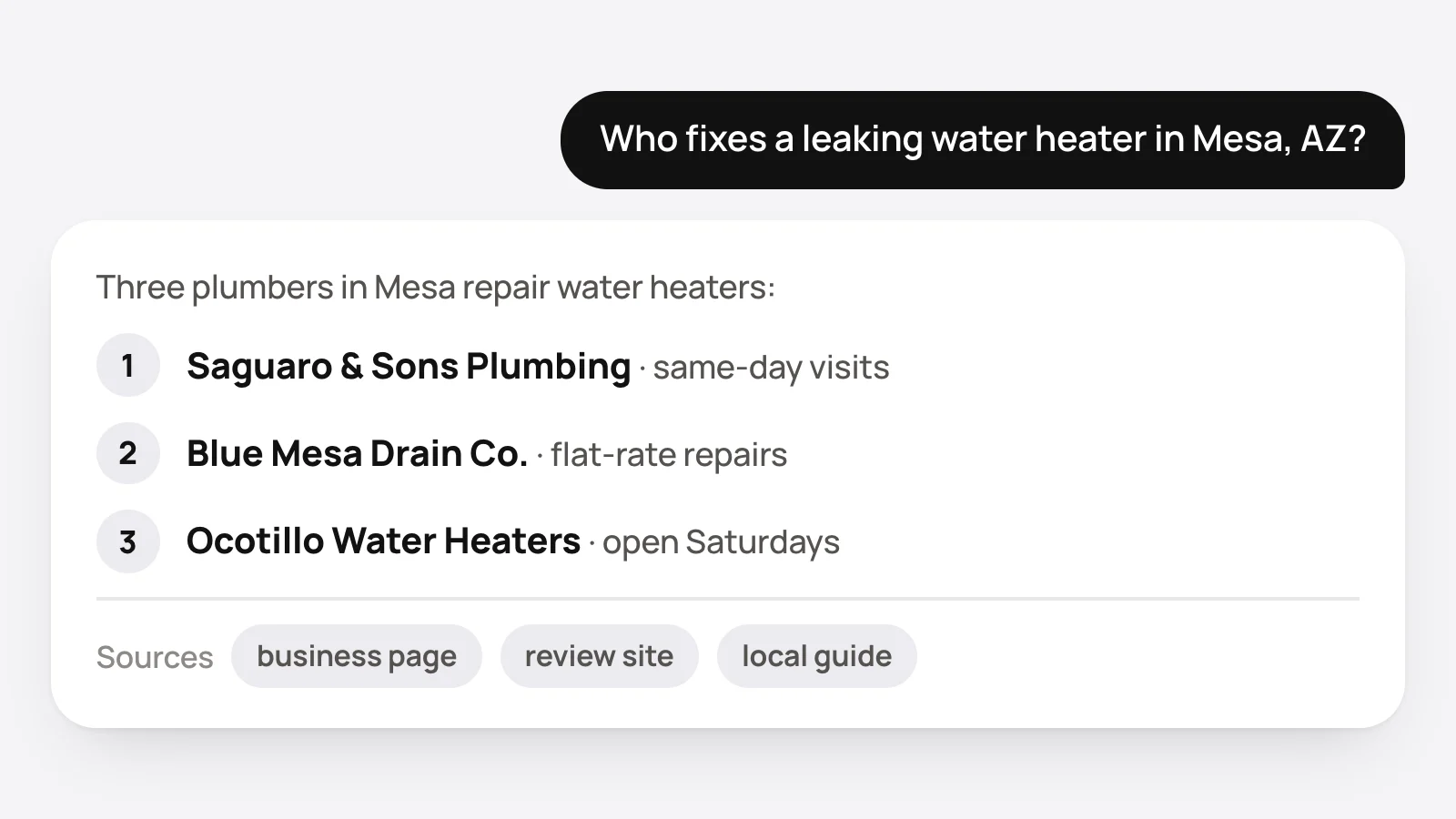
Four steps for a local business that wants ChatGPT to name it: let OpenAI's search crawler in, put the facts in text, keep listings the same, and earn real reviews.
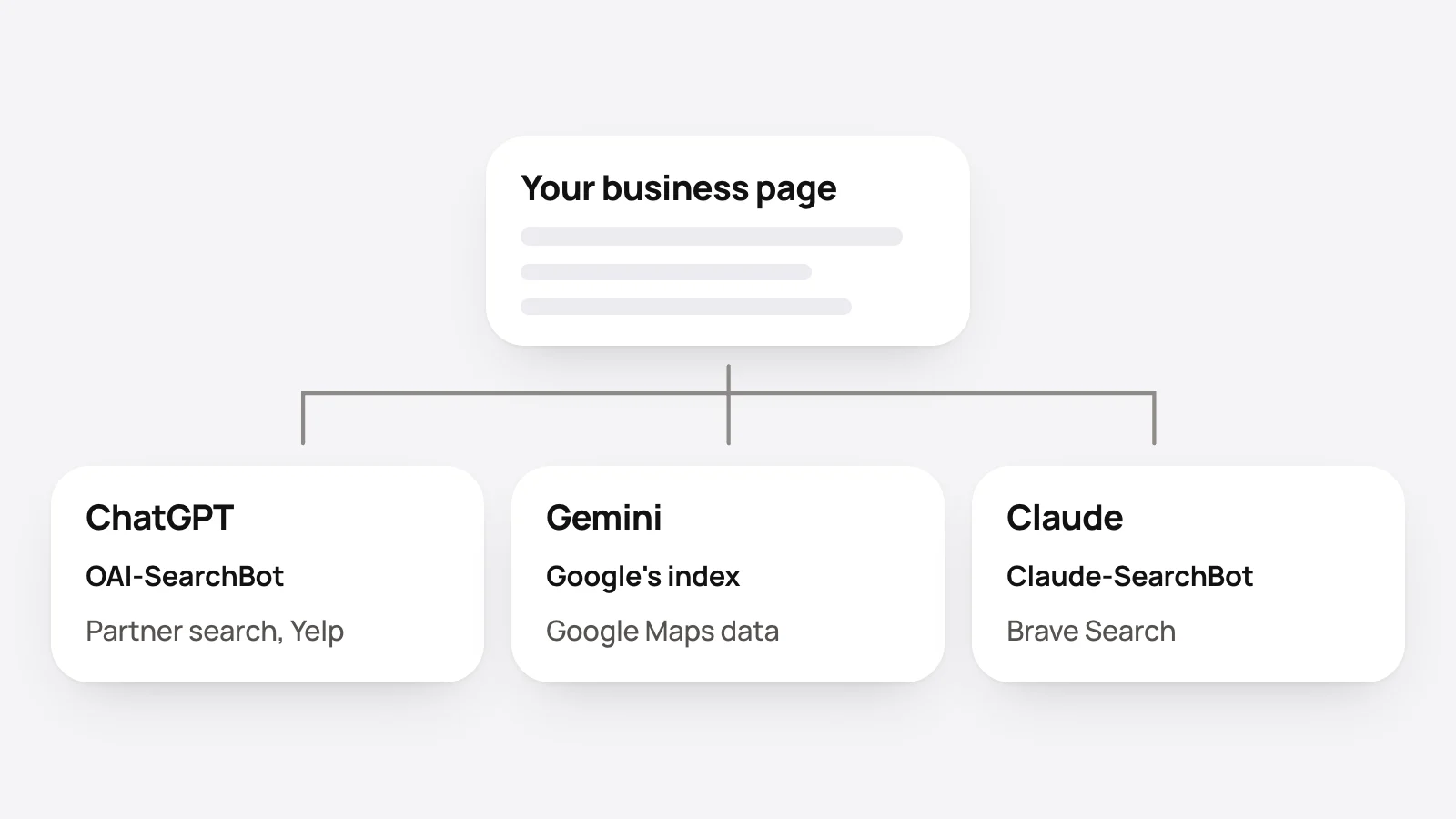
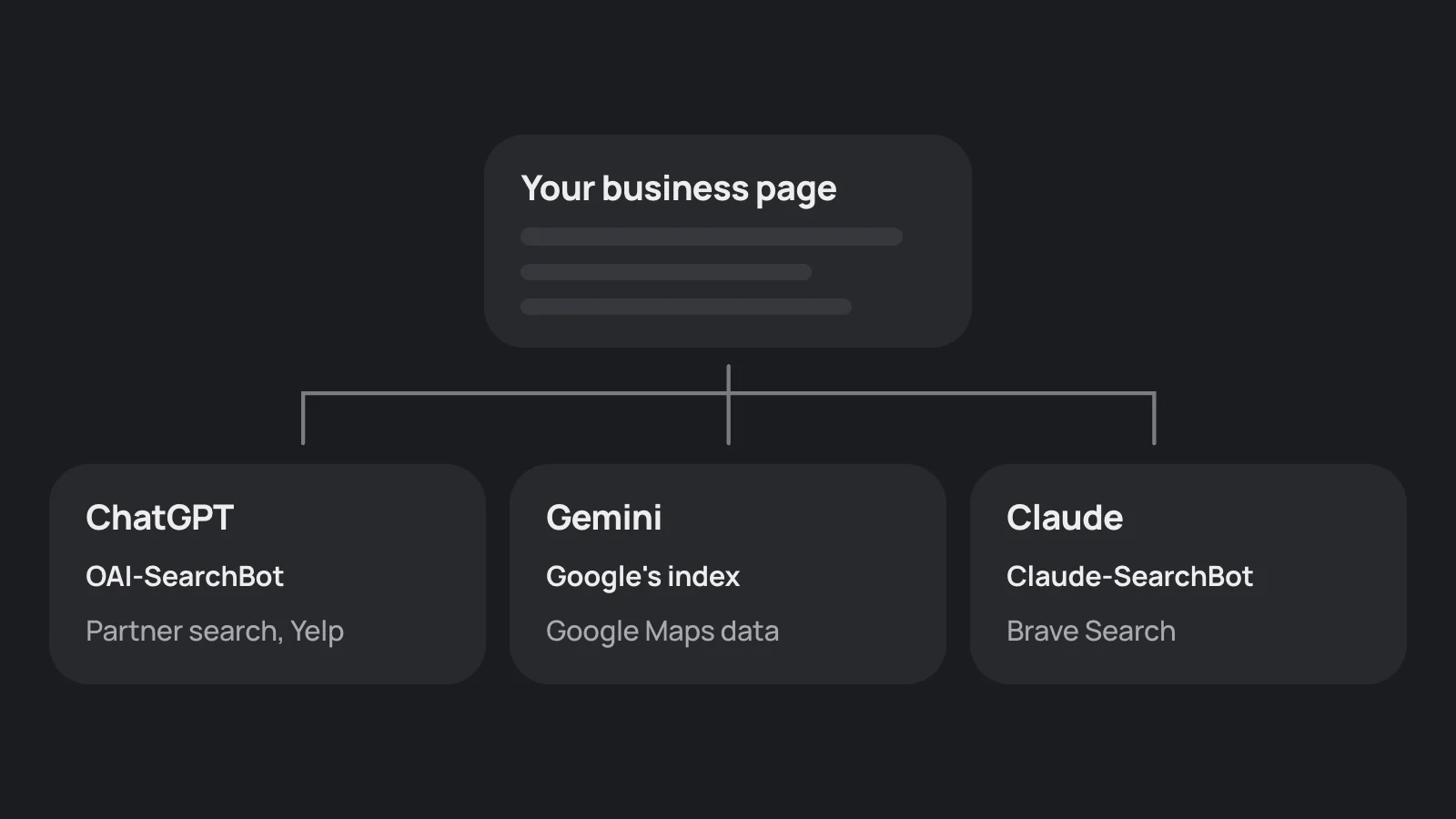
How to make a local business visible in AI search
AI search is three systems, not one. What ChatGPT, Gemini and Claude each need from a local business, what they share, and what makes a page a source they cite.
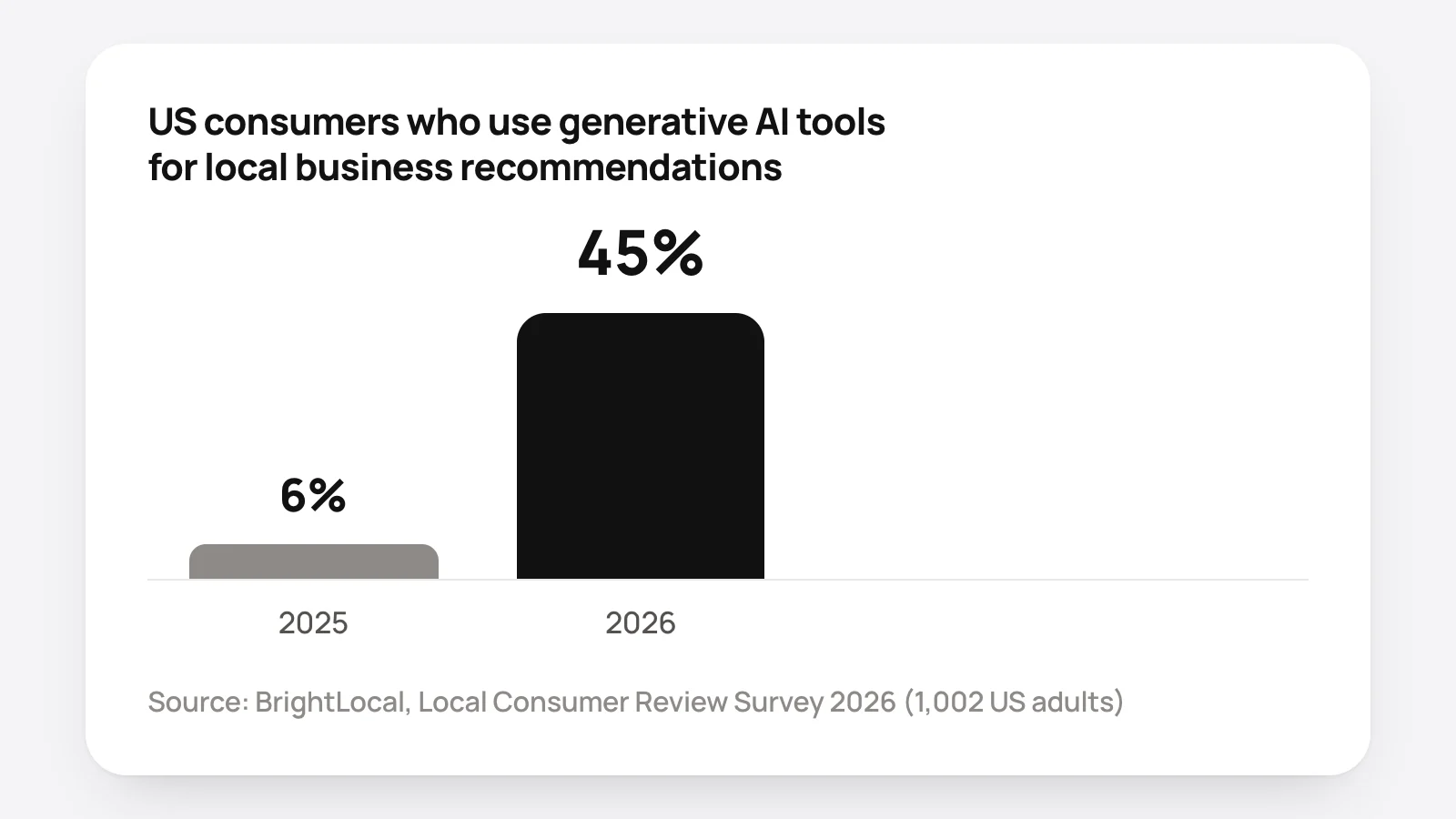
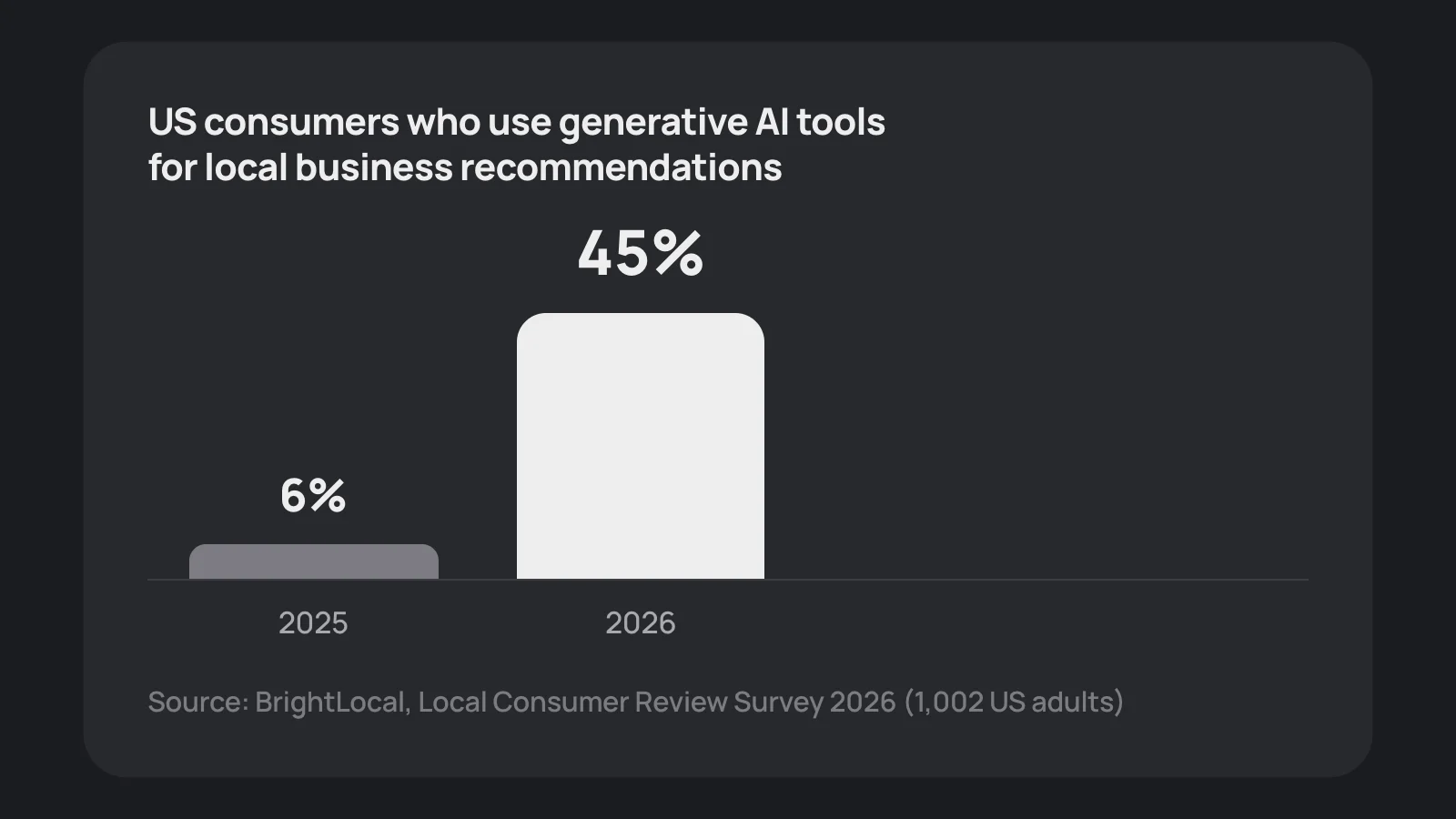
Can a small or new business get found by AI?
Do people use ChatGPT to find local businesses, can a small shop appear next to big brands, and how a new business gets known to AI assistants. With the numbers and their limits.