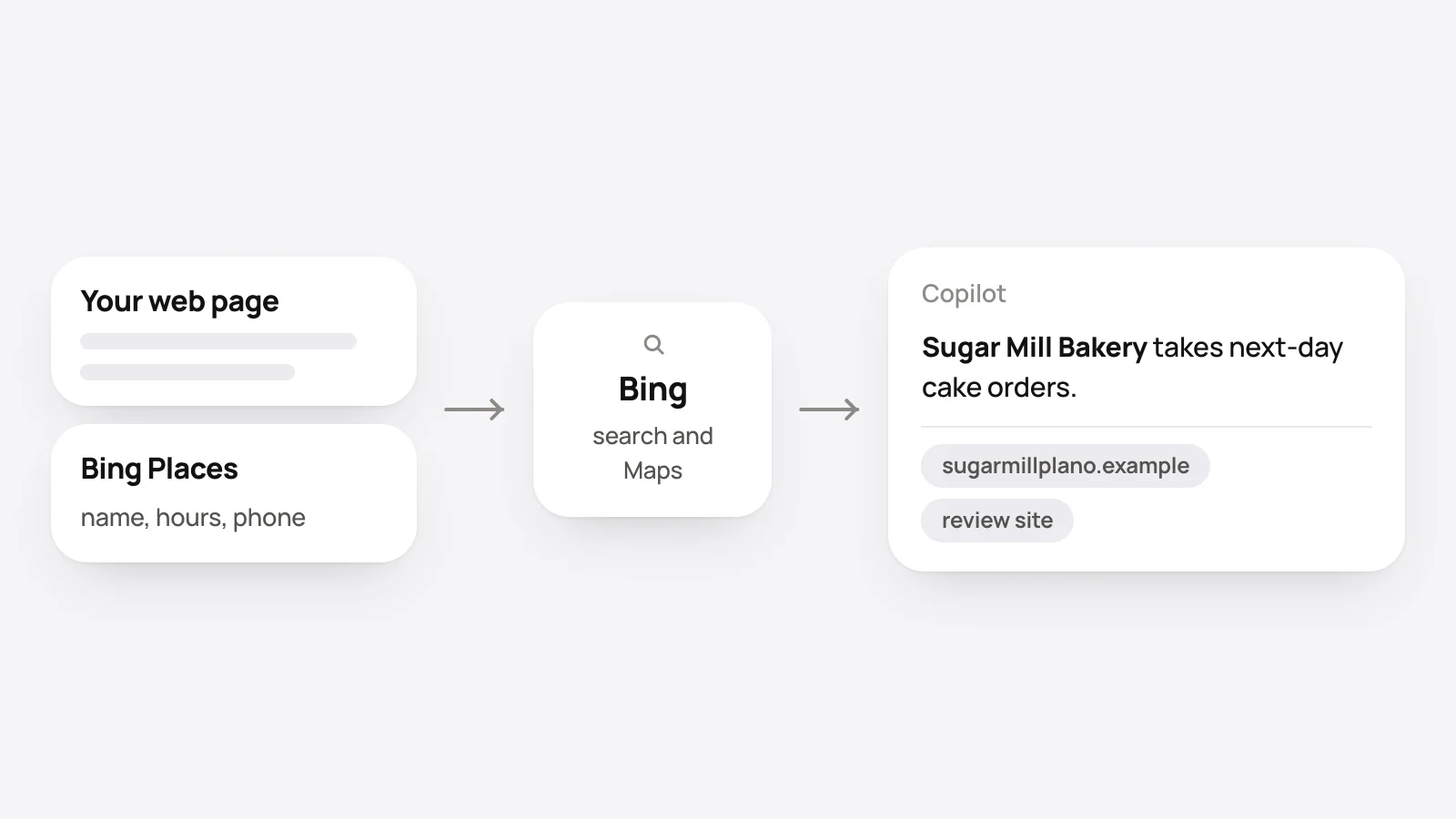
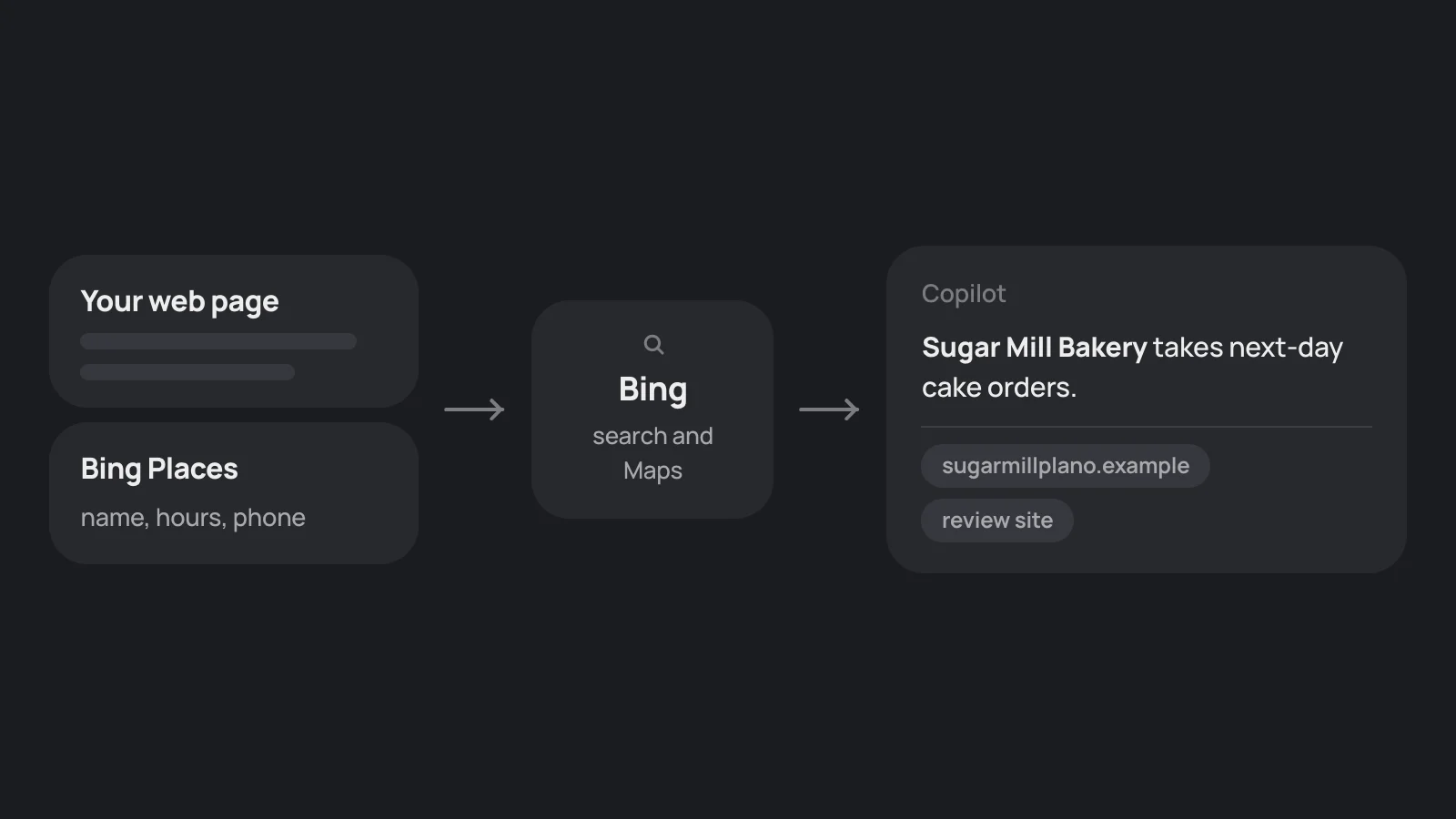
Where does Copilot get its answers?
Microsoft's transparency note for Copilot says: "For certain conversations where users seek information, Copilot is grounded in web search results." Those answers carry links to the pages used.
The note does not name the search engine. Microsoft's help page for Copilot Chat at work does: "Copilot generates a short query based on your prompt and sends it to Bing." And Bing Webmaster Tools reports when a site is cited in Copilot. That the Copilot app for individuals also uses Bing is our inference from these two.
Step 1: is your page in Bing?
- Search Bing for your business name and city. Is your own page in the results?
- If it is not, add the site to Bing Webmaster Tools and submit its sitemap.
- Check that robots.txt does not block Bingbot, or every crawler.
Bing also takes IndexNow, a ping a site sends when a page changes. Bing's post on sitemaps says it notifies Bing "when individual URLs are added, updated, or removed", and that an accurate lastmod date in the sitemap helps Bing choose what to crawl again.
Step 2: have you claimed Bing Places?
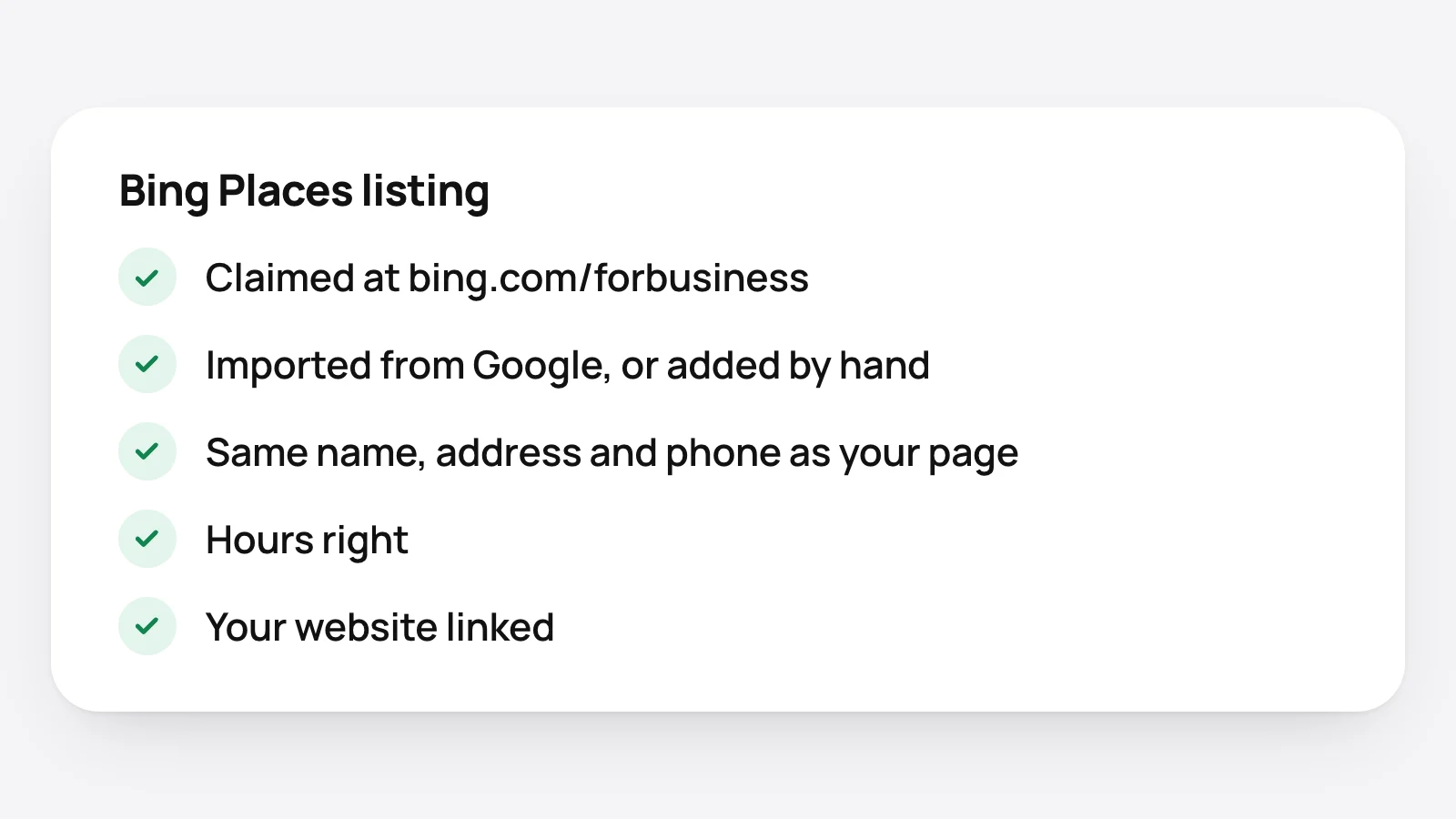
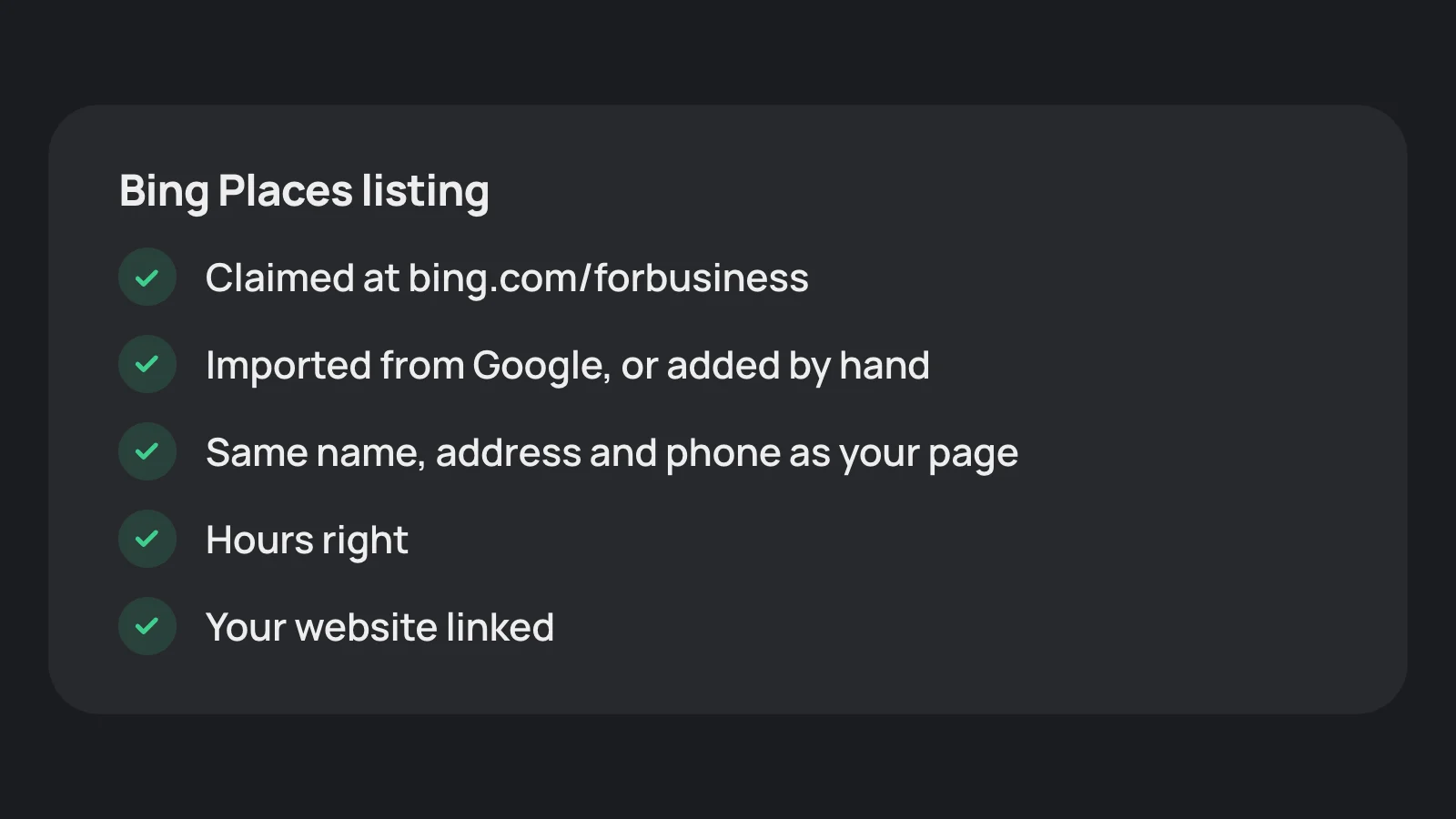
Bing Places is Bing's version of a Google Business Profile. Microsoft's October 2025 post calls it "a free online platform", says listings appear in Bing search results and Bing Maps, and moved it to bing.com/forbusiness, with an import from Google.
The same post lists "deeper integrations with Bing Maps and Copilot" as future work. So Microsoft has not said that Copilot reads Bing Places today. The listing is still free, and it fixes what Bing shows.
Step 3: are the facts on the page as text?
Copilot builds its answer from the pages it found, so the sentence has to be on your page. Write the services, the city and the areas you serve, the hours, the phone number and the prices you publish as text. The full list is in what a page needs to be quoted.
Microsoft's note warns that answers "might misrepresent" a source. Short, plain sentences leave less room for that. That last point is our inference.
How do I know it worked?
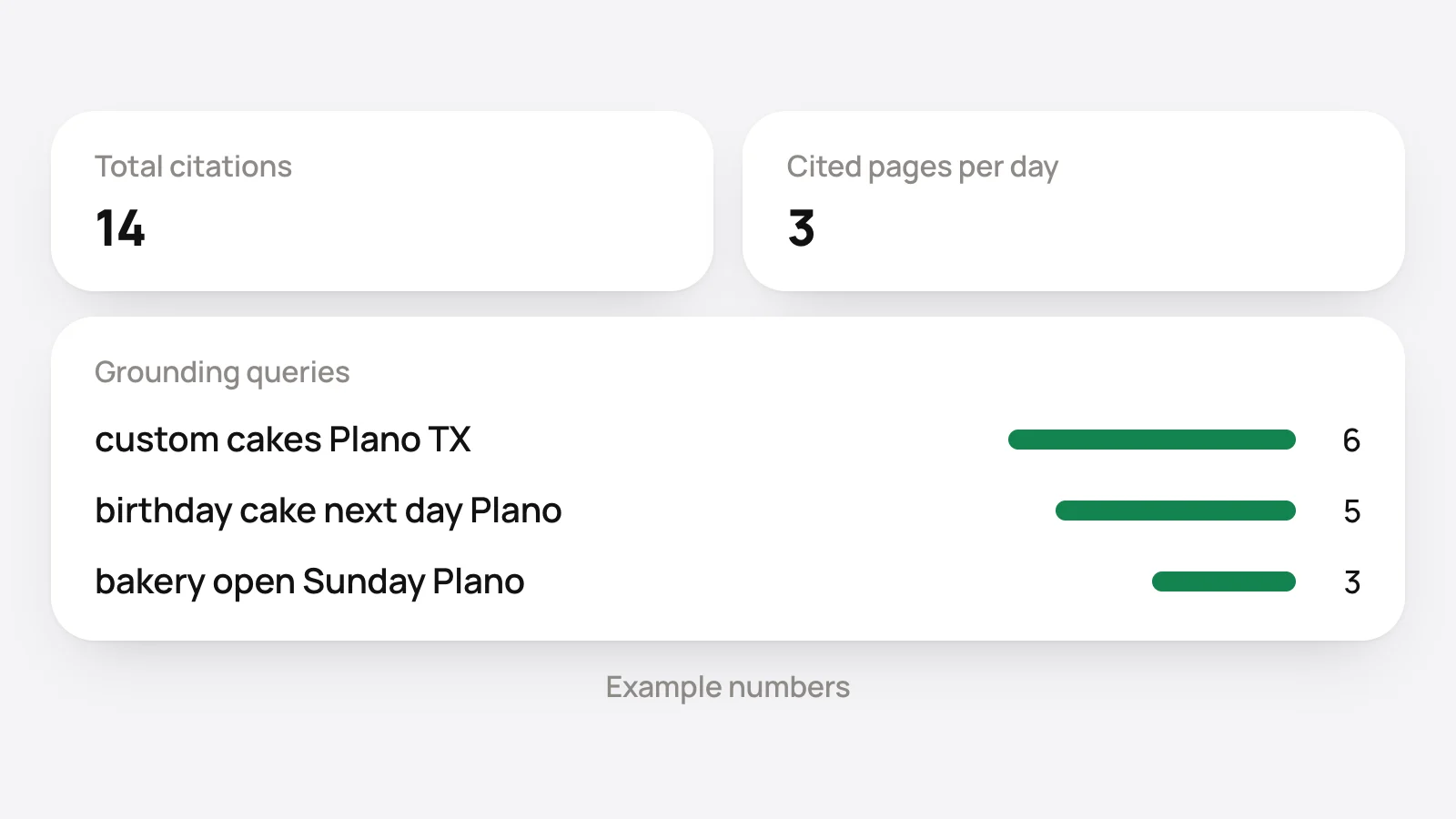
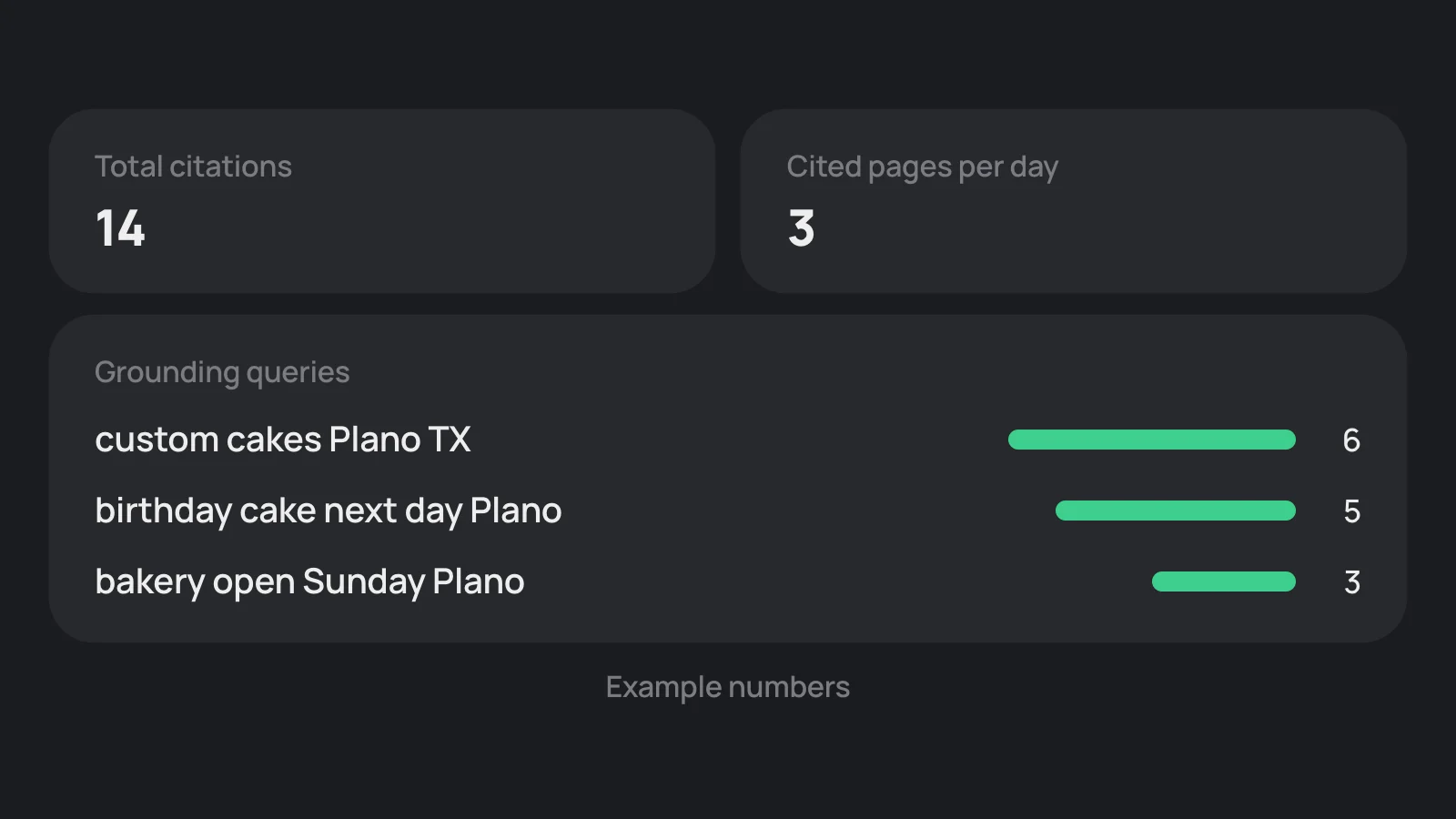
Bing Webmaster Tools has a report for this. Microsoft's February 2026 post says AI Performance shows how a site appears across Microsoft Copilot and Bing's AI summaries: total citations, cited pages, the "grounding queries" behind them and citations per page. It started as a public preview.
You can also ask Copilot the customer's question, with your city in it, at least five times, and read the links under each answer.
Where does OnMap fit?
An OnMap page covers steps 1 and 3: it is open to Bingbot, it is in a sitemap with lastmod dates, every change is sent to Bing through IndexNow, and the facts are plain text. Bing Places stays with the business. The dashboard's listings checklist includes it.
Sources
- Microsoft: Transparency Note for Microsoft Copilot (for individuals) (official documentation)
- Microsoft: How web search works in Microsoft Copilot Chat and agents (official documentation)
- Microsoft Bing: Introducing AI Performance in Bing Webmaster Tools (February 2026) (official documentation)
- Microsoft Bing: Keeping content discoverable with sitemaps in AI powered search (July 2025) (official documentation)
- Microsoft Bing: Introducing the new Bing Places for Business (October 2025) (official documentation)
Sources were last read on November 19, 2026. Assistants change often, so a fact here can go out of date.
Keep reading
How to show up in Perplexity for local searches
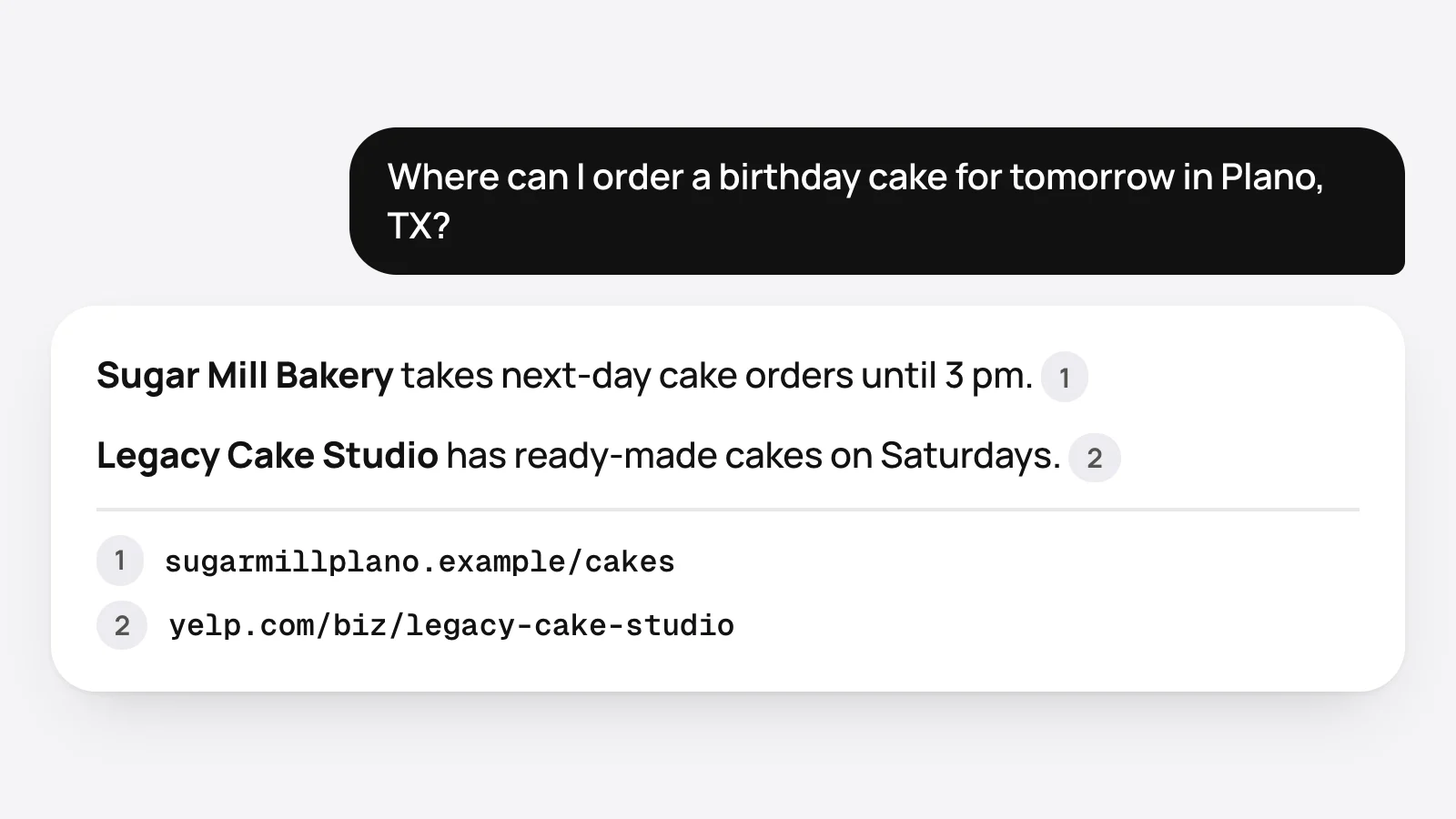
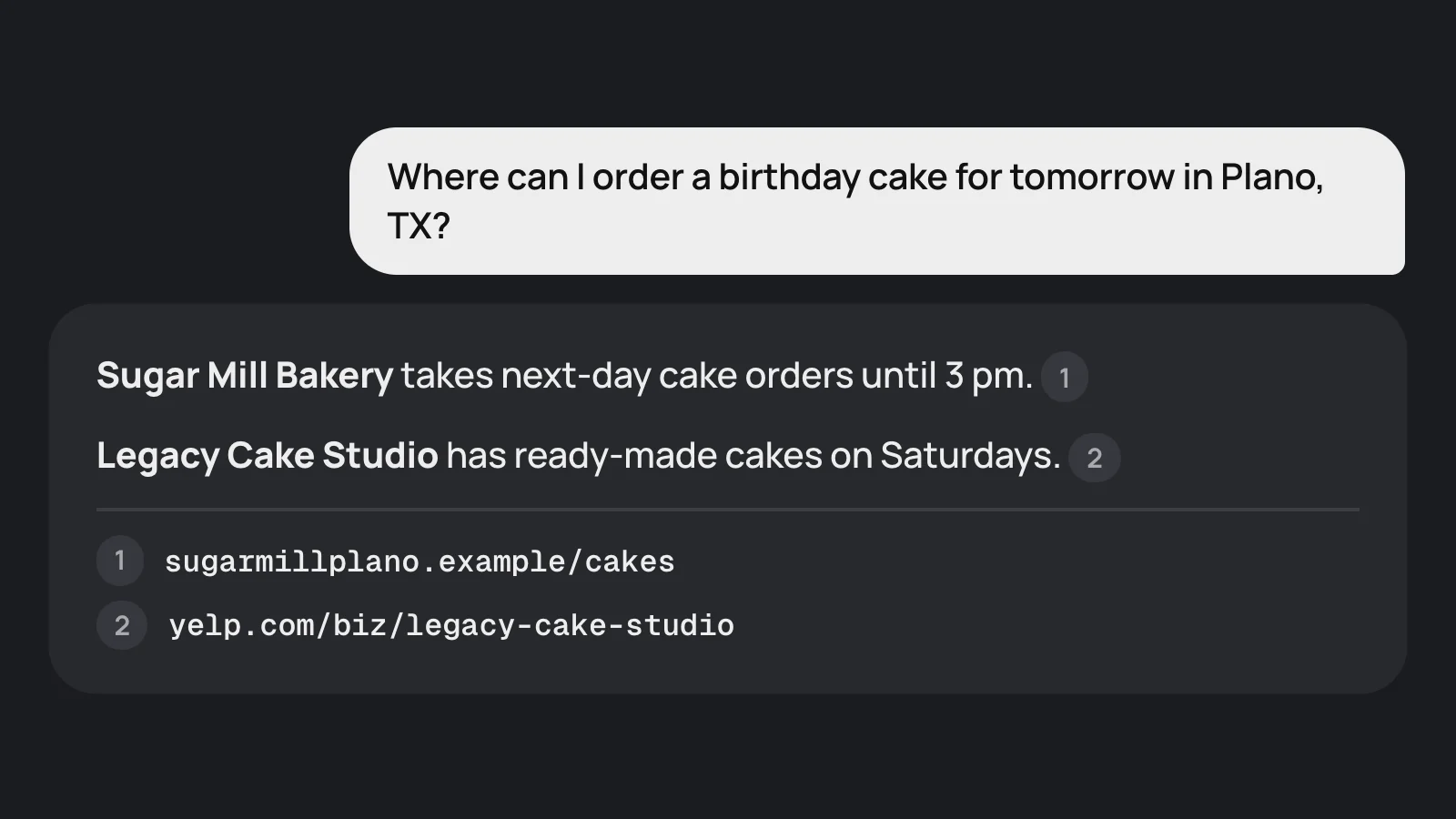
Perplexity searches the web for each question and cites the pages it used. Let PerplexityBot read your page, write the facts as text, and keep your Yelp listing right.
How to get your business to show up in ChatGPT
Four steps for a local business that wants ChatGPT to name it: let OpenAI's search crawler in, put the facts in text, keep listings the same, and earn real reviews.
How to make a local business visible in AI search
AI search is three systems, not one. What ChatGPT, Gemini and Claude each need from a local business, what they share, and what makes a page a source they cite.