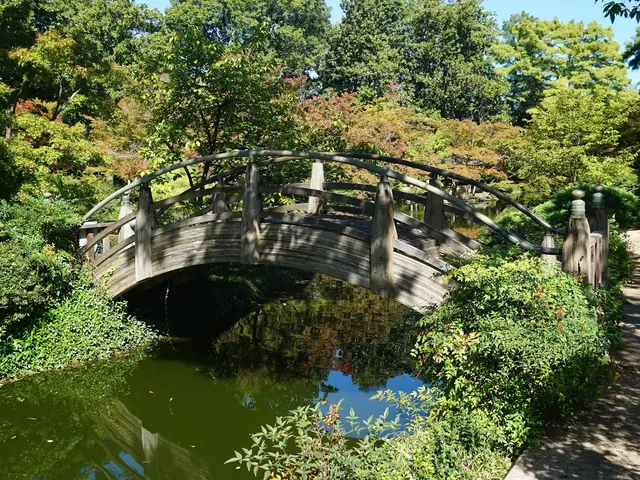
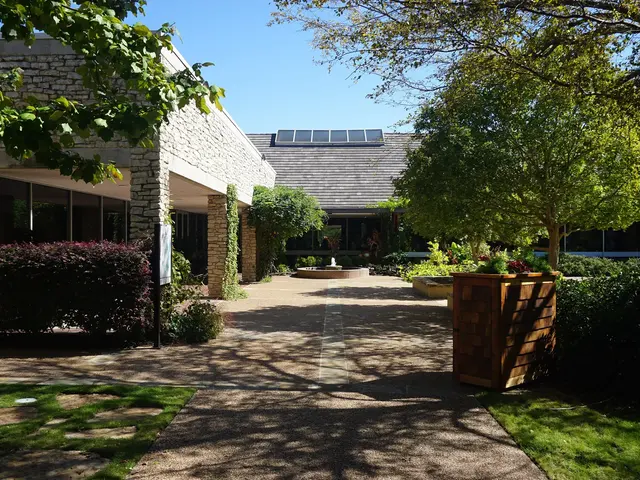
The Rose Garden at the Fort Worth Botanic Garden, built in 1933.
Written by OnMap.meAbout Fort Worth Botanic GardenUnofficialPublished 2 min read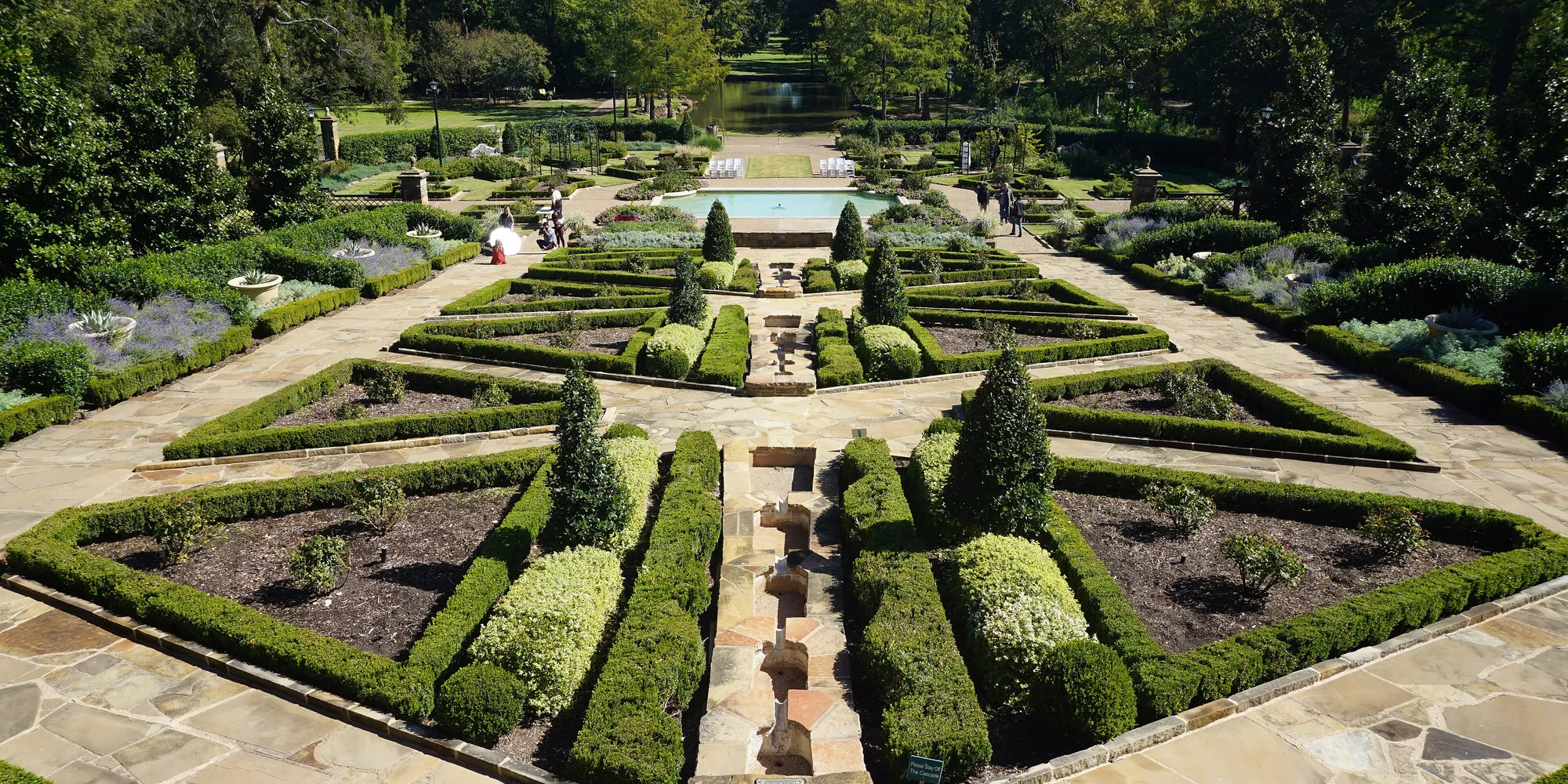
Short answer
The Rose Garden was completed in 1933 with 4,000 tons of Palo Pinto County sandstone, as Fort Worth's first unemployment relief program in the Great Depression. It is on the National Register of Historic Places and was rededicated on October 15, 2017.
In detail
The six named areas of the Rose Garden, from the Shelter House at the top down to the Reflection Pond.
Start at the Shelter House.
The historic Shelter House sits high above the Rose Ramp, with a view over the Lower Rose Garden and the Reflection Pond. It is one of the Beauty Bus shuttle stops.
Walk down the Rose Ramp.
Stone steps lined with flowers lead from the Shelter House down to the Lower Rose Garden, alongside a cascade of water.
The Lower Rose Garden.
At the bottom of the Rose Ramp, seasonal flower beds line the sides of the garden.
The Republic of Texas Rose Garden.
Winding paths run between beds of roses and trellises draped with wisteria, between the Oval and Lower Rose Gardens.
The Oval Rose Garden.
A colonnade of stone and wood trellises connects it to the Rose Garden. Four portals lead into the garden and its stone gazebo.
The Reflection Pond.
Turtles sun themselves around the pond, and goldfish swim in it.
Tip. The Garden's page says the design was inspired by the vistas of Versailles.
Call the park if
- You want to rent the Shelter House, the Lower Rose Garden or the Oval Rose Garden for an event
- You plan a portrait session in the Rose Garden and need a photography pass