The Fort Worth Japanese Garden: Moon Bridge, Pagoda and koi ponds.
Written by OnMap.meAbout Fort Worth Botanic GardenUnofficialPublished 2 min read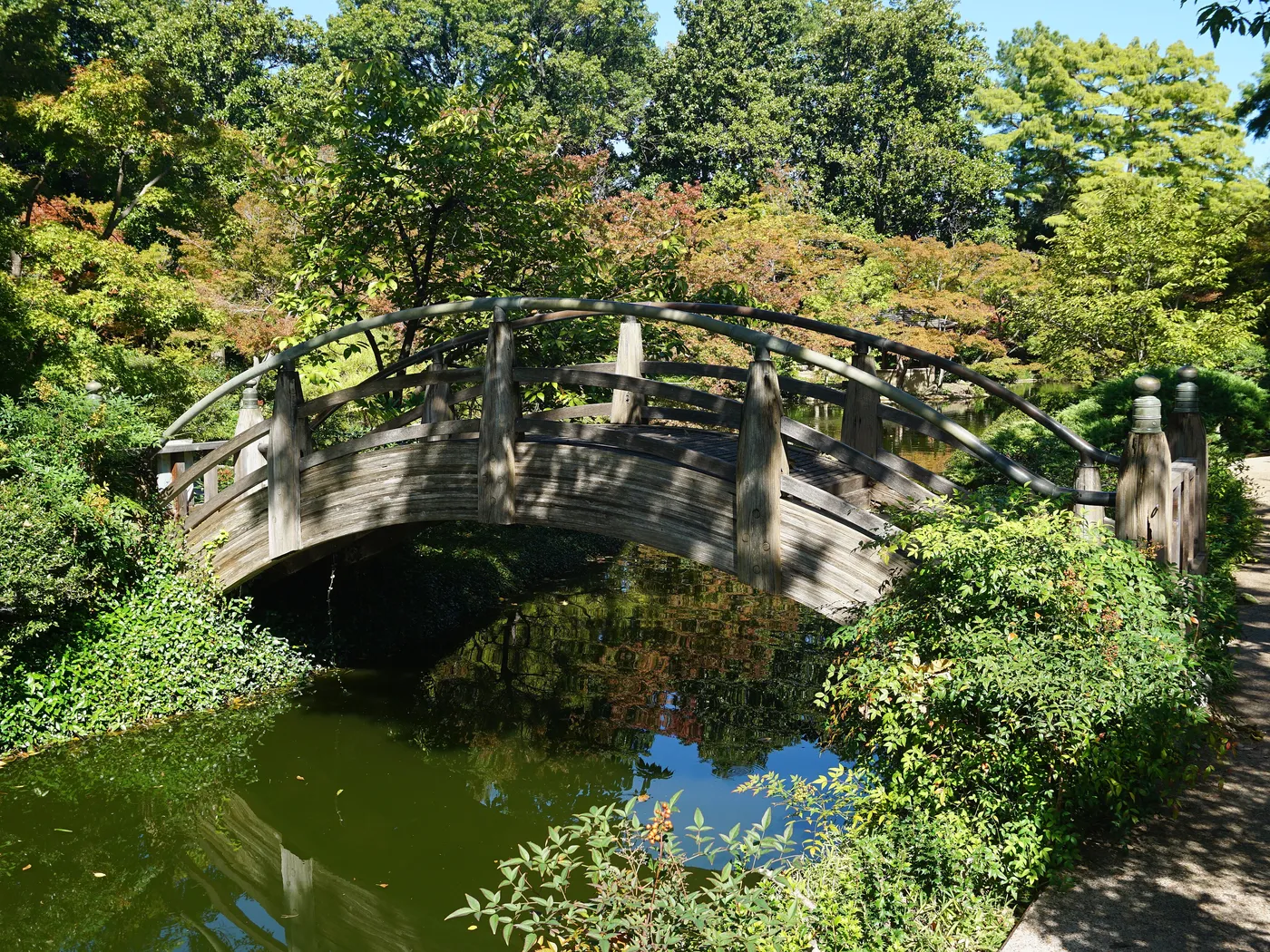
Short answer
The Japanese Garden is a 7.5-acre strolling garden completed in 1973, with more than 1,200 koi. It is included in general admission. Docents lead a free tour from the Japanese Garden Courtyard on set Saturday mornings in spring and fall.
In detail
What stands inside the Japanese Garden, and how to see it with a docent.
The Moon Bridge.
A high-arched footbridge over calm water. Its reflection completes a full circle, symbolic of the moon.
The Pagoda.
A traditional five-story wooden tower. The five stories stand for earth, fire, water, wind and void.
The two dry gardens.
The Karesansui Dry Landscape Garden has rocks placed on sand in a rectangle, ringed by a raised footpath, as an aid to meditation. The Suzuki Garden is a Zen garden named after the landscape architect who donated its plans.
The teahouse and the koi ponds.
The Mary K. Umstead Teahouse is one of the garden's original buildings. The ponds hold more than 1,200 koi, as well as turtles and birds.
The free Saturday tour.
It meets in the Japanese Garden Courtyard from 10 am to 11 am on listed dates in spring and fall (the last 2026 date is Saturday, November 21). Up to 15 guests, first come, first served, no reservation needed.
Private tours.
Three levels: Full (60 to 90 minutes), Modified (60 to 75 minutes, no full-flight stairs) and Silver Highlights (60 minutes, up to 12 guests, suitable for wheelchairs). The fee is $50 for every 8 guests plus admission, booked at least two weeks ahead.
Tip. Few flowers bloom in the Japanese Garden outside of spring, following the Japanese practice of Mono no aware.
Call the park if
- You want a private docent tour for a group
- You want to know whether the Saturday tour is canceled for weather