Paluxysaurus jonesi, the Texas State Dinosaur in the museum's atrium
Written by OnMap.meAbout Fort Worth Museum of Science and HistoryUnofficialPublished 1 min read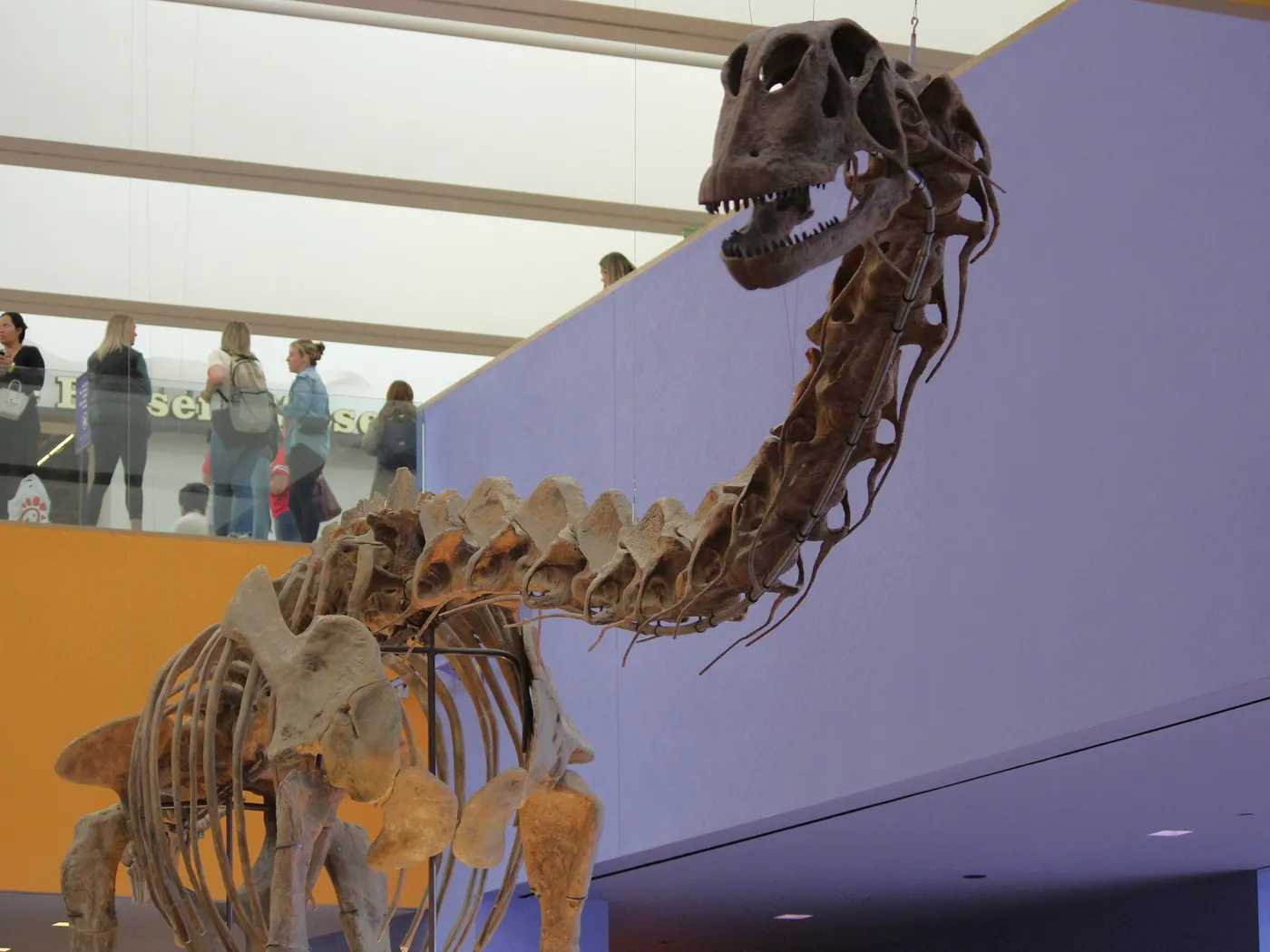
Short answer
The skeleton in the atrium is Paluxysaurus jonesi, an Early Cretaceous sauropod about 60 feet long, made the Texas State Dinosaur in 2009. More North Texas dinosaurs and a fossil dig site are in DinoLabs and DinoDig.
In detail
What the atrium skeleton is, where it came from, and where to see more fossils.
The animal.
Paluxysaurus jonesi lived about 110 million to 115 million years ago. It stood about 12 feet high at the shoulder, weighed an estimated 20 tons and measured about 60 feet from nose to tail.
Where it was found.
The name comes from the dig site, a sandstone quarry on the Jones ranch in Hood County, Texas, close to the town of Paluxy on the Paluxy River.
How the skeleton was made.
It combines four skeletons found in a similar area. Most bones were too fragile or deformed to mount, so casts were made with 3D modeling. The work took 16 years, with Southern Methodist University, the museum and others.
State Dinosaur.
House Bill 16, approved on June 19, 2009, made it the official State Dinosaur of Texas. For the museum's 75th anniversary it was moved from Dino Labs to the atrium, a move that took six weeks.
More in DinoLabs and DinoDig.
DinoLabs shows dinosaur skeletons native to North Texas, and DinoDig is a replica field site where visitors dig for fossils.
Tip. One Paluxysaurus femur fossil weighs about 200 pounds, according to the museum.
Call the museum if
- You have a question about the museum's science collections
- You are planning a field trip to DinoLabs